Introduction
With the rapid global rise of padel, an increasing number of sports clubs, investors, and venue operators are selecting reliable padel court systems for their operations. Evaluating a padel court requires looking beyond mere cost; factors such as aesthetics, material quality, user experience, maintenance requirements, and overall design all play important roles in determining its long-term value.
A high-quality padel court achieves a balance between safety, durability, playing performance, and visual appeal. Every component, from tempered glass panels and steel structures to artificial turf systems and professional lighting, plays a vital role.
A well-crafted court enhances appeal and user experience while simultaneously lowering maintenance costs. To illustrate the options: Panoramic padel courts focus on delivering a high-end visual experience and expansive views, while commercial-grade courts are engineered for daily operations and heavy usage.
Gaining a deeper understanding of padel court materials, structural components, and relevant standards empowers buyers to make informed decisions and secure the ideal court solution for their projects.
What Defines a High-Quality Padel Court?
When selecting a padel court, many buyers focus mainly on price. However, the initial cost is only one factor. The long-term performance of a court depends largely on the quality of its components and manufacturing process.
A reliable padel court system should include durable glass panels, a stable steel structure, suitable artificial turf, and a professional lighting system. These elements work together to influence safety, playing performance, and operating costs.
Tempered Glass: Safety, Visibility and Durability
Glass is one of the most recognizable elements of a padel court. Besides defining the playing area boundary, it also directly affects safety, visibility, and the overall appearance of the venue.
12mm Tempered Glass for Enhanced Safety
High-quality padel courts typically use tempered glass. Compared with standard glass, tempered glass provides higher impact resistance and improved safety because it breaks into small, blunt fragments instead of sharp shards. During padel games, the ball frequently rebounds against the glass panels at high speed, and players may also move close to the glass during fast rallies.
Using suitable tempered glass helps create a safer playing environment while maintaining clear visibility for players and spectators.
Wide Viewing Experience
The glass design of a padel court also affects the spectator experience. Transparent glass walls reduce visual barriers and allow audiences to watch games from different angles.
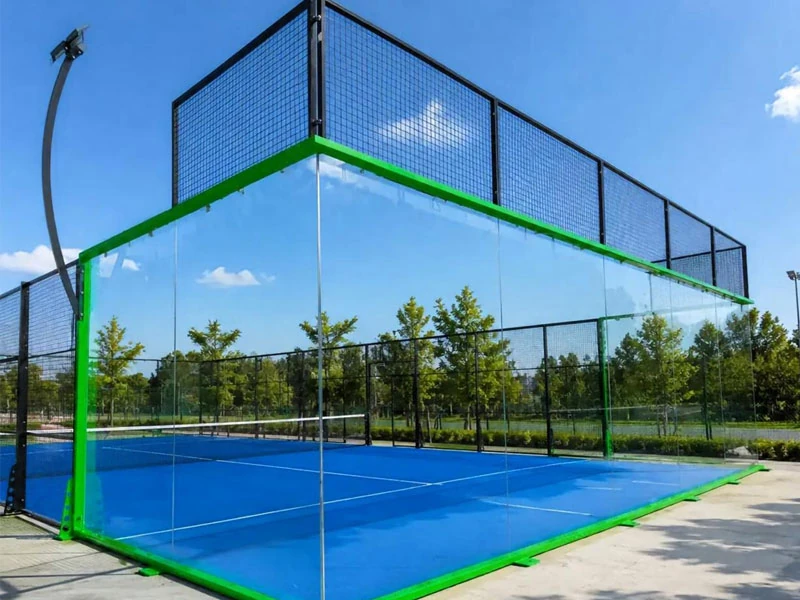
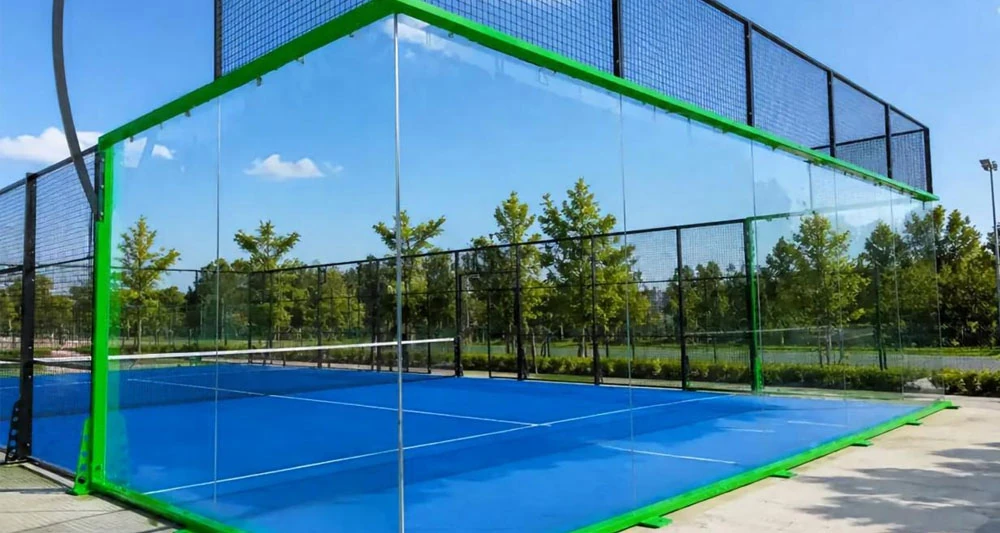
A full panoramic padel court enhances this design by using a more open glass structure to create a 360° unobstructed viewing experience. This design is especially suitable for premium clubs, tournament venues, and commercial facilities that want to improve the visual appeal of their courts.
Steel Structure: Strength, Stability and Corrosion Protection
The steel structure is the main support of the entire padel court system. A strong frame helps keep the glass panels, fencing system, and other parts securely installed during long-term use.
A high-quality padel court requires a reliable steel framework with sufficient strength and structural stability. Carbon alloy steel is commonly used for padel court structures because it provides good mechanical strength and helps maintain the stability of the entire court system.
For outdoor padel courts, the steel structure must also withstand different environmental conditions, including humidity, rain, and temperature changes. Therefore, corrosion protection is an important factor when evaluating the quality and durability of a padel court structure.
Three-Layer Surface Protection Process
To improve corrosion resistance and extend outdoor service performance, professional padel court steel structures can use a three-layer protection process, including galvanization, painting, and electrophoresis coating.
Galvanization:
Adds a zinc coating to improve corrosion resistance and protect the steel from moisture and outdoor conditions.
Painting:
Provides an additional protective layer while improving the overall appearance of the structure.
Electrophoresis Coating:
Enhances coating adhesion and adds extra protection against environmental factors.
By combining carbon alloy steel with a three-layer protection process, a padel court structure can achieve better stability, corrosion resistance, and long-term reliability. This makes the steel structure a key factor that distinguishes a high-quality padel court from standard court solutions.
Artificial Turf System: Playing Performance and Drainage
The artificial turf system directly influences player comfort, ball movement, and daily maintenance requirements.
High Fiber Density
A high-density turf system can provide a more stable playing surface. Dense artificial grass fibers help maintain consistent performance during frequent use and can reduce surface wear over time.
For commercial facilities, turf quality is especially important because courts may experience continuous daily operation.
Standard Turf Height
The height of artificial turf affects playing characteristics, including ball speed, bounce performance, and player movement comfort.
Professional padel courts commonly use 10mm–12mm artificial turf systems, based on their specific usage requirements, including training, recreational activities, or competitive events.
Drainage Performance
For outdoor padel courts, drainage capability is another important consideration. Efficient drainage helps reduce water accumulation after rainfall and allows the court to reduce downtime after rainfall.
A complete padel court solution should consider not only playing performance but also practical maintenance needs. This is why the turf system is an important part of choosing the best padel court for long-term operation.
Lighting System: Professional Visibility Standards
Lighting is essential for padel courts that operate during evenings or in areas with limited natural light.
LED Lighting System
Professional padel courts usually use LED lighting systems because LED technology provides stable illumination, energy efficiency, and long service life.
For commercial sports venues, a suitable lighting system does not impair the players’ visibility and also enhances the viewing experience for the audience.
IP65 and IP67 Protection Standards
Outdoor lighting equipment must take water resistance into account.
IP65-rated lighting fixtures are protected against dust and low-pressure water jets, making them suitable for many outdoor padel court environments. IP67 provides protection against temporary water immersion and is suitable for outdoor environments with higher water exposure risks.
For outdoor commercial padel courts, selecting lighting equipment with the appropriate level of water resistance helps ensure the facility’s continued operation.
Full Panoramic Padel Court vs Commercial Padel Court: Which One Is Better?
When planning a padel facility, buyers often compare a full panoramic padel court with a standard commercial padel court. Both options can support professional padel activities, but they are designed for different priorities.
| Feature | Full Panoramic Padel Court | Commercial Padel Court |
| Viewing Experience | 360° unobstructed view | Standard viewing experience |
| Visibility | Excellent | Good |
| Aesthetic Effect | Premium appearance | Standard appearance |
| Application | Premium clubs, tournaments, luxury venues | Commercial clubs, training centers |
| Price | Basically similar | Basically similar |
Advantages of a Full Panoramic Padel Court
The main advantage of a full panoramic padel court is its open visual design. The reduced visual obstruction creates a more attractive environment for spectators and players.
It is especially suitable for:
- Premium sports clubs
- Tournament venues
- High-end commercial facilities
- Projects focusing on brand presentation
Compared with traditional designs, panoramic structures can enhance the overall appearance of a venue and create a more modern sports environment.
Advantages of Commercial Padel Court
A commercial padel court focuses more on practical daily operation. It is commonly used in:
- Padel clubs
- Training facilities
- Community sports centers
- Recreational venues
Commercial courts need to balance public convenience with ease of management to ensure sustainable and rational operations.
Since the price difference between the two configurations is minimal, buyers should consider the court’s intended positioning when making a decision; provided the budget allows, the panoramic padel court—offering superior aesthetics as well as an enhanced experience for both players and spectators—is a highly attractive option.
Why Choose a High-Quality Padel Court?
Choosing a high-quality court is not only about improving appearance. It can also influence operating efficiency, customer satisfaction, and long-term business value.
Reduce Maintenance Costs
A durable court system can help reduce future maintenance requirements.
High-quality materials can contribute to:
- Lower risk of structural corrosion
- Reduced frequency of component replacement
- Longer service life of turf systems
- More stable daily operation
Although premium materials may require a higher initial investment during the purchasing stage, they can help reduce maintenance pressure throughout the court’s operating period.
Improve Player Experience
Player experience is one of the most important factors for commercial padel facilities.
A well-designed high-quality padel court can provide:
- More consistent ball response
- Comfortable playing conditions
- Improved safety
- Better visual experience
For commercial operators, better user experience can influence customer satisfaction, repeat visits, and overall venue reputation.
Increase Revenue Potential
A premium court can also support stronger commercial performance.
A high-quality padel facility can help:
- Improve venue image
- Attract more users
- Support premium pricing strategies
- Create opportunities for events and competitions
A full panoramic padel court, with its enhanced visual design, can be particularly valuable for facilities aiming to create a premium sports experience.
How to Choose the Best Padel Court for Your Project?
Selecting the best padel court requires considering several factors beyond appearance.
Installation Location
When planning the installation, the first consideration is whether the court will be installed indoors or outdoors. Local climate conditions and available space should also be considered, as different environments require different materials and protection measures.
Usage Purpose
The choice of court also depends on its intended use. Competition venues may prioritize visual aesthetics, whereas training centers tend to focus on durability, practicality, and maintenance costs. Private courts, on the other hand, center on personal preference.
Material Quality
Before purchasing a padel court, buyers should check several key factors:
- Glass thickness and quality
- Steel protection process
- Artificial turf performance
- Lighting standards
These factors affect the court’s performance, durability, and long-term value.
Supplier Experience
Choosing an experienced manufacturer ensures you receive a comprehensive padel court solution. Their reliable production capabilities enable them to provide technical support tailored to specific projects.
This helps ensure that the high-quality padel court meets your project expectations.
FAQ
Q1. What makes a high-quality padel court?
A high-quality padel court uses durable tempered glass, stable steel structures, suitable artificial turf systems, and reliable lighting solutions. These components improve safety, performance, and long-term use.
Q2. What is the difference between a full panoramic padel court and a commercial padel court?
Panoramic padel courts offer an unobstructed 360° viewing experience and a visually striking appearance, whereas commercial padel courts prioritize the demands of daily use and operational costs.
Q3. Is a full panoramic padel court more expensive?
The final cost depends on configuration, materials, and project requirements. In many cases, the price difference between panoramic and commercial solutions can be relatively small.
Q4. Is a panoramic padel court suitable for commercial clubs?
A panoramic padel court is a good choice for commercial clubs that aim to create a premium sports environment. Its open glass design improves visibility and gives the court a modern appearance, creating a better experience for both players and spectators.
Conclusion
High-quality components are the foundation of a premium padel court; elements such as tempered glass panels, steel structures, artificial turf, and lighting systems all play a crucial role in determining the court’s quality. These components enhance safety and playing performance while extending the facility’s lifespan.
For commercial clubs and investors, selecting the right padel court directly impacts operational success. A well-designed court not only delivers a superior user experience but also reduces long-term maintenance costs and supports business growth. Factors such as material selection, manufacturing processes, and the supplier’s experience directly influence the quality of the final installation.
Whether purchasing a panoramic padel court for an upscale sports club or outfitting a facility for standard commercial operations, buyers should carefully evaluate the structural design, material standards, customization options, and the manufacturer’s reliability. A professional supplier with robust manufacturing capabilities can help create padel facilities that are safe, durable, and aesthetically pleasing, while meeting the specific requirements of diverse projects.


