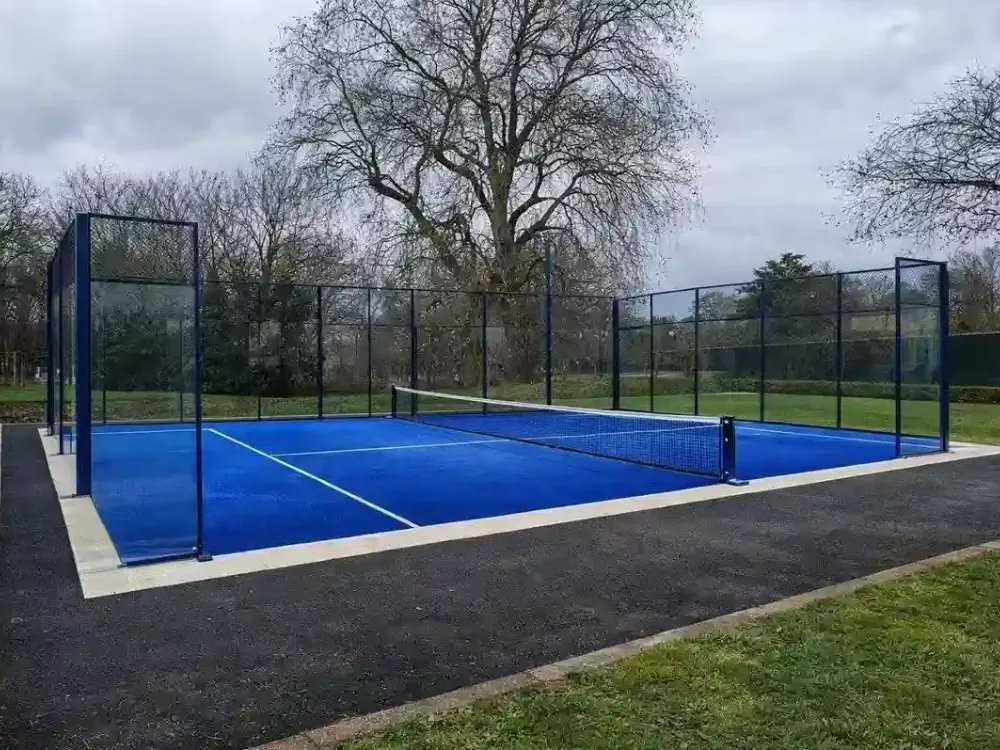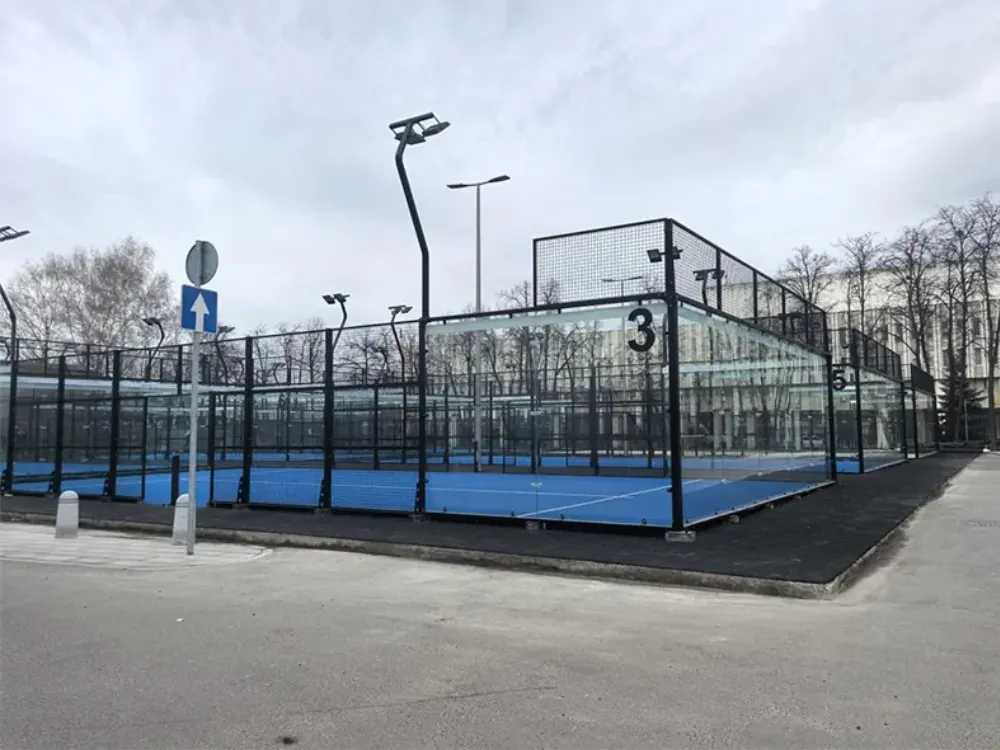
Padel court cost includes the court package, delivery, site preparation, installation, and any facilities needed to open the venue. A useful price must state which of those items it covers, where the court will be built, and whether tax is included.
A low equipment quote and a complete construction quote describe different purchases. Before comparing them, put both on the same basis. This guide helps you separate supplier prices from local works, build a complete budget, and prepare an itemised request for quotation.
Key takeaways
- Compare equipment, delivery, installed court, and complete venue budgets separately.
- Record currency, tax treatment, location, specification, and quote validity beside every amount.
- Check an existing base before treating it as a saving.
- Use documented project inputs for operating costs and returns.
- Ask suppliers and local contractors to identify exclusions as clearly as inclusions.
What does padel court cost include?
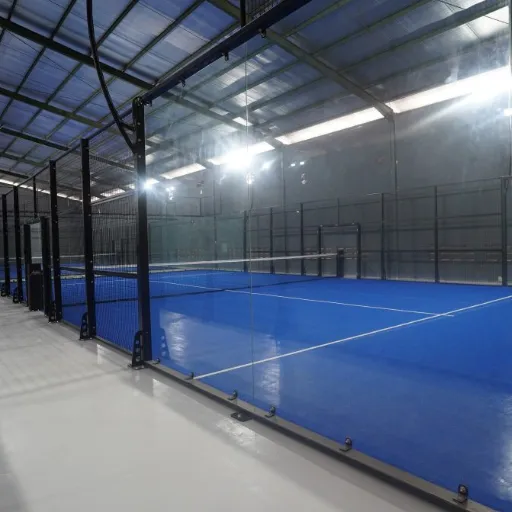
Start with four budget levels. Each answers a different question. A padel court cost estimate becomes useful when the buyer and supplier agree which level they are pricing.
| Budget level | What you are buying | What to check separately |
|---|---|---|
| Court package | The specified structure, glass, mesh, playing surface, net, and lighting items | Confirm the actual packing list; packages differ |
| Delivered equipment | The package plus agreed transport to a named location | Import charges, unloading, storage, and final site access |
| Installed court | Equipment, agreed civil works, assembly, and commissioning | Check whether electrical connection, drainage, and approvals are included |
| Complete venue | Courts plus the building or canopy, access, utilities, and other facilities | Reception, changing rooms, parking, professional fees, and opening costs |
Don’t assume that “complete court” means complete venue. Ask for a line that names the destination and the delivery duties. A freight allowance to a port does not cover every padel court cost at the site. Ask separately about inland transport and unloading equipment.
A published benchmark needs a defined scope
For a documented example, the LTA’s 2025 UK construction guidance lists £36,000 for one court with lights and £35,000 for the ring beam, court base, ducting, and drainage. Its £71,000 total excludes VAT and fees. The figures reflect delivered UK projects in 2025 and include some site-specific costs.
That example shows why groundwork belongs in a padel court cost budget. It is not a 2026 PEDI quotation or a price for every country. Use current supplier and contractor quotes for your own project.
If you have an existing paved area, check the base, drainage, and fixing requirements against the selected court before ordering. Separate repairs from new works in the budget. Existing paving needs assessment before you remove foundation work from your padel court cost sheet.
For an initial equipment scope, request an itemised PEDI quotation with your country, court quantity, preferred model, and site information.
Build your padel court cost breakdown
A budget should show who supplies each item, what is included, and how firm the figure is. Keep actual quotes separate from allowances. Your padel court cost sheet should also distinguish shared project expenses from expenses charged for each court.
Court package and specification
Compare the same model and configuration. Record the steel structure, glass specification, turf system, net, lighting equipment, finishes, and accessories. Ask which items are standard, which are optional, and which must be bought locally.
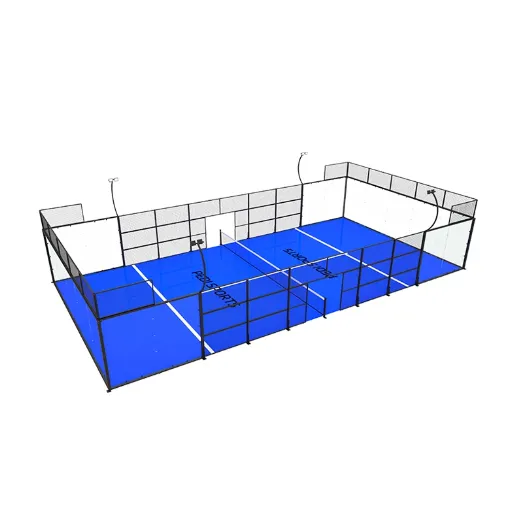
PEDI’s PC001 panoramic padel court provides a model reference for a 20 × 10 m court. Use its current technical information when requesting a configuration, then ask for the supplied specification in writing. A model name alone does not confirm every accessory or service in a quote.
Keep the package price and optional upgrades on separate padel court cost lines. This shows what each change adds to the starting price. It also helps you compare a panoramic padel court price with a classic configuration on equal terms.
Groundwork, drainage, and local services
Base preparation depends on the site and the chosen court. The local design must account for ground conditions, drainage, structural requirements, and the manufacturer’s fixing information. Treat early estimates as allowances until the necessary site information is available.
Measure the available area before pricing works. The FIP Rules of Padel applicable from January 2026 define the doubles playing rectangle as 20 × 10 m internally. That is not the whole project footprint. The same rules specify 6 m minimum clear height and suggest 8 m for new facilities.
Allow separately for access, maintenance space, and the requirements of your venue. Our court dimensions and space guide helps organise the measurements to send with an enquiry.
Transport, handling, and assembly
Record freight, insurance where agreed, port handling, inland transport, unloading, storage, and assembly. Identify the party responsible for each stage. This prevents a padel court cost comparison from hiding services outside the supplier’s quote.
Ask the installer what must be ready on arrival. The base, power arrangements, unloading area, and access for handling equipment should be addressed before delivery. Use the purchase-to-opening timeline to plan these dependencies alongside production and shipping.
| Budget line | Evidence to request | Status to record |
|---|---|---|
| Court and options | Dated model quotation and packing list | Quoted or provisional |
| Freight and handling | Named route, destination, and responsibilities | Quoted or allowance |
| Foundation and drainage | Site-specific scope and local contractor price | Quoted or allowance |
| Assembly and commissioning | Labour, equipment, travel, and handover scope | Included or separate |
| Electrical connection | Equipment and connection responsibilities | Included or separate |
| Professional fees and approvals | Defined local services and application costs | Quoted or allowance |
| Reserve | Clearly stated planning assumption | Adjustable allowance |
For every padel court cost quote, record its issue date and expiry date. If you convert currencies, record the exchange rate and date. Don’t present a converted amount as a fixed supplier price. Keep tax treatment consistent across the sheet.
Compare outdoor, indoor, and covered projects
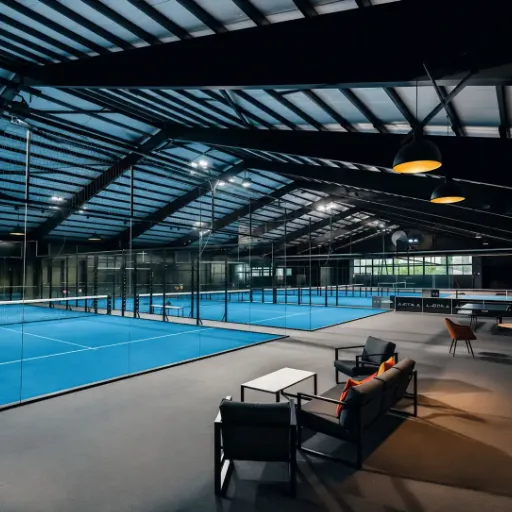
Location and venue type change the work surrounding the court. Compare alternatives using the same padel court cost categories, then add the works particular to each option.
Outdoor courts
An outdoor budget needs a defined drainage and base scope. Discuss exposure, structural design inputs, finishes, and electrical arrangements with the relevant supplier and local team. Site access and ground conditions belong in the quotation process, not in a later list of surprises.
The LTA guidance is a useful UK example of separating court equipment from civil works and engineering responsibilities. Apply the requirements relevant to your own location and project rather than copying a generic foundation detail.
Indoor courts
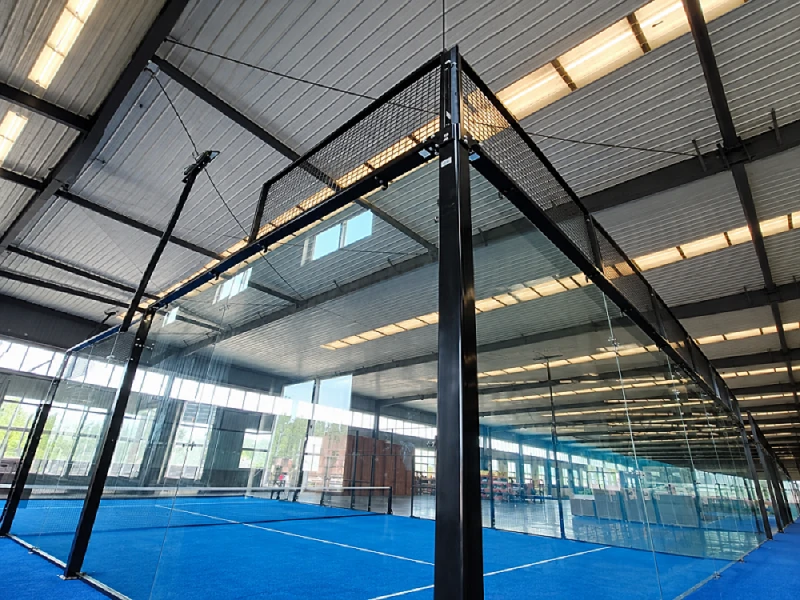
Indoor padel court cost must be separated from the cost of the building. For an existing hall, investigate clear height, columns, floor suitability, services, ventilation, and the proposed use. For a new building, obtain a separate building scope.
Compare an existing-hall option with a new-build option only after identifying what each contains. A budget that omits the hall cannot describe the full indoor investment. Keep changing rooms, reception, and other facilities separate from the equipment part of your padel court cost.
Covered courts
A canopy creates its own design, foundation, drainage, and installation scope. Check its relationship with the court enclosure and access. An open-sided roof should not be budgeted as though it were a fully enclosed building.
For roof choices, use our covered padel court guide. In your budget, show the court package and roof works separately. This keeps the effect of adding coverage visible when comparing padel court cost alternatives.
Use a worked budget with stated assumptions
The following Illustrative scenario explains the arithmetic for one outdoor court. Every amount is invented for the example; none is a supplier quote, market average, or PEDI selling price. It uses USD, excludes tax, and assumes no building, canopy, land purchase, or surrounding club facilities.
| Assumed item | Illustrative amount, USD |
|---|---|
| Court package | 20,000 |
| Freight and handling | 2,500 |
| Foundation and drainage | 12,000 |
| Assembly | 4,000 |
| Electrical connection | 1,500 |
| Design and local project services | 2,500 |
| Subtotal | 42,500 |
| Illustrative reserve: 10% of subtotal | 4,250 |
| Total including reserve | 46,750 |
The reserve is a planning assumption, not a recommended percentage for every project. Replace each input with a dated quote or a justified allowance. If an amount already includes another service, remove the duplicate line before adding the total.
This is how to make a padel court cost example reproducible: define its scope, label its assumptions, and show the addition. Do not combine the cheapest component from one region with a total quoted for another project.
Extending the sheet to several courts
Illustrative scenario: A four-court venue. The buyer separates four equipment packages from a shared building, reception, utility connection, and project services. It asks which delivery and installation charges are shared and which increase with court quantity. The resulting sheet shows court-level costs and venue-level costs without counting either twice.
Do not simply multiply a single-court total by four. Equally, do not assume that every shared service becomes cheaper per court. Get a loading plan, site scope, and installation proposal for the actual quantity.
Keep the revenue model separate from padel court cost. A business plan needs its own assumptions for available booking hours, occupancy, net selling price, staffing, rent, energy, maintenance, and other expenses. Gross revenue does not show the cash available to repay an investment.
For a useful scope reference, Padel Provider’s centre-budget guide separates courts from building works, facilities, professional services, and working capital. Its supplier prices describe its own offer, not PEDI’s.
Compare supplier quotes on the same basis
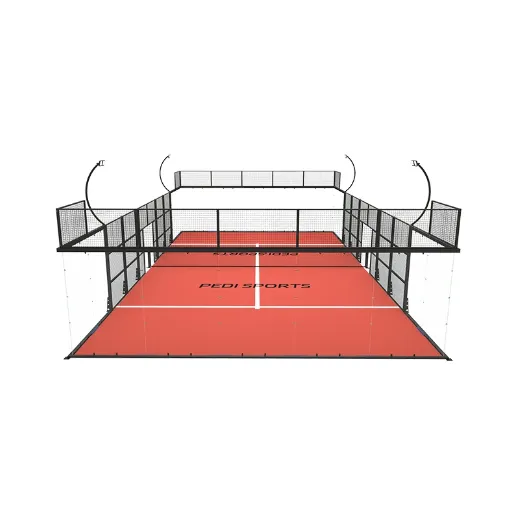
Create one specification sheet and send it to every supplier. Use the same quantity, site information, equipment list, delivery destination, and requested services. A consistent request makes padel court cost differences easier to explain.
Check the quote before comparing the total
For each padel court cost proposal, confirm:
- The model, dimensions, materials, finish, and supplied components.
- Optional items and services that remain outside the price.
- Currency, tax basis, payment schedule, and validity.
- Transport destination, unloading responsibilities, and handling arrangements.
- Installation support, local work requirements, and handover documents.
- Written warranty terms and the procedure for replacement parts.
A certificate should identify the item and scope it covers. Do not treat a component document as approval of the entire venue. Ask for documentation relevant to the quoted configuration and the project’s requirements.
Review supplier capability as well as price. Our manufacturer selection guide provides questions for that assessment. Then return to the budget sheet and record the cost of any missing work.
Clarify differences before negotiating
Illustrative scenario: A resort comparing two proposals. One supplier prices delivery to a port; the other prices delivery to site. The resort adds inland transport and unloading to the first scope before comparing them. The exercise identifies a scope difference, without assuming which supplier offers better value.
Apply that method to lighting, turf, assembly, and spares. If you cannot explain a difference, ask for clarification. A lower padel court cost total is meaningful only after the specifications and responsibilities are comparable.
When your specification is ready, send PEDI your quotation checklist and request separate equipment, delivery, and installation-support lines.
Plan maintenance and your next step
The opening budget is only part of ownership. Keep routine care, inspection, repairs, and replacement allowances separate from the initial padel court cost. Use the supplied maintenance instructions to set the tasks and intervals for your court.
The original guide’s practical maintenance categories remain useful: clearing debris, caring for turf and infill, cleaning glass, checking lighting, and inspecting structural components. The method and frequency should follow the actual system’s instructions. Repairs and safety concerns require appropriate professional attention.
Do not assign the same replacement schedule to turf, lighting, glass, and the structure. Obtain component-specific information and record the conditions behind any service-life claim. A warranty period and an expected service life describe different things.
Prepare a useful enquiry
Start with your location, number of courts, venue type, preferred configuration, and site plan. Include photos or information about the existing base. State the delivery point and describe the local works and installation team you already have.
Ask for the price basis, packing list, drawings needed by your local team, exclusions, and quote validity. A padel court cost enquiry with those inputs gives the supplier a clearer scope to price. It also gives you a better starting point for local contractor estimates.
Conclusion
Build your padel court cost budget around a defined project rather than a single headline price. Match specifications, separate equipment from civil works, and keep assumptions visible. Use published examples to understand scope, then replace them with current quotes for your site.
For a project-specific equipment proposal, contact PEDI for an itemised quote. Share your country, court quantity, preferred model, and site details so the enquiry addresses the configuration you intend to buy.
Frequently asked questions
What is the average padel court cost in 2026?
A reliable average needs a defined country, specification, and project scope. Equipment-only prices cannot represent installed courts or complete venues. Ask for current quotes on the same basis, and use the dated UK example above only as a scope reference.
Can I reuse an existing concrete base?
Reuse depends on the existing base and the selected court’s requirements. Have its suitability, drainage, and fixing arrangements assessed before removing groundwork from the budget. An existing slab does not automatically mean zero preparation cost.
Does a panoramic court always cost more?
Compare actual quotations for matched quantities and services. Structure, glass, finish, accessories, and delivery affect the result. Use the padel court range to identify configurations, then request comparable prices.
Is installation included in the package price?
Only when the quotation says so. Assembly guidance, on-site labour, lifting equipment, electrical connection, and civil works are different services. List each responsibility to avoid gaps in your padel court cost sheet.
How should I budget for maintenance?
Use the court’s maintenance instructions, local service prices, and replacement-part information. Keep routine spending and occasional replacements on separate lines. Revise allowances as actual usage and inspection records become available.
Will a padel club pay back its investment quickly?
The result depends on total investment, demand, pricing, and operating expenses. A court quote cannot establish a payback period. Build a separate operating model with documented inputs and test different occupancy assumptions before making an investment decision.