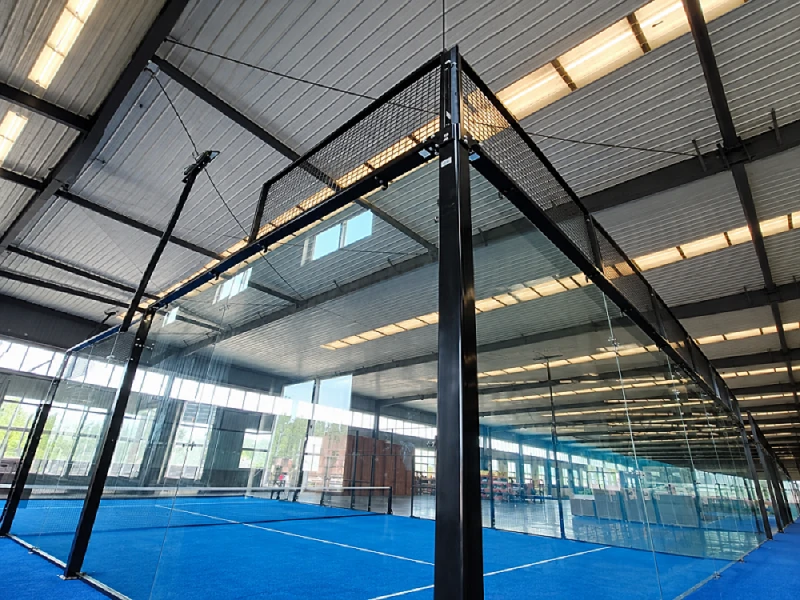
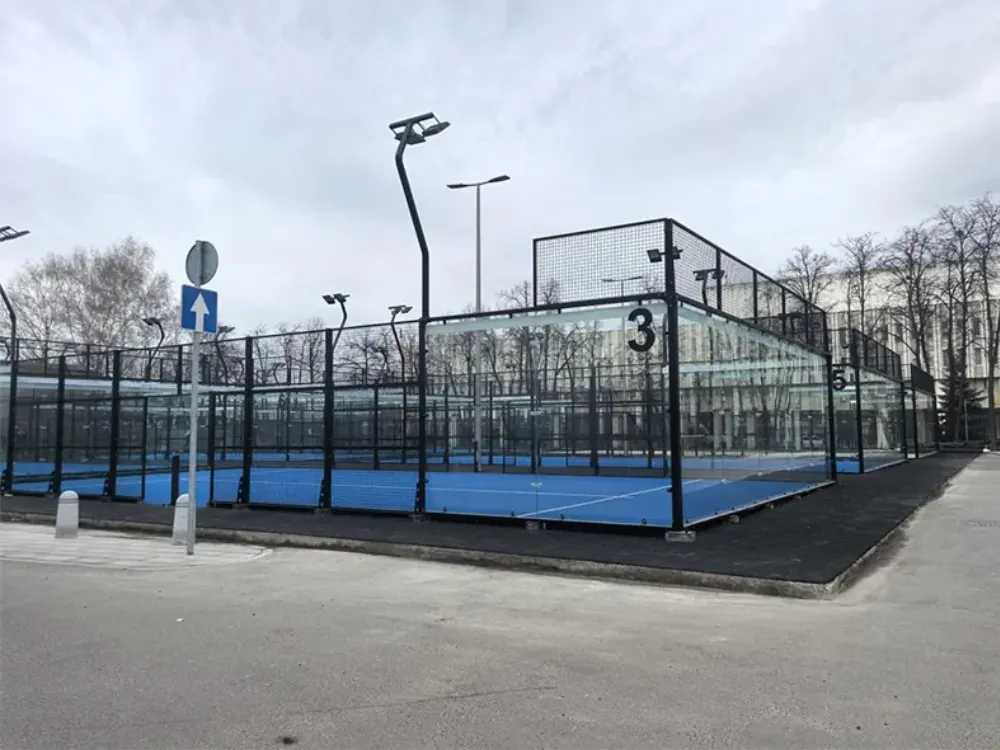
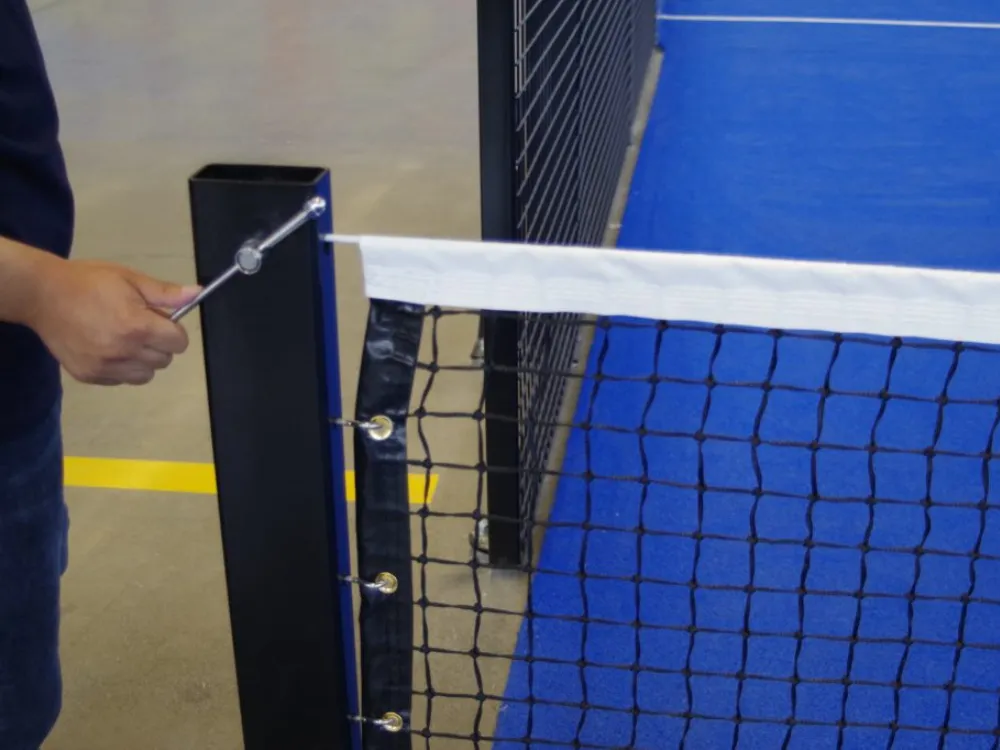
Choose a padel court manufacturer by checking project fit, the business supplying the system, supporting documents, quote scope, and after-sales terms. Ask each shortlisted company to answer the same questions and support its answers with relevant records.
A polished catalogue can introduce a court, but it won’t tell you who checks the foundation interface or what a warranty excludes. Those details matter when your equipment supplier and local contractor work under separate agreements. This guide turns the usual buying criteria into questions, evidence requests, and decisions you can record.
Key takeaways
- Give each supplier the same site brief and proposed configuration.
- Check who manufactures, supplies, installs, and supports each part of the project.
- Match drawings and supporting documents to the actual model being quoted.
- Compare included work and delivery boundaries before comparing totals.
- Agree warranty coverage, maintenance duties, and the process for reporting an issue.
If you’re preparing a shortlist, send PEDI your location, court count, and project brief. Request an equipment proposal with a clear configuration and supply scope, then review the local works with your appointed team.
Start with your project requirements
Give suppliers a common starting point
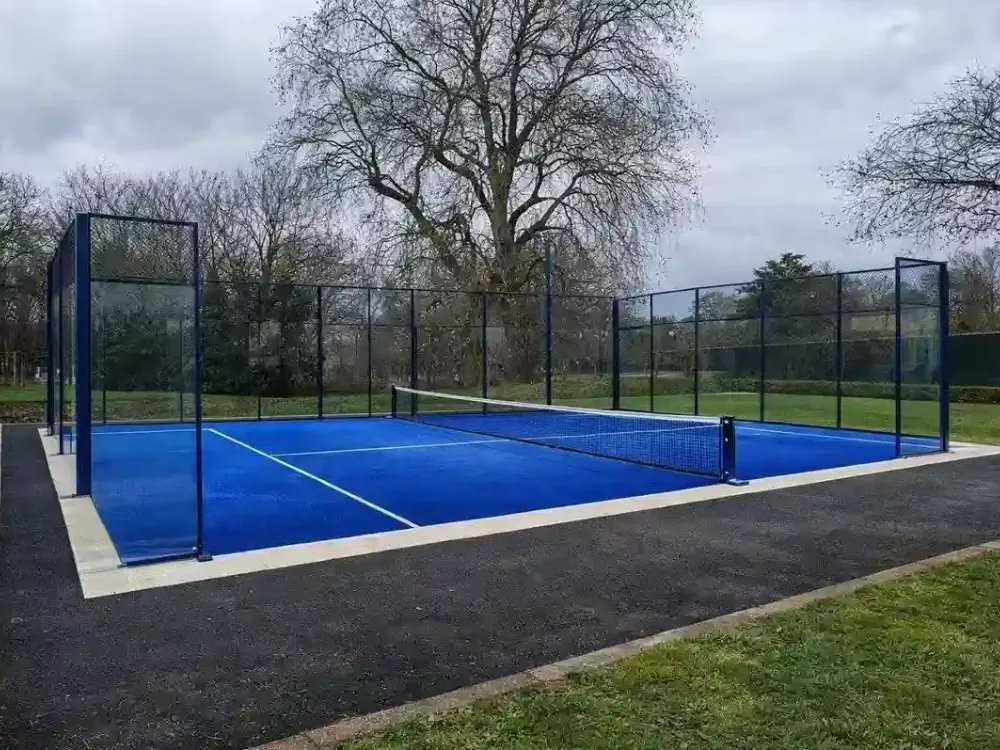
A padel court manufacturer needs more than a request for its lowest price. State the country, venue type, court quantity, and whether the project is indoors, outdoors, or under a proposed roof. Include a measured plan if one is available and identify what still needs checking.
Explain who will use the venue and what configuration you are considering. A club, school, hotel, and distributor may ask different questions about access, branding, documentation, and ongoing support. Share those needs before the quotation becomes the basis for an order.
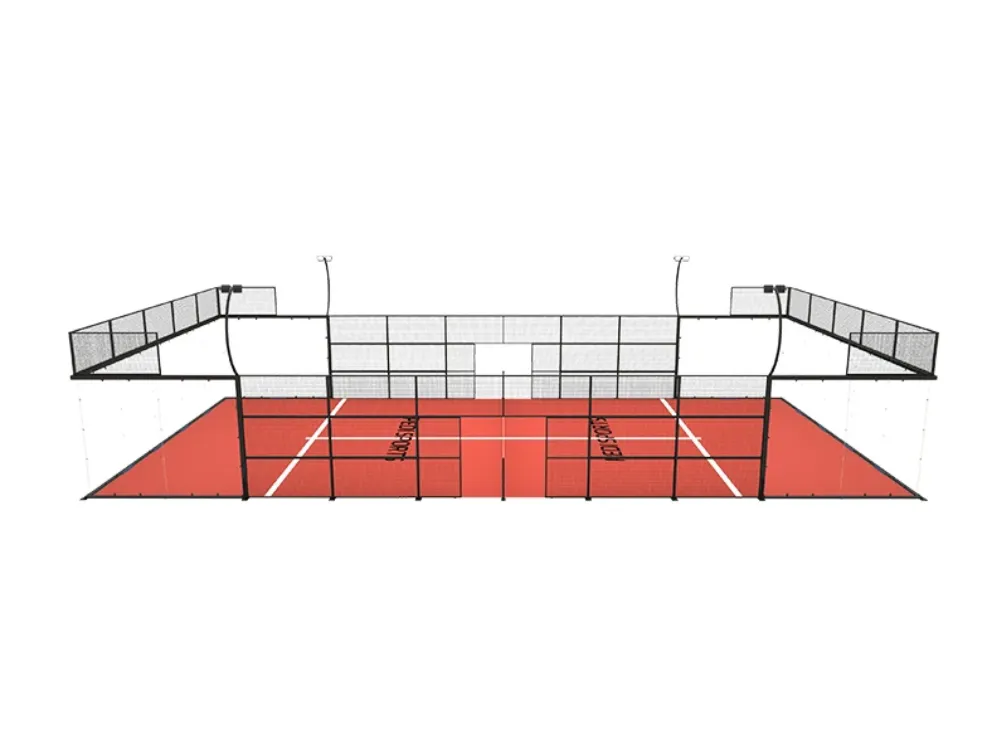
Use the court dimensions and site space guide to distinguish the playing area from the system footprint and whole site. Ask the padel court manufacturer for the selected model’s layout. Your local designer can then review that information against the measured location.
Separate facts from assumptions
Label sketches, unconfirmed dates, and proposed site arrangements honestly. Ask which missing facts affect the quote. Find out what the team needs before design or production can start. Keep a dated question log with a person responsible for each answer.
Illustrative scenario: A hotel asks for a court on an existing paved area. Its project lead sends the plan to the supplier but marks the base condition as unverified. The local professional assesses the existing work before the owner treats reuse as part of the budget.
The buying decision stays open until the relevant evidence is available. A padel court manufacturer can provide system information, while the appointed local team assesses the site. Neither role should disappear into an assumed promise of a complete package.
Verify the padel court manufacturer and its supply scope
Identify the business and its role
Ask for the legal business name on the proposal and clarify who will sign the supply agreement. Check how that entity relates to the factory, sales office, brand, and after-sales contact. If different parties hold those roles, record the arrangement rather than assuming they are interchangeable.
A padel court manufacturer may make some parts and buy others. Ask what is produced in-house, what is bought in, and how the supplied parts are checked. A bought-in part is not by itself a sign of poor quality. Ask who sets its spec, checks it, and supports it.
Factory visits, a live production walkthrough, and relevant inspection records can inform due diligence. Ask how those records relate to the court on offer. A photograph of machinery alone does not establish the quality or availability of your order.
Turn experience into relevant evidence
Request examples that resemble your configuration and location conditions. Ask what the company supplied and what local parties completed. For each reference, check who supplied the court and who did the local work. Ask which tasks the supplier completed.
For any padel court manufacturer claiming a particular output or delivery capability, ask what that means for your proposed order. Discuss the current workload, chosen model, order size, and files still needed. An annual production figure cannot by itself establish an available dispatch date.
PEDI’s manufacturer and supplier website introduces its court offering. Use that introduction to start a specific document and scope review. Assess the resulting proposal rather than treating general brand statements as your project’s contract.
Check drawings, materials, and supporting documents
Match the technical file to the quoted court
Ask the padel court manufacturer to identify the model, options, drawing revisions, and components included. Check the status of each drawing. Is it an early layout or a file issued for a stated task? The local team needs to know which information it can use and what still requires confirmation.
| Topic | Ask for | Check before accepting |
|---|---|---|
| Court layout | Model-specific plan and relevant interfaces | Configuration, revision, and dimensions match the proposal |
| Steel and protection | Material and finish information for the supplied system | The description identifies the proposed components and intended conditions |
| Glass and enclosure | Product specifications and applicable supporting documents | Documents relate to the supplied panels and system |
| Surface and net | Named products, installation information, and care instructions | Quoted products and options are consistent |
| Lighting | Supplied equipment information and connection boundary | Local electrical responsibilities are assigned |
| Packing and assembly | Available handling information and current manual | Delivery and installer inputs are clear |
The FIP Rules of Padel provide a primary reference for playing requirements. Their glass section also refers to the court homologation annex. Request the applicable product evidence rather than treating a general reference to FIP as proof of every material claim.
Read the scope of each compliance document
Ask the padel court manufacturer which document supports each claim and what product it covers. Record the issuer, reference, named entity, and version where relevant. Ask the right reviewer to check that it applies to your product and market.
The EU’s official CE marking guidance explains that CE marking applies to products covered by specific EU rules. A general badge should not become a claim that every element of a venue has approval. The document review needs to address the actual supplied products.
Illustrative scenario: A buyer receives a report for a lighting component while comparing complete courts. The buyer asks the supplier to identify its scope and provide the separate information needed for the remaining system. The report remains useful for what it covers; it does not settle unrelated questions.
Keep unresolved items visible. If a padel court manufacturer cannot yet supply a requested file, ask when it will be available and which decision depends on it. Ask your reviewers what to do next. They may need more facts before you buy.
Use a simple status for each file: received, under review, accepted for a stated purpose, or still open. Name the person who will review it. A file in your inbox is not the same as a file your team has checked.
Compare padel court manufacturer quotes on the same basis
Compare scope before price
Give every padel court manufacturer the same comparison sheet. Record the model, quantity, currency, quotation date, validity, and named delivery point. Ask whether transport, import tasks, unloading, installation, and local works are included, excluded, or awaiting assessment.
| Comparison field | Supplier A | Supplier B | Evidence or unresolved question |
|---|---|---|---|
| Model and supplied components | Enter response | Enter response | Attach configuration and quotation |
| Delivery boundary | Enter response | Enter response | Name destination and receiving duties |
| Installation support | Enter response | Enter response | Distinguish guidance, labor, travel, and equipment |
| Local works and connections | Enter response | Enter response | Assign items outside the supply package |
| Warranty and spare parts | Enter response | Enter response | Attach terms and component coverage |
| Programme assumptions | Enter response | Enter response | List inputs needed before dates are confirmed |
Use the itemised court budget guide for the wider cost framework. Here, the purpose is to make unlike offers visible. A lower supply figure may cover a different configuration or a different end point in the delivery process.
Record how changes will be handled
Ask how the padel court manufacturer prices a change after quotation or order. Confirm who can approve a revised configuration and how the decision reaches the local designer and installer. A change to one package may affect another team’s documents or work.
Do not assume that buying direct always produces a lower finished cost or a shorter project. Compare the actual proposals and responsibilities. A distributor’s local service and a factory’s supply offer may cover different tasks, so the purchasing route alone does not settle value.
Keep a short decision record for the selected padel court manufacturer: what met the brief, which documents were reviewed, and which conditions remain open. That record helps the wider team understand the purchase after the original discussions are over.
Ask what you can check before dispatch and on arrival. Agree how the supplier will record the supplied items and how your receiving team will report a mismatch. Keep the packing list and photos with the order records. If an item differs from the agreed scope, record the issue and ask the responsible party for a response before accepting a substitute.
Agree delivery, installation support, and local responsibilities
Define the boundary between supply and site work
Ask who handles local design, base work, drainage, services, unloading, assembly, and checks. A padel court manufacturer providing installation guidance is not automatically providing local labor or civil engineering. Put the actual support arrangement in writing.
UK buyers can consult the LTA’s court construction guidance alongside advice for their own site. Its UK context matters. For international projects, appoint the relevant local professionals rather than applying one country’s arrangements everywhere.
The construction and procurement guide connects these roles across the whole project. Keep this supplier comparison focused on what each party promises to provide and what information the next party needs.
Connect delivery to a ready site
Ask the padel court manufacturer to distinguish production, dispatch, transport, and arrival milestones. Separately confirm local design and site readiness with the responsible team. The installation readiness guide explains why an equipment date alone cannot define an opening date.
Before booking the installer, agree how the team will confirm the required starting conditions. Identify who checks access, storage, handling, local works, and outstanding documents. Record what happens if the site or delivery position changes.
Confirm warranty terms and prepare your enquiry
Ask what the warranty covers
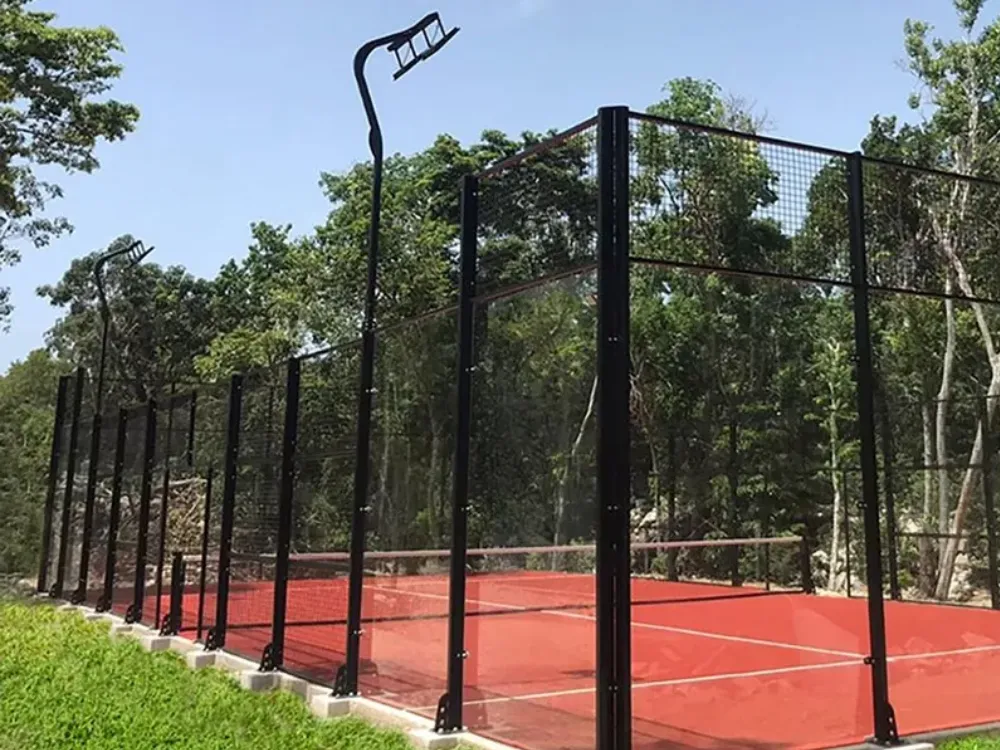
Request the written terms from the padel court manufacturer before ordering. Check component coverage, start date, exclusions, maintenance duties, and how a claim is reported. Ask which costs and actions sit with the supplier, installer, and owner when an issue needs investigation.
Ask how to name and order spare parts. Keep the model, part codes, delivery records, and final layout in the venue file. Look past the headline. Your venue team needs terms it can read and follow.
Illustrative scenario: A club compares two offers with different warranty headlines. Its buyer lists the covered components and excluded work for each, then asks about the unclear items. The team compares the written coverage rather than choosing by the largest number alone.
Send a brief that supports an answer
Your enquiry should include the location, venue use, court count, preferred configuration, available site plan, and appointed local roles. Name the delivery point and target dates. Mark what is still unknown. Ask for the equipment proposal, relevant document list, support scope, and warranty terms.
Explore the PEDI court range if you need a starting point for configuration. Then request a project-specific equipment proposal with your brief attached. Use the response to compare the padel court manufacturer on evidence, scope, and support that match your venue.
Frequently asked questions
How do I verify a padel court manufacturer?
Check the business named on the proposal, its manufacturing role, and the parties responsible for the supplied components. Request relevant production or inspection evidence and project references. Match those records to the system being offered rather than relying on factory photographs alone.
Which documents should I request before ordering?
Ask the padel court manufacturer for the model configuration, current drawings, supporting product documents, supply scope, installation information, and warranty terms. Identify files that depend on later project decisions and agree when they are needed.
Is buying directly from the factory always better?
Compare the actual offer. Direct supply and distribution arrangements can include different services and local responsibilities. Assess configuration, total scope, communication, delivery, installation support, and after-sales terms before deciding which arrangement suits the project.
Does a court quotation include the foundation and installation?
Only if those tasks are expressly included. Ask the padel court manufacturer to separate equipment supply, guidance, installation labor, local design, foundations, drainage, and electrical work. Assign every excluded task to the relevant project party.
How should I compare delivery dates?
Ask what event each date describes and what inputs it assumes. Production release, dispatch, arrival, site readiness, assembly, and venue opening are separate milestones. Confirm each with its responsible party before making a public opening commitment.
What should I check in a warranty?
Review component coverage, conditions, exclusions, maintenance records, and the claims process. Ask the padel court manufacturer how spare parts and investigation costs are handled. Keep the agreed terms with the venue’s final project records.