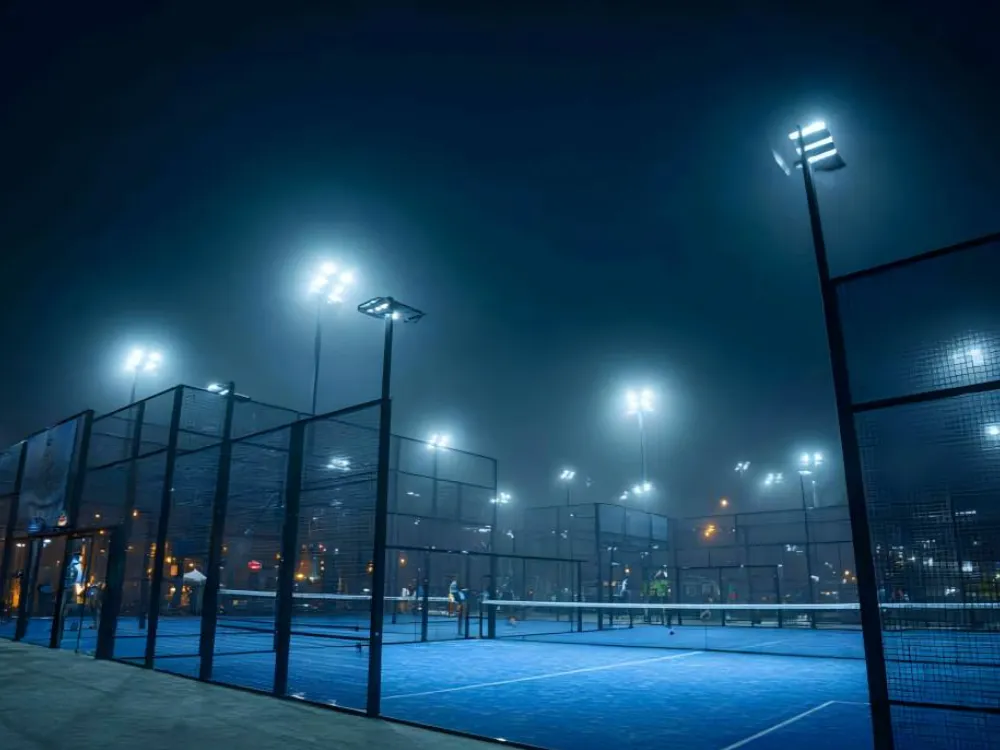
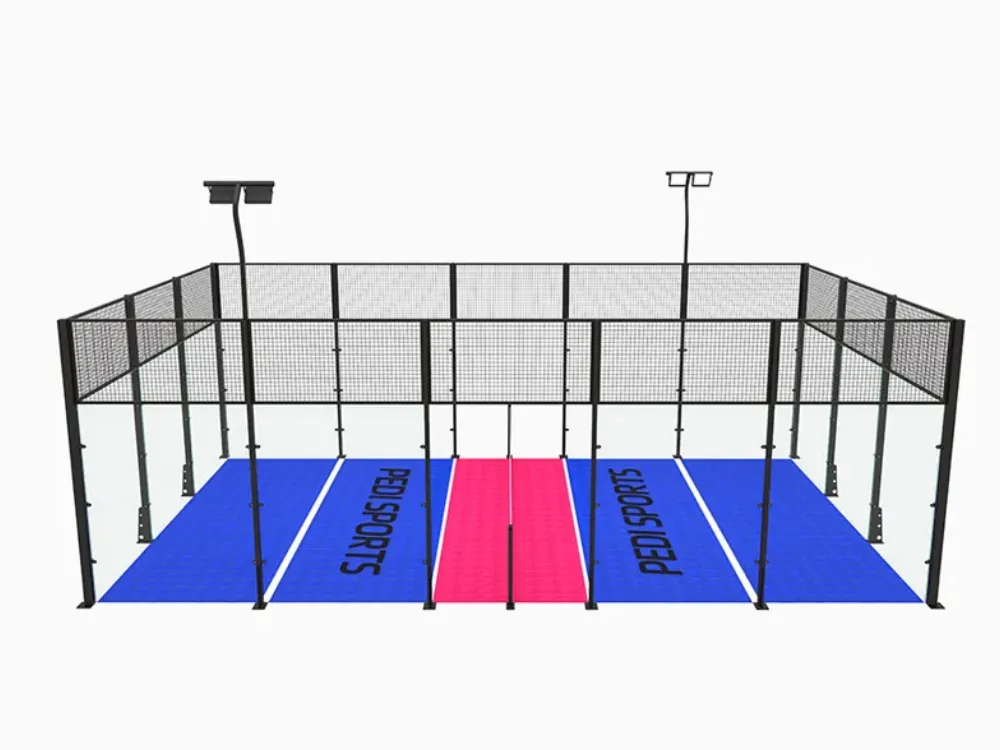
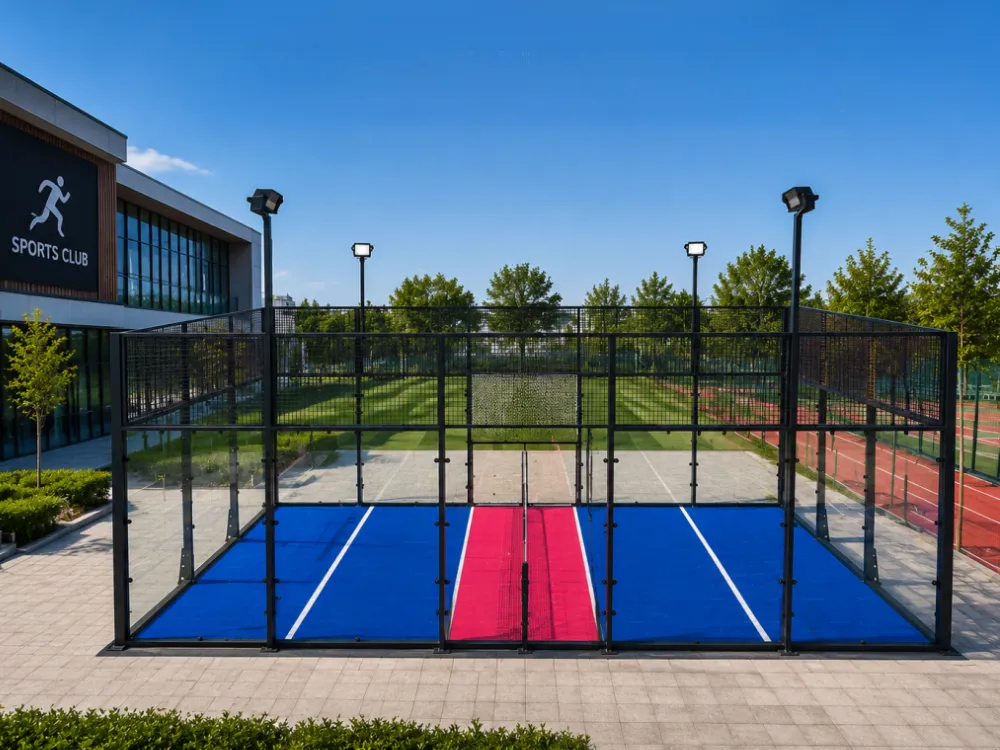
Padel court lighting requirements depend on the level of play, indoor or outdoor setting, and project rules. State the average light level, how evenly it is spread, mounting clearance, and glare limits together. A wattage label or a single lux reading cannot show that the lights meet those requirements.
A higher number on a quote can still leave you with the wrong design brief. Match play may need a different target from casual club use. A roof changes where you can mount lights, but doesn’t settle which lighting category applies. And a test with every nearby court switched on may hide a problem during normal bookings.
This guide helps you turn padel court lighting requirements into a brief suppliers can price and installers can test. It explains which source to use, where to measure height, and how to check the finished work. The worked examples use assumed values; they are not results from a PEDI court.
For equipment selection and electricity budgeting, explore our separate guide to lighting layouts, fixtures, and running costs.
Key Takeaways
- The 2025 FIP Tour horizontal reference table distinguishes indoor and outdoor use; confirm the current applicable event specification before procurement.
- Uniformity means minimum illuminance divided by average illuminance. Both the average and the ratio need to pass their agreed targets.
- FIP’s rules applying from January 2026 specify a 6 m projector-underside minimum, with a conditional 8 m suggestion for new facilities and qualifications for exterior positions.
- Agree the grid, operating scenes, test conditions, correction process, and records before ordering.
Which padel court lighting requirements apply?
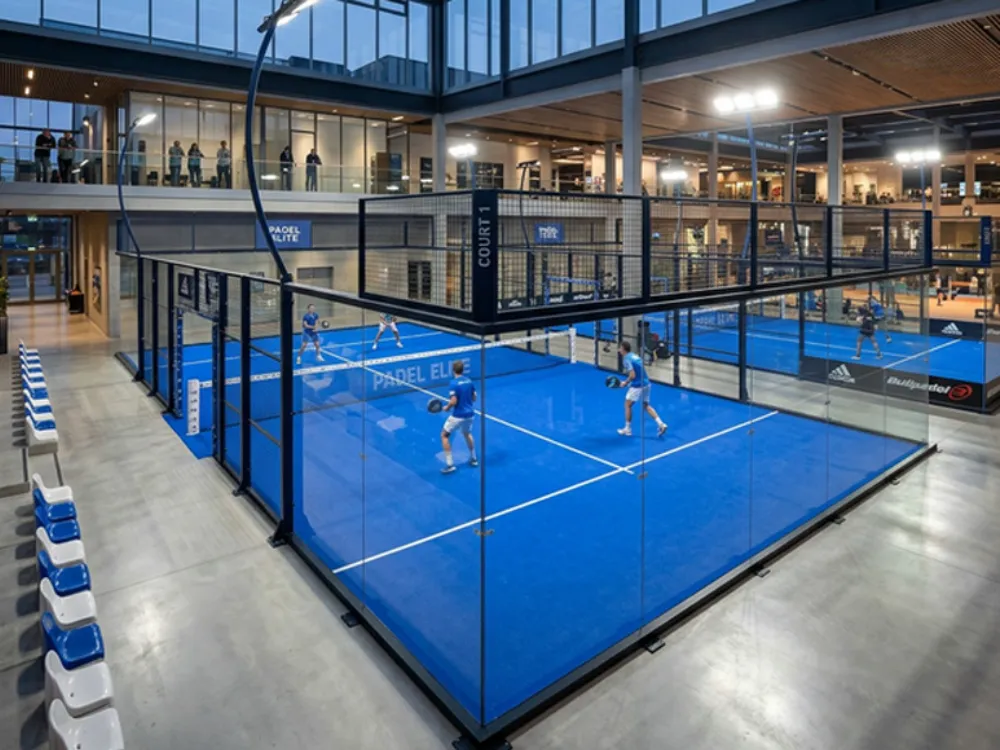
Start by writing down how the court will be used: casual play, coaching, local matches, or a named event. Then list who sets each requirement. Padel court lighting requirements can come from a federation, event organizer, local authority, electrical designer, and the buyer’s operating brief.
Assign each part of the work:
- Use the sports brief to define playing conditions.
- Check planning conditions for light spill and hours of use.
- Have the relevant designers address electrical and structural rules.
These checks answer different questions. A pass on one doesn’t show that the others have been met.
Keep each reference attached to its scope
The following table is a dated reference from the 2025 CUPRA FIP Tour rulebook, section 11.1.7, PDF page 94. It is not confirmation of the rules governing a particular 2026 event. Obtain the current specification from the organizer or relevant federation before using it for procurement.
| Setting and use in the 2025 FIP document | Average horizontal illuminance | Uniformity: minimum / average |
|---|---|---|
| Outdoor: local competition, training, school, and recreation | 200 lux | 0.5 |
| Outdoor: national and international competition | 500 lux | 0.7 |
| Indoor: local competition, training, school, and recreation | 300 lux | 0.5 |
| Indoor: national and international competition | 750 lux | 0.7 |
Source: 2025 CUPRA FIP Tour rulebook, using the file identified as 11_03_25.
UK construction guidance uses a different table. SAPCA’s September 2025 code of practice, section 3.3, lists 500 lux average with 0.7 uniformity for national and international competition. Its lower row lists 300 lux with 0.5 for regional competition, school and recreational use, and indoor courts, under an outdoor-and-indoor header.
Don’t use SAPCA’s 500 lux competition figure to replace the FIP reference’s 750 lux indoor figure. Record which document and category the project adopts. Where padel court lighting standards differ, ask the responsible designer and approving organization to resolve applicability in writing.
A covered court needs the same clarification. Open sides, roof structure, background light, and event classification all need describing. Use our covered court planning guide to coordinate the building arrangement before selecting an indoor or outdoor category.
Read padel court lighting lux and uniformity together
Lux measures how much light reaches a surface. Lumens describe light output; watts describe power use. Neither a lumen total nor a wattage package shows how light spreads across the court.
Check the plane used in the report:
- Horizontal illuminance measures light on a flat horizontal plane, such as the playing surface.
- Vertical illuminance measures light on an upright plane and matters for camera-facing views.
Padel court lighting lux values only help when you know what the report measures. A camera-facing reading and a floor reading describe different results.
Check the darkest point and the average
For the minimum-to-average definition:
Uniformity = minimum illuminance / average illuminance.
A hypothetical grid with a 500 lux average and a 200 lux minimum gives 200 / 500 = 0.40. It fails a specified 0.70 ratio despite achieving the chosen average. At an average of 500 lux, a minimum of 350 lux would correspond to 0.70. Recalculate the ratio when either value changes.
This is why padel court lighting requirements should state the average, the uniformity formula, and the calculation area together. A selected bright reading at the net cannot stand in for the full grid. Keep the individual readings so the result can be checked.
Separate new-installation readings from maintained output
Maintained illuminance is the light level a design aims to keep after allowed light losses over a stated period. Initial illuminance describes the new lights. Compare like with like: a new-court test and a prediction for later use need different checks.
SAPCA section 3.3 gives a maintenance factor of 0.9. With that factor, a 300 lux maintained target needs about 333 lux initially: 300 / 0.9. This simple average calculation doesn’t predict each point or prove that all requirements are met.
Ask how the designer allowed for dirt, ageing parts, and cleaning. Padel court lighting requirements should link those assumptions to a care schedule the club can follow. The first test is not a promise of unchanged light output for life.
Padel court lighting height, placement, and glare
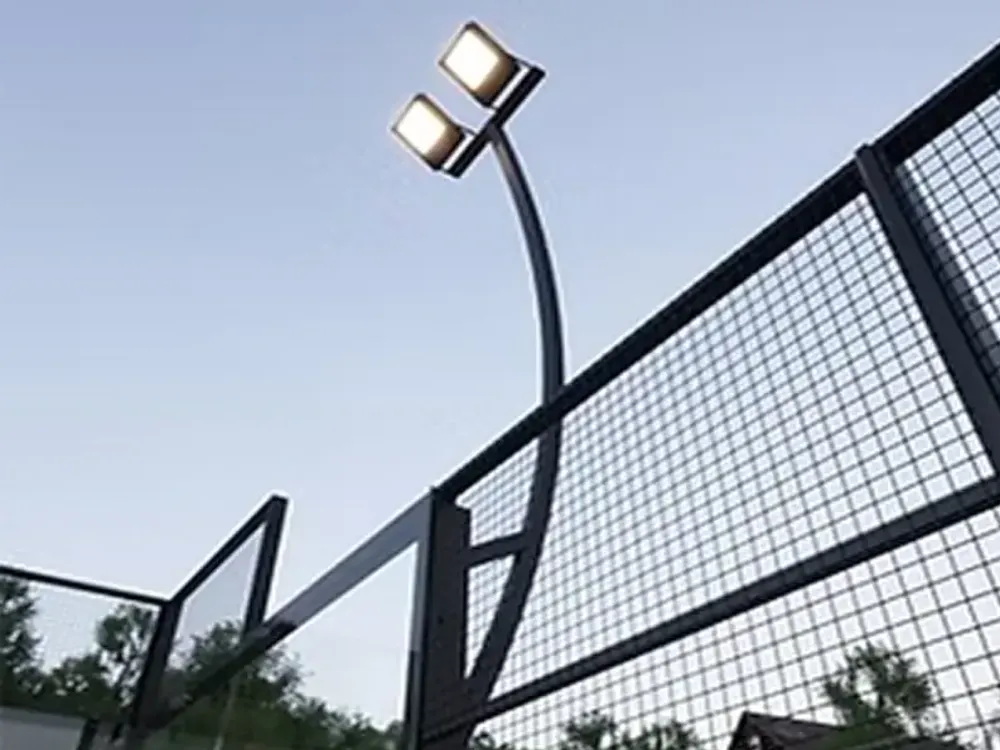
Measure padel court lighting height to the underside of the installed projector, including its final bracket and tilt. A pole’s nominal length doesn’t establish that clearance. The distinction matters when a fitting hangs below its support or projects over the playing area.
The FIP Rules of Padel applying from January 2026, printed page 8, state a 6 m minimum from ground to the lower part of the projectors. For new facilities, they suggest 8 m when projectors sit within the court’s vertical projection. The text also allows different heights for lights outside the court walls. Have the designer resolve the actual arrangement against the applicable rules.
Coordinate supports before fabrication
Fictional design example: Noor is checking a covered court drawing. The supplier marks the support line at 6 m, but the bracket puts the projector underside at 5.8 m over the court. Noor asks for a new section drawing before the parts are made.
The team adjusts the mount and checks how it fits below the roof. They resolve the height issue on the drawing before ordering equipment.
That example illustrates a dimensional check, not approval of a complete design. Ask for elevations showing the lowest fitting, brackets, trusses, and services. Coordinate these with court space and clearance planning.
FIP also requires poles outside the court. If they occupy the safety area, out-of-court play is not permitted under that clause. Check the planned playing format and access routes before fixing foundation positions. Padel court lighting requirements belong on the coordinated site drawing, alongside the court and surrounding space.
Assess what players and neighbors see
Brightness on the floor doesn’t describe glare during a lob. Have the designer assess player viewing directions, glass reflections, backgrounds, and light arriving from adjacent courts. Specify the applicable glare assessment method and thresholds for the project.
For outdoor padel court lighting, include nearby windows, site edges, allowed hours of use, and local restrictions. For indoor padel court lighting, check nearby courts and bright surfaces too. An “anti-glare” label doesn’t resolve those site conditions. The cited sources don’t set one glare-rating or light-colour rule for every venue.
Turn lighting standards into a supplier specification
Issue the same padel court lighting requirements to every bidder. That makes a lower equipment price easier to interpret: you can see whether it covers the same result, supporting documents, and local work.
Keep a short requirements register with a document reference, a responsible party, and an evidence status for each item. Mark an unresolved event target as awaiting confirmation. Don’t turn an unanswered question into an assumed pass.
| Requirement to agree | Evidence to request |
|---|---|
| Intended play and applicable rules | Named source, edition, category, and organizer confirmation where relevant |
| Proposed equipment | Exact model, optic, driver, quantity, and matching IES or LDT photometric data |
| Installed geometry | Positions, underside heights, aiming, brackets, and surrounding structures |
| Predicted performance | Average, minimum, uniformity formula, plane, grid, and maintained/initial basis |
| Operating scenes | Settings for each approved play mode and assumptions about neighboring courts |
| Environment and local works | Site suitability, electrical/structural scope, approvals, and assigned responsibilities |
| Acceptance and care | Test procedure, records, correction/retest terms, cleaning, and replacement arrangements |
The photometric file describes how the specified fitting distributes light. The calculation uses it with the proposed geometry. If an optic, driver output, mounting position, or fixture changes, ask the designer whether the report needs revision. Don’t accept a different model solely because its wattage matches.
Keep the evidence for padel court lighting requirements in separate groups:
- The maker’s product documents describe the exact equipment.
- The designer’s report predicts how it will light this court.
- The installer’s test record shows what was fitted and measured.
- The organizer’s venue decision addresses the planned event.
Each document answers a different question. Ask for the evidence that matches the claim.
Before approving the package, send the supplier your marked-up requirements register and ask them to identify every exclusion. Agree who supplies the design, supports, electrical work, measurements, and corrections. Court equipment supply alone doesn’t establish that local installation or event approval is included.
Check padel court lighting requirements at handover
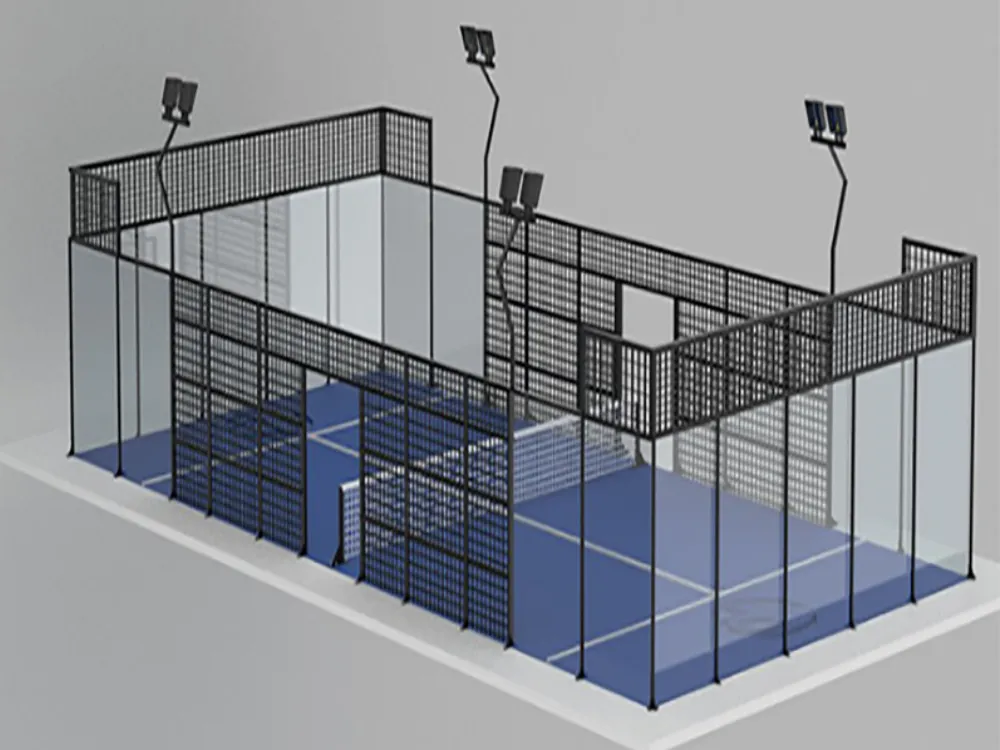
Agree the test procedure while the purchase is still being negotiated. SAPCA section 3.5 describes client-requested completion performance testing against the submitted design. Include the testing you need in the contract; don’t assume that every equipment quotation contains it.
Make the test reproducible
Ask a competent tester to use the agreed grid, plane, and operating settings. SAPCA section 3.4 suggests a suitable 1 m × 1 m calculation grid centred on the net line. If the project adopts that approach, retain the grid coordinates and use the agreed comparison procedure for completion measurements.
Record these details with the results:
- Court identification, drawing revision, test date, and tester.
- Installed models, optics, mounting heights, aiming, and control settings.
- Instrument identification, calibration information, and measurement plane.
- Daylight or background-light conditions, neighboring-court status, and relevant environmental conditions.
- Every grid reading, calculated average, minimum, uniformity, and comparison basis.
- Defects, responsible parties, correction dates, and required retests.
Padel court lighting requirements need to identify whether the completion comparison concerns initial readings or maintained predictions. Agree how the maintenance factor enters that comparison. Don’t multiply a reading by an unexplained allowance to make a failed result appear compliant.
Test the scene the club will use
Fictional handover example: Ellis books a test for Court 2. The first readings are taken with all nearby courts lit, though the club sells single-court evening bookings. Ellis asks the tester to run the agreed standalone booking scene too.
A low-reading area appears, and the installer checks the aiming. The court stays on the correction list until the agreed tests have been run again and recorded.
This example shows why the test record needs the operating scene. After a correction, check the affected performance again, including glare and spill where relevant. Improving one dark patch can change conditions elsewhere. Keep the revised drawing and settings with the final records.
Treat television requirements separately
The FIP general rules and FIP Promises Tour rulebook, file 10_02_2026, section 11.1.7, specify at least 1,000 lux vertical for television, potentially increasing with camera distance. That is separate from a horizontal court average.
For a planned production, obtain camera positions and the current event and broadcaster requirements. Include flicker, colour, and camera-facing assessment criteria where required. Meeting one illuminance number doesn’t demonstrate complete broadcast suitability.
Frequently asked questions
Is 200 lux enough for a padel court?
It depends on the applicable specification. The dated 2025 FIP Tour table lists 200 lux average with 0.5 uniformity for outdoor local competition, training, school, and recreational use. That reference doesn’t establish current approval for your project; confirm the source, category, and other criteria together.
Are indoor and outdoor requirements different?
They can be. The 2025 FIP reference distinguishes indoor and outdoor horizontal averages, while SAPCA’s UK construction table uses different categories. Identify the adopted document before comparing indoor padel court lighting with an outdoor proposal. A roof alone doesn’t determine the classification.
Must new court lights be 8 m high?
FIP’s 2026 general rules suggest 8 m for new facilities when projectors are within the court’s vertical projection. The clause also states a 6 m underside minimum and qualifications for exterior positions. Have the designer confirm how it applies to the actual arrangement.
Does an eight-light, 200 W package prove compliance?
No. Fixture count and power do not establish average illuminance, uniformity, glare, or clearance. Check the exact photometric calculation and installed geometry against the agreed padel court lighting requirements, then follow the contracted acceptance procedure.
Does 1,000 lux mean a venue is broadcast-ready?
No. The cited FIP requirement concerns vertical illumination for television and can increase with camera distance. Ground-level horizontal readings answer a different question. Confirm the complete production specification, including the required camera and lighting assessments.
Prepare your lighting requirements before ordering
Build the specification around the decisions that affect your project: intended play, applicable document, venue classification, performance targets, mounting arrangement, and acceptance method. Resolve differences between sources before they become competing assumptions in supplier quotations.
Keep the supporting evidence connected. The calculation should identify the quoted equipment; the drawing should show its installed position; the handover record should identify the tested settings. Retain outstanding items until the responsible party provides the agreed evidence or correction. That gives the club a usable record when lights are adjusted or replaced later.
PEDI can discuss court selection and project specification needs. For a useful enquiry, provide your country and city, court count, venue type, intended playing level, available drawings, and any known event requirements. Include roof sections, nearby-property constraints, and your proposed booking schedule. Ask for the lighting deliverables and local responsibilities in writing.
Request a project quotation with your padel court lighting requirements so the proposed scope can be reviewed against your site, operating needs, and acceptance criteria.