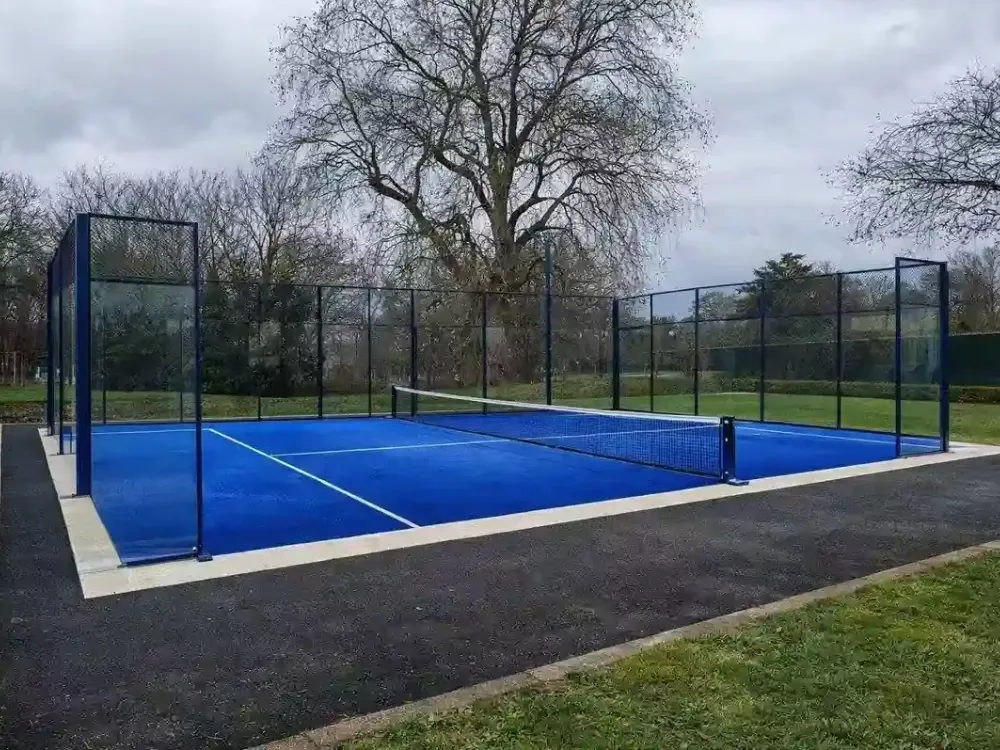
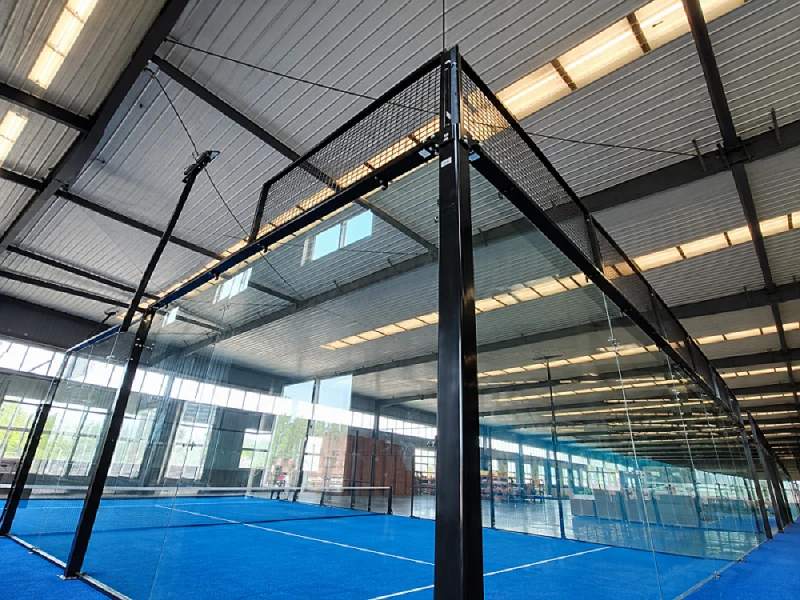
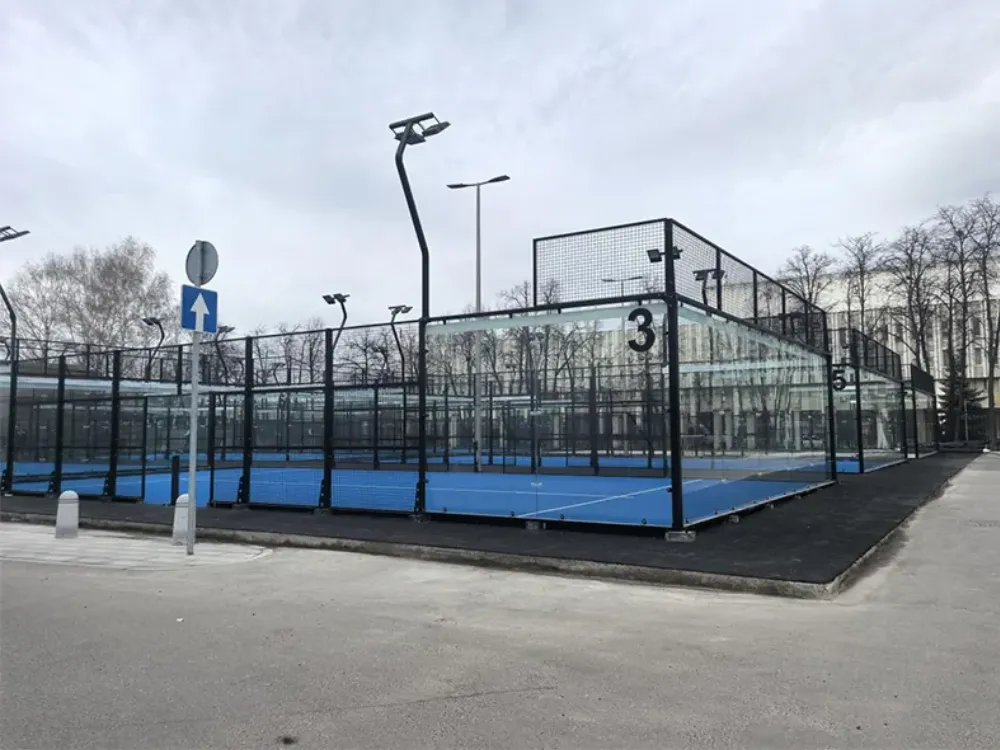
Padel court installation is the on-site assembly and checking of the selected court system. The full journey from purchase to opening also includes design, production, transport, local works, and any required approvals. Its duration depends on the project and the work completed before the crew arrives.
To plan an opening date, define each stage’s starting conditions and the evidence needed to finish it. A supplier’s assembly estimate cannot tell you when the base, delivery, and venue will all be ready. This guide explains how to coordinate those tasks and prepare a useful installation enquiry.
Key takeaways
- Separate the full project schedule from the on-site assembly period.
- Check site readiness before committing a crew to a date.
- Show production and local works as separate paths with agreed dependencies.
- Follow the supplied model documents for assembly and material waiting periods.
- Keep technical handover, local approvals, and commercial opening as distinct milestones.
Padel court installation versus the complete project
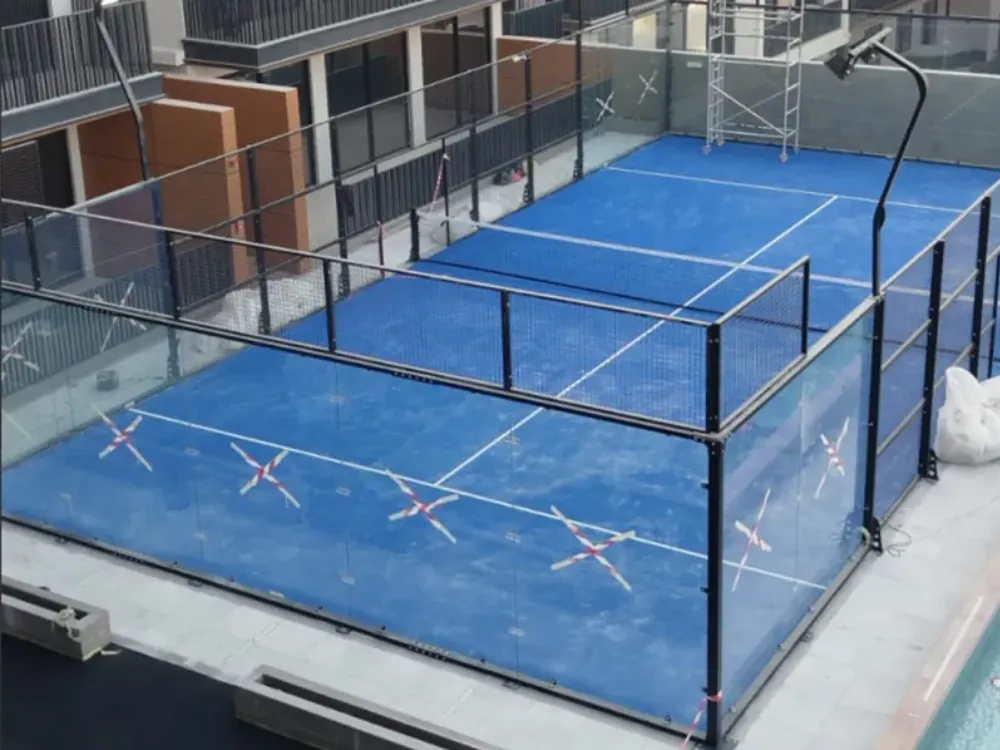
Start by agreeing what “installation” includes in your proposal. Some scopes cover court assembly and checks; others also include site services or additional supervision. List the included work rather than relying on the label alone.
Define the clock before discussing duration
A useful padel court installation estimate names the model, quantity, crew, equipment, weather assumptions, and site conditions. It also states whether the time includes unloading, electrical work, finishing, and handover.
Record the timing basis for every padel court installation stage. Is the estimate in working days or calendar days? What event starts the clock?
It might be drawing approval, a payment, delivery, or site release. State the agreed event beside the estimate.
| Schedule stage | Example starting condition | Completion evidence to agree |
|---|---|---|
| Specification and design | Project information received | Agreed configuration and current drawings |
| Production | Contractual production conditions met | Packing list and release information |
| Transport | Equipment ready for the agreed route | Delivery and handling records |
| Local works | Site design and work arrangements ready | Recorded site-readiness review |
| Assembly | Materials and site ready; crew mobilised | Model-specific inspection records |
| Handover and opening | Works completed and checked | Resolved issues and required release documents |
The LTA’s UK construction guidance provides a useful example of separating project design, works, and operating documentation. It is UK guidance, not a universal permit process or a PEDI delivery commitment.
Illustrative scenario: A club books a crew too early. Its equipment is ready to ship, but the local base work is still being reviewed. The club changes its plan from a fixed crew date to a conditional mobilisation date. It asks for site and delivery confirmation before making the final booking. This is a planning example, not a customer case or a claimed result.
For an initial scope discussion, send PEDI your model, quantity, destination, and site information. Ask which installation documents and support arrangements apply to the proposal.
Check site readiness before padel court installation
The equipment arriving does not make the site ready. A padel court installation readiness review should bring together the current court drawings, local works information, access arrangements, and the proposed crew’s needs.
Base, anchoring, and services
Confirm that the base and fixing information correspond to the selected system. The responsible local team should review the completed works against the applicable design and agreed acceptance conditions. Record any outstanding issues before assembly is scheduled.
Don’t replace the padel court installation review with a generic number of curing days. Use the applicable design requirements, material data, and site conditions to decide when work can proceed. A surface that looks finished is not proof that it is ready.
Check drainage routes and the agreed electrical interface. Identify what is already installed and what remains for the assembly team or local trade. Keep those responsibilities on the same site plan so that the work packages do not leave gaps.
Layout and access
Confirm the actual model footprint and its positions on the site. Mark entrances, fixed obstacles, overhead equipment, maintenance routes, and any surrounding venue works. Use the court dimensions and site-space guide to organise the measurements, then obtain the selected model’s current drawings.
Plan how the shipment will reach its unloading position. Check the available approach, handling space, storage, and access for the equipment selected by the responsible team. Separate public routes from the work area during the project.
| Readiness item | Information to confirm | Who must be identified |
|---|---|---|
| Base and fixing layout | Current design, completed work, and release conditions | Responsible designer and local works team |
| Drainage and services | Completed interfaces and remaining connections | Local contractors and relevant trades |
| Unloading and storage | Delivery point, handling arrangements, and protected storage | Logistics and site coordinator |
| Assembly documents | Model, drawing revision, and supplied instructions | Supplier and installation lead |
| Crew and equipment | Skills, equipment, and work arrangements for the system | Installation contractor |
| Outstanding issues | Open items, owners, and completion evidence | Project coordinator |
A padel court installation checklist should identify a person for every unresolved item. Avoid entries such as “contractor to confirm” when several contractors are involved. Name the party and the document or decision required.
Coordinate production, delivery, and local works
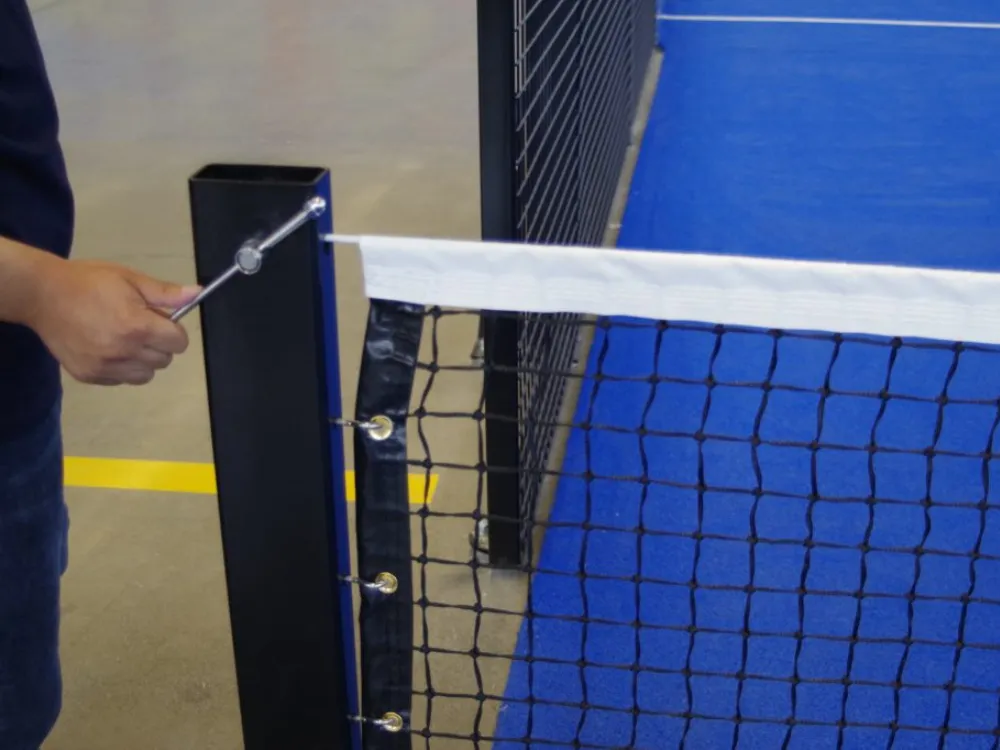
The original project stages remain useful: confirm the configuration, manufacture the equipment, transport it, prepare the site, assemble the court, and complete handover. The important change is to show how the stages depend on each other.
Use two planning paths
One path covers the court package and delivery. Another covers local design and site readiness. Some tasks can run alongside each other once the necessary information and approvals are in place. Do not assume that every task starts together
For the padel court installation date, identify the conditions that must be complete on both paths. The later unfinished requirement may control crew mobilisation. Once the project team agrees those conditions, it can update a schedule using actual estimates and records.
Specify the transport boundary
A shipping estimate should name the route and destination. Separate factory readiness, departure, arrival, customs processing, inland transport, and unloading as needed. A port-to-port duration is not a delivery-to-site promise.
Ask the freight provider and supplier which dates are estimates and which are confirmed. Update the padel court installation plan when they change. Don’t leave an old shipping allowance in the opening plan without checking it.
Illustrative scenario: Equipment arrives before the venue is ready. A buyer has a delivery date, but one local service connection remains outstanding. The project coordinator checks the storage plan and the remaining site task with its owner. The padel court installation booking is reviewed using both facts, rather than treating arrival as permission to assemble.
For a wider budget, keep logistics and local works on separate lines in your court cost planning. A schedule change can affect costs, but it does not establish a return on investment.
Review multi-court scheduling separately
Several courts may share deliveries, equipment, or crews. That can change the sequence, but it does not justify multiplying or dividing a single-court estimate automatically. Ask for a programme based on the actual quantity and site.
Record which areas will be released first and where materials will be stored. If the venue will open in stages, separate each area’s construction, inspection, and operating arrangements. The padel court installation programme should reflect those decisions.
Follow the selected system’s assembly documents
This is a project-planning guide, not an instruction manual for fastening, lifting, or electrical work. The supplied system documents and the responsible installation team determine the applicable sequence, methods, and checks.
Receive and identify the components
Check the shipment against the packing list and record discrepancies or visible damage through the agreed procedure. Keep component labels and drawings available to the team. Confirm that the documents match the delivered configuration before the next padel court installation stage begins.
PEDI’s PC001 panoramic court page identifies a model and describes installation guidance. Ask for the files and support included in your padel court installation proposal. Don’t assume that a product description includes local civil works or a travelling crew.
Review the work packages and their checks
The assembly overview may include structure positioning, enclosure components, playing surface, lighting equipment, net, and accessories. Their order and methods depend on the system. Use the correct model instructions rather than transferring another supplier’s fastener, foundation, or material values.
| Work package | Planning question | Record to agree |
|---|---|---|
| Structure | Which drawings and fixing instructions apply? | Position and assembly checks |
| Glass and enclosure | Who handles and installs the supplied components? | Component and installation inspection |
| Playing surface | Which surface-system instructions apply? | Preparation, completion, and release checks |
| Lighting and electrical work | Where is the interface with the local trade? | Applicable connection and test records |
| Net and accessories | Which configuration and checks are specified? | Completion record |
The FIP Rules of Padel provide the sport’s court requirements. They are not a substitute for the selected system’s assembly instructions or the project’s local engineering documents.
A padel court installation inspection should therefore distinguish playing requirements, manufacturer instructions, and local project conditions. Put the relevant document beside each check so that the team knows what it is checking against.
For contractor coordination, review PEDI’s contractor partnership information and clarify the proposed split between equipment supply, guidance, and local work.
Complete commissioning, handover, and opening conditions
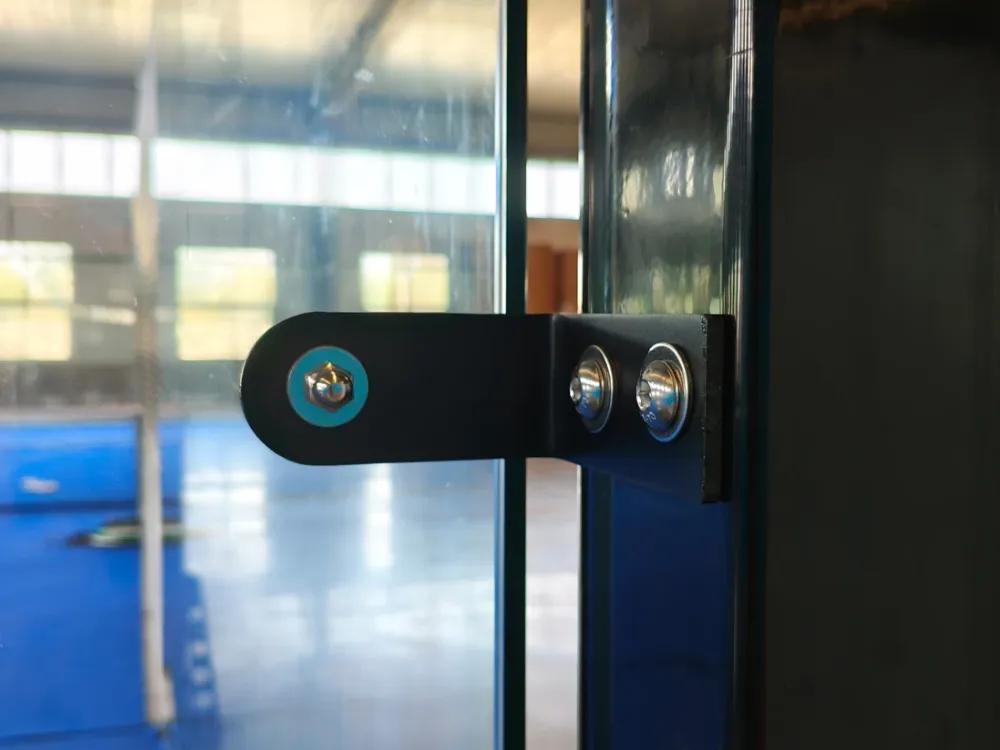
Finishing assembly is a milestone, not automatic permission to play. The padel court installation handover should record the agreed checks, unresolved defects, required documents, and the party responsible for each release.
Keep waiting periods and tests visible
Any applicable curing, bonding, or other material waiting conditions must be completed before the relevant use or loading. Follow the supplied product information and project requirements. There is no reliable universal statement that every court has “no waiting period” after assembly.
Identify what is being accepted. A physical installation check, an electrical test, a local approval, and a venue’s commercial opening decision are different tasks. Avoid hiding them in one unexplained “inspection and grand opening” allowance.
Use a documented handover pack
Agree the padel court installation handover pack before work begins. Include the records and instructions for the supplied system and agreed work. Record what was installed, which issues were fixed, what remains, and who accepts the work.
Useful handover items include the supplied maintenance instructions, component information, applicable test records, warranty terms, and the procedure for reporting a problem. Keep project contacts available to the venue team after the crew leaves.
Illustrative scenario: A completed court with an open item. The assembly work appears finished, but one agreed test record has not been provided. The owner lists the missing item and asks its responsible party to confirm the next action. Commercial opening is considered only after the required conditions are addressed. The example does not establish a fixed inspection period.
Keep the padel court installation record separate from your opening-day marketing plan. Launch bookings should follow an agreed release, not substitute for it. A revised date is easier to manage when the missing condition and its owner are clear.
Build a practical timeline and responsibility checklist
Use one shared schedule with a named owner, dependency, and timing source for each task. That makes the padel court installation plan easier to update when the configuration, delivery, or local work changes.
Ask for evidence behind each date
For production, ask how the proposed time is measured and what it depends on. For transport, use the named route and current freight information. For local works, ask the contractor what is included and when it can be released. For assembly, confirm the model, team, equipment, and padel court installation start conditions.
Record whether a date is a planning allowance, a forecast, or an agreed contractual milestone. When a forecast changes, review the downstream tasks. Do not describe a general article estimate as the supplier’s commitment.
The main risks to check include missing decisions, drawing changes, incomplete services, transport uncertainty, weather, and crew availability. Treat these as project review items rather than claiming they are statistically the most common delays everywhere.
Prepare an installation enquiry
Send your country, delivery point, model, court quantity, site plan, and current readiness status. Describe your local contractors and the work you expect them to complete. Include the target opening date, while asking which conditions control its feasibility.
If the project reuses an existing court, our tennis-to-padel conversion guide provides the wider assessment context. Confirm the actual site work before incorporating a reuse assumption into the padel court installation schedule.
Conclusion
A useful padel court installation timeline begins with a defined scope and ends with a documented release. Coordinate delivery and local readiness, use the correct system instructions, and identify who owns each handover condition. Those steps give the project team a clearer plan than a single promised number of weeks.
To discuss the supplied system and support scope, contact PEDI with your site and schedule information. Request the relevant model documents and clarify responsibilities before booking the installation crew.
Frequently asked questions
How long does padel court installation take?
The answer depends on the model, quantity, crew, equipment, weather, and included work. Ask for an estimate with stated starting conditions. Keep that estimate separate from the full purchase-to-opening programme.
Can I shorten the project by preparing the site during shipping?
Some tasks can overlap once the required drawings, decisions, and permissions are in place. Agree that sequence with the responsible parties. Local readiness and equipment delivery must both support the proposed mobilisation date.
Can local contractors assemble a supplied court?
Confirm their suitability for the selected system and the support offered by the supplier. Local civil work, court assembly, glass handling, and electrical work may involve different teams. The proposal should identify each scope and responsibility.
Can players use the court immediately after assembly?
Only after the applicable material conditions, checks, approvals, and handover requirements are satisfied. Assembly completion alone does not establish readiness for play. Confirm the release with the responsible project parties.
What information should I send before scheduling a crew?
Provide the model and quantity, delivery details, current drawings, site-readiness information, available services, and outstanding issues. A padel court installation booking should use confirmed inputs rather than a photograph or a general opening target.