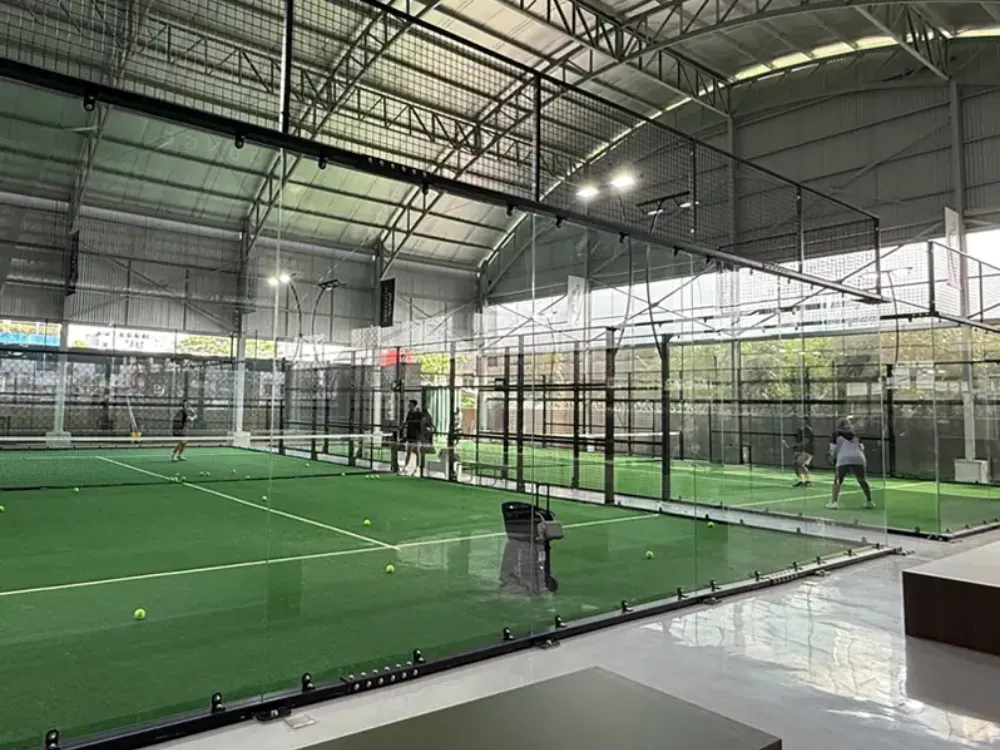
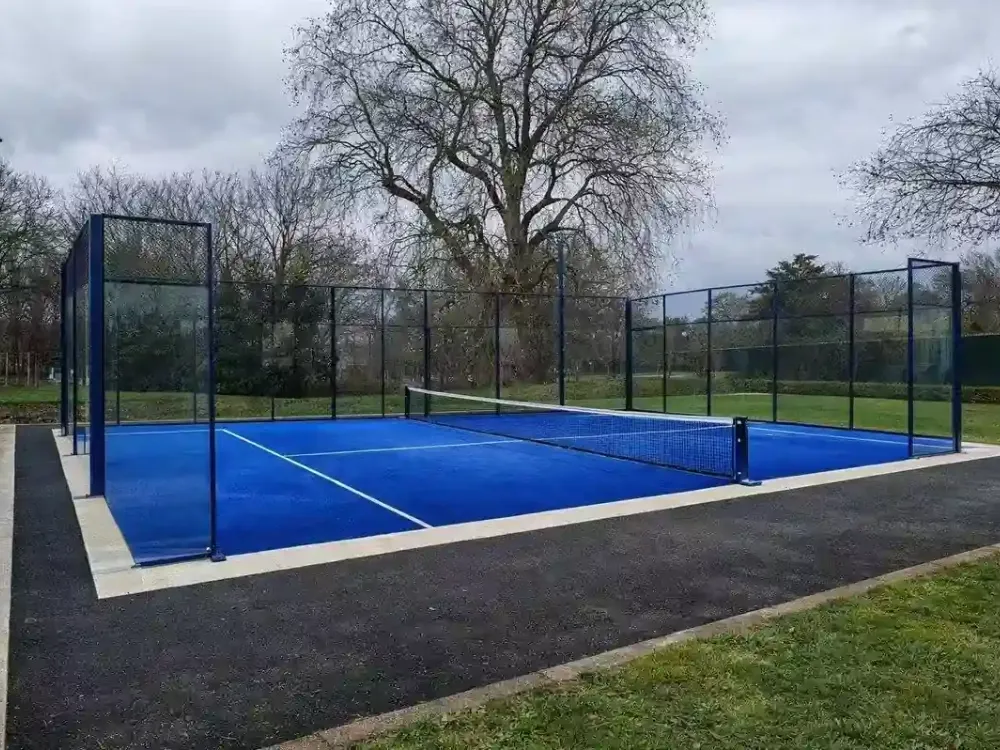
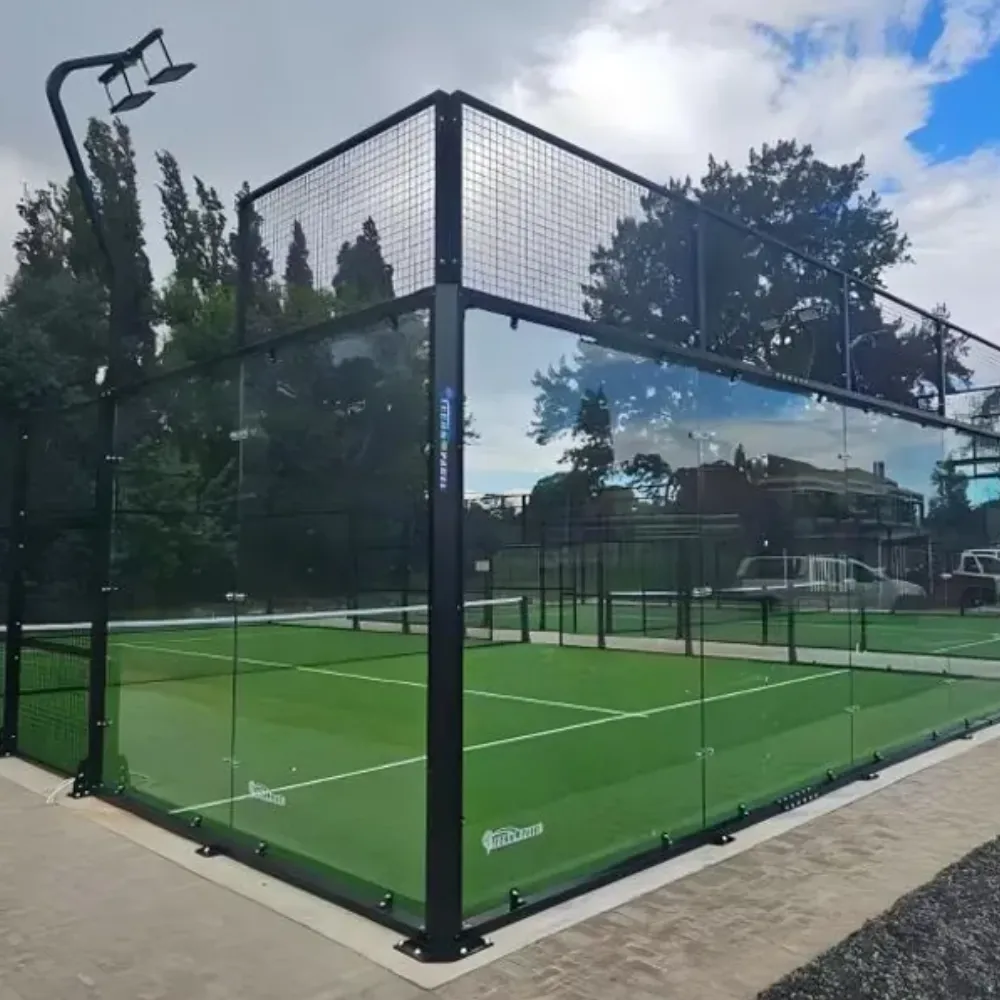
An indoor vs outdoor padel court decision should compare the actual venue, project scope, and intended operation. Neither setting is the best choice for every club, hotel, school, or sports center.
A suitable existing building and a new indoor development present different questions. So do an exposed outdoor site and an outdoor court with a proposed canopy. Start by defining what each option includes, then gather the evidence needed to compare space, conditions, costs, maintenance, and local responsibilities.
Key takeaways
- Separate enclosed indoor space, open-air courts, and open-sided covered courts.
- Check measured layouts and clear height before treating a location as suitable.
- Compare whole-project scopes rather than court equipment prices alone.
- Keep assumptions about demand, usable hours, and revenue separate from design labels.
- Record essential requirements, supporting evidence, and unresolved questions before choosing.
Preparing an indoor vs outdoor padel court shortlist? Send PEDI your venue brief with the location, court quantity, available plans, and proposed setting. Request relevant equipment information and a defined supply scope to discuss with your local project team.
Indoor vs outdoor padel court: Define the actual setting
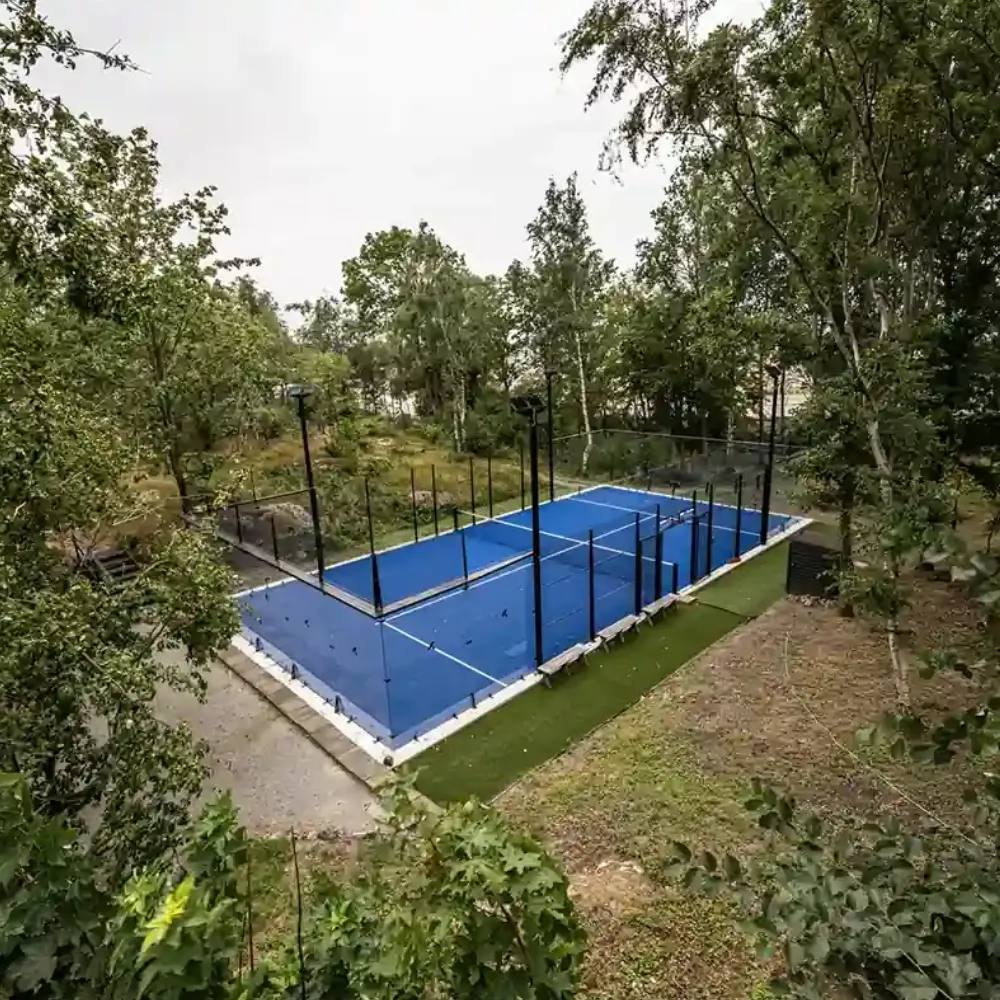
Describe the building or site being considered
Use indoor to describe the proposed enclosed building environment, rather than any court with a roof. Identify whether the building exists, needs alteration, or is part of a new development. Record what is known about its space and services and what still needs assessment.
For an outdoor option, identify the actual site, surrounding uses, ground information, and known access constraints. A broad climate description cannot answer all the questions about that location. Ask the responsible local team which further information it needs.
An indoor vs outdoor padel court comparison becomes clearer when the alternatives are specific. “Existing building A” and “outdoor site B” give reviewers something to assess. “Indoor costs more” does not describe either proposal’s scope.
Keep an open-sided cover as a separate option
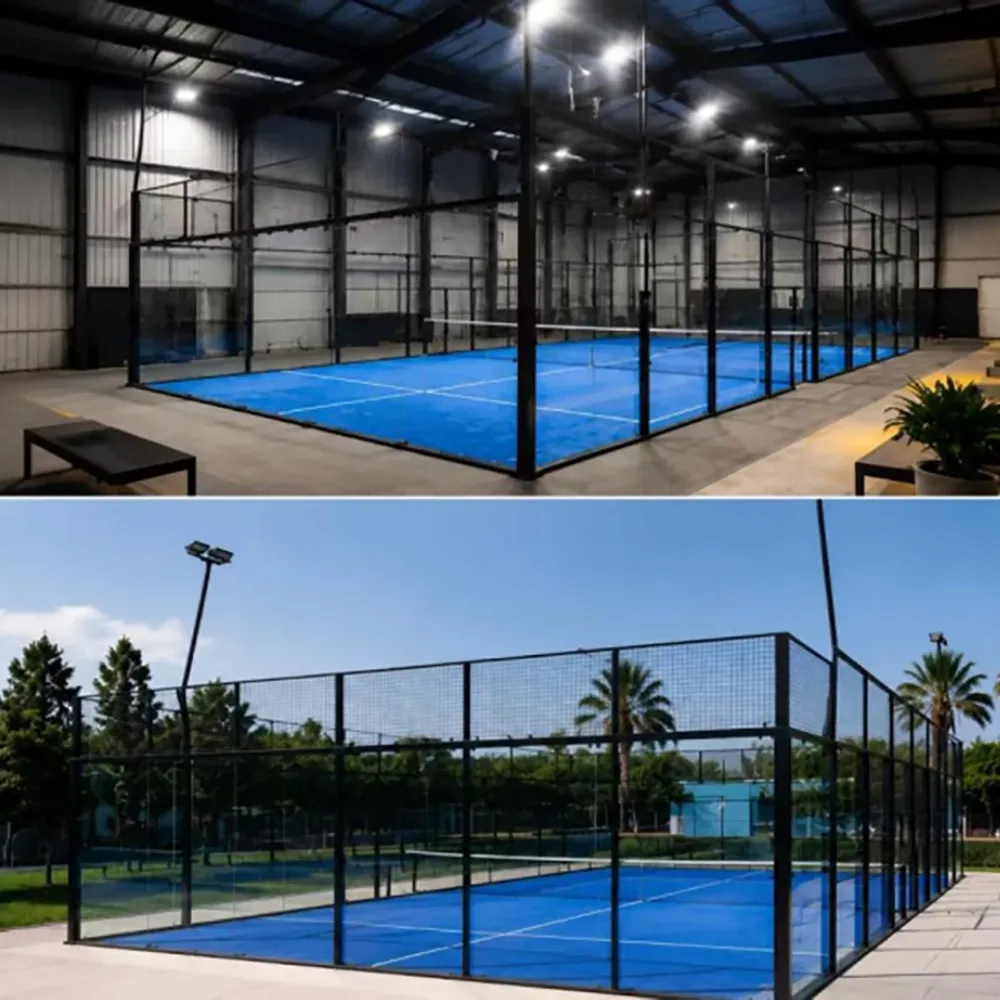
A roof above an otherwise open-sided court is not automatically an enclosed indoor facility. Describe the roof, sides, and service arrangements when considering this option. Ask what exposure and operating conditions remain under the actual design.
| Setting | Describe in the brief | Information still to check |
|---|---|---|
| Enclosed indoor venue | Existing or proposed building, layout, and services | Clearance, building suitability, and intended conditions |
| Open-air outdoor site | Location, surroundings, ground, and access | Site design, drainage, exposure, and operating constraints |
| Open-sided covered site | Roof layout, sides, supports, and local works | Protection limits and roof-to-site interfaces |
Illustrative scenario: A resort proposes a canopy and calls the option indoor. Its project lead clarifies that the sides remain open, then asks the design team to review that arrangement. The brief compares the proposed conditions rather than assuming a fully enclosed room.
For roof-specific inputs, use the covered padel court planning guide. Keep this indoor vs outdoor padel court review focused on choosing the venue setting, rather than repeating a complete roof procurement process.
Check the site, building, and playing clearance
Work from measured space
Prepare a plan for each candidate location and mark entrances, circulation, services, and nearby facilities. Ask the supplier for the proposed court model’s layout and relevant interface information. Give those files to the local team. Ask it to review whether the site or building suits the proposed use.
In an indoor vs outdoor padel court review, distinguish the playing rectangle from the system footprint and whole venue. The FIP Rules of Padel specify standard doubles dimensions of 20 × 10 m internally. That rectangle does not define a building’s total area, outdoor land requirement, or foundation dimensions.
Use the court dimensions and site space guide for those distinctions. A space that appears large enough on a listing still needs a measured layout and the relevant project review.
Check the lowest obstruction across the court
FIP sets a minimum unobstructed height of 6 m throughout the court and suggests 8 m for new facilities. Keep the minimum and recommendation distinct. Measure to relevant beams, lights, ducts, or other obstructions, rather than relying on a building’s advertised or peak height.
The indoor vs outdoor padel court decision may depend on whether the actual layout can provide the required space. If an obstruction affects the proposal, ask the responsible team to assess the options. Do not assume a service or structural element can simply be moved.
For an outdoor or covered site, give the local designer the available ground records and proposed system information. The foundation and drainage guide explains the information and interfaces to coordinate. An open site is not automatically a ready base.
Compare playing conditions and operating limits
Define what your users and operation need
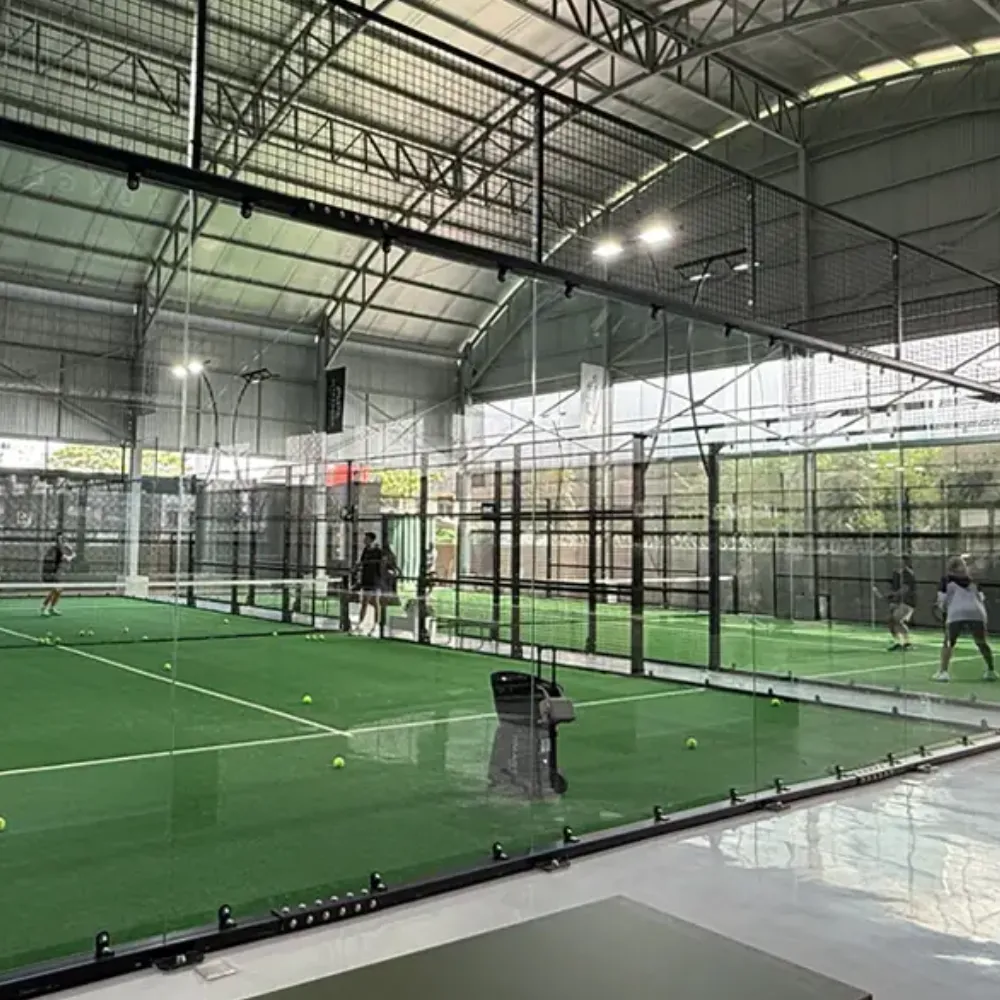
An indoor vs outdoor padel court brief should describe the intended sessions, users, and operating pattern. Identify which conditions are essential and which are preferences. If comfort or usable hours drive the proposal, ask how the team will check them.
For indoor space, discuss the actual lighting, air and thermal conditions, and building services with the appropriate team. Enclosure alone does not establish comfortable temperatures or suitable lighting. List the systems already in place. State which work the project still needs.
For outdoor space, discuss the site’s exposure, surrounding conditions, lighting, and water management. Ask who evaluates these issues and what operating limits may apply. Avoid translating a regional description such as warm climate into a guarantee of year-round use.
Gather evidence for the intended schedule
If the business relies on regular bookings, record the proposed hours and the assumptions behind them. Keep local conditions, venue arrangements, user demand, and operational decisions visible. An indoor vs outdoor padel court label does not itself establish the number of bookable hours.
Ask local advisers which rules and requirements apply to the intended venue use. Ask about the building or site, its services, nearby uses, and planned hours. Treat these as location-specific tasks, not a universal approval checklist copied from another country.
For UK projects, the LTA’s court construction guidance offers a national reference for project planning and site-specific design. Use it within its UK context and with advice for your own location. It is not a global building or permitting specification.
Keep financial forecasts separate from these reviews. More predictable conditions may be an objective, but demand, rates, expenses, and funding need their own supported assumptions. Do not make indoor vs outdoor padel court selection a shortcut to a promised return.
Indoor vs outdoor padel court costs: Match the scope
Compare the actual starting conditions
An indoor vs outdoor padel court cost comparison needs a stated basis. An existing building proposal may include lease or purchase terms, alterations, and services. A new building proposal includes a different scope. An outdoor project may need substantial local works even though it has no enclosed building.
Ask for dated proposals and record the model, quantity, currency, destination, validity, inclusions, and exclusions. Keep firm offers separate from costs that still need a review. Do not present an equipment price as the total cost of either venue.
| Cost or task | Indoor option: record the actual scope | Outdoor option: record the actual scope |
|---|---|---|
| Property and access | Building arrangement and relevant obligations | Land arrangement and relevant obligations |
| Local design and works | Building review, alterations, and site tasks | Ground review, foundations, drainage, and site tasks |
| Court equipment | Model, components, options, and documents | Model, components, options, and documents |
| Services | Existing provision and work still required | Existing provision and work still required |
| Delivery and assembly | Named delivery point, handling, crew, and checks | Named delivery point, handling, crew, and checks |
| Ownership support | Care duties, parts, warranty, and local support | Care duties, parts, warranty, and local support |
The itemised court budget guide provides the wider comparison framework. Use current offers with matching boundaries instead of assuming one category always costs less.
Illustrative scenario: An investor compares an existing building with an undeveloped outdoor site. The first proposal identifies some existing services, while the second still awaits a ground assessment. The buyer records those different starting conditions before comparing the project totals.
The example does not identify a cheaper option. It shows why an indoor vs outdoor padel court budget needs evidence for both locations, including the work not yet priced.
Compare programme assumptions as well as price
Ask what information, work, checks, and decisions must be complete before installation begins. Use the installation readiness and timeline guide to separate delivery from a ready site and the venue opening decision.
Outdoor does not automatically mean a shorter programme. Indoor does not automatically mean a complete new building. Base the indoor vs outdoor padel court schedule on the proposed scope and the people responsible for each milestone.
Review maintenance and local responsibilities
Request care requirements for the supplied system
Compare the applicable maintenance instructions, component references, support process, and warranty terms. Ask which tasks the venue team handles and which require the relevant specialist. Neither setting removes the need for care and records.
For an indoor vs outdoor padel court maintenance review, use the actual surface, equipment, environment, and service arrangements. Ask about requirements relevant to each proposal rather than assigning a universal cost ranking. If maintenance cost drives the decision, request evidence or quotations for the tasks being compared.
Keep the final system details and instructions where the operator can find them. Show the team how to report concerns and identify parts. A warranty headline is not a substitute for the written coverage, conditions, exclusions, and claims process.
Separate equipment support from local work
Name the parties handling building or site design, local construction, services, equipment supply, assembly, and checks. Ask what the supplier’s guidance or installation support includes. Record any work excluded from the offer and who will provide it.
Follow the selected system’s current documents and the appointed team’s plan for the actual work. Agree which records support handover and which questions remain for the wider venue. Keep open items assigned to a named person.
Build your decision record and project enquiry
Give each requirement an evidence status
Use a short indoor vs outdoor padel court decision record. Mark essential conditions, preferences, and unanswered questions. For each unanswered item, name an action and a reviewer. Do not treat it as a pass or failure.
| Decision item | Evidence to gather | Person to assign |
|---|---|---|
| Space and clearance | Measured plan and proposed model layout | Relevant local reviewer |
| Intended playing conditions | Venue brief and applicable service or site assessments | Design team and operator |
| Total scope and budget | Comparable offers, exclusions, and provisional items | Project lead and cost owners |
| Programme | Inputs, readiness conditions, and required checks | Parties delivering the work |
| Care and support | System instructions and written service terms | Supplier and operator |
| Operating forecast | Separate assumptions about demand, hours, rates, and expenses | Owner or business team |
Illustrative scenario: A club shortlist still includes a building with unmeasured obstructions and an outdoor site with unpriced local works. The project lead assigns the missing measurements and cost inputs. The team keeps the choice open until those decision-critical questions have been addressed.
This indoor vs outdoor padel court process gives the owner a record of why an option was selected. It does not predict revenue or certify the chosen design. Retain the files, dates, and decisions that support the conclusion.
Send a brief that a supplier can answer
Summarize the country, venue type, court count, candidate setting, available plans, intended use, and appointed local roles. State the equipment scope you want priced for your indoor vs outdoor padel court options. Mark unknown conditions and target dates honestly rather than filling gaps with assumptions.
For the full project sequence, refer to the construction and procurement guide. Explore the PEDI court range for configuration questions, then request model information and a supply proposal.
Use the response with local professional advice to complete your indoor vs outdoor padel court comparison. The useful outcome is a venue choice supported by measured space, defined work, clear operating needs, and assigned responsibilities.
Frequently asked questions
Is an indoor vs outdoor padel court choice mainly about climate?
Climate is one input, alongside the actual site or building, intended use, project scope, services, and operating assumptions. Review those factors together. A broad regional or venue-type label cannot establish the best option for every project.
Is a covered outdoor court an indoor facility?
Not necessarily. A roof may cover an open-sided outdoor court. Describe the actual enclosure, services, and proposed conditions, then ask the relevant team to assess them. Use the covered court guide for the roof-specific questions.
Do indoor and outdoor courts need different playing dimensions?
The FIP standard doubles playing rectangle is 20 × 10 m internally. Distinguish that from each system’s footprint and the whole venue layout. Check the relevant clearance and site requirements for the proposed arrangement.
Is an outdoor court always cheaper or faster to build?
Compare the actual scopes. Ground works, drainage, services, access, delivery, installation, and release conditions can differ between projects. A suitable existing building also presents a different comparison from a new indoor development.
Does an indoor court guarantee more revenue?
No venue label establishes demand, bookable hours, rates, expenses, or payback. Keep the operating forecast separate and support its assumptions. The indoor vs outdoor padel court review should identify what the business plan still needs to verify.
What information should I send for equipment advice?
Send the location, venue setting, court count, intended use, available plans, local roles, and requested supply scope. Identify unknown conditions and the documents you need. This gives the supplier a clearer basis for a useful response to your indoor vs outdoor padel court enquiry.