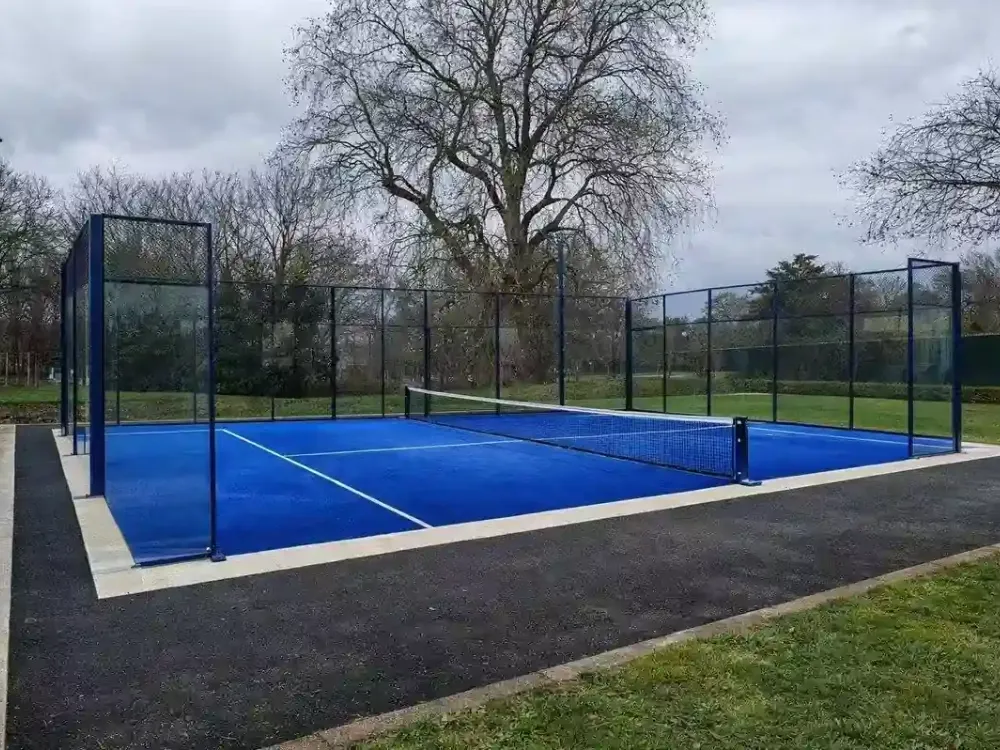
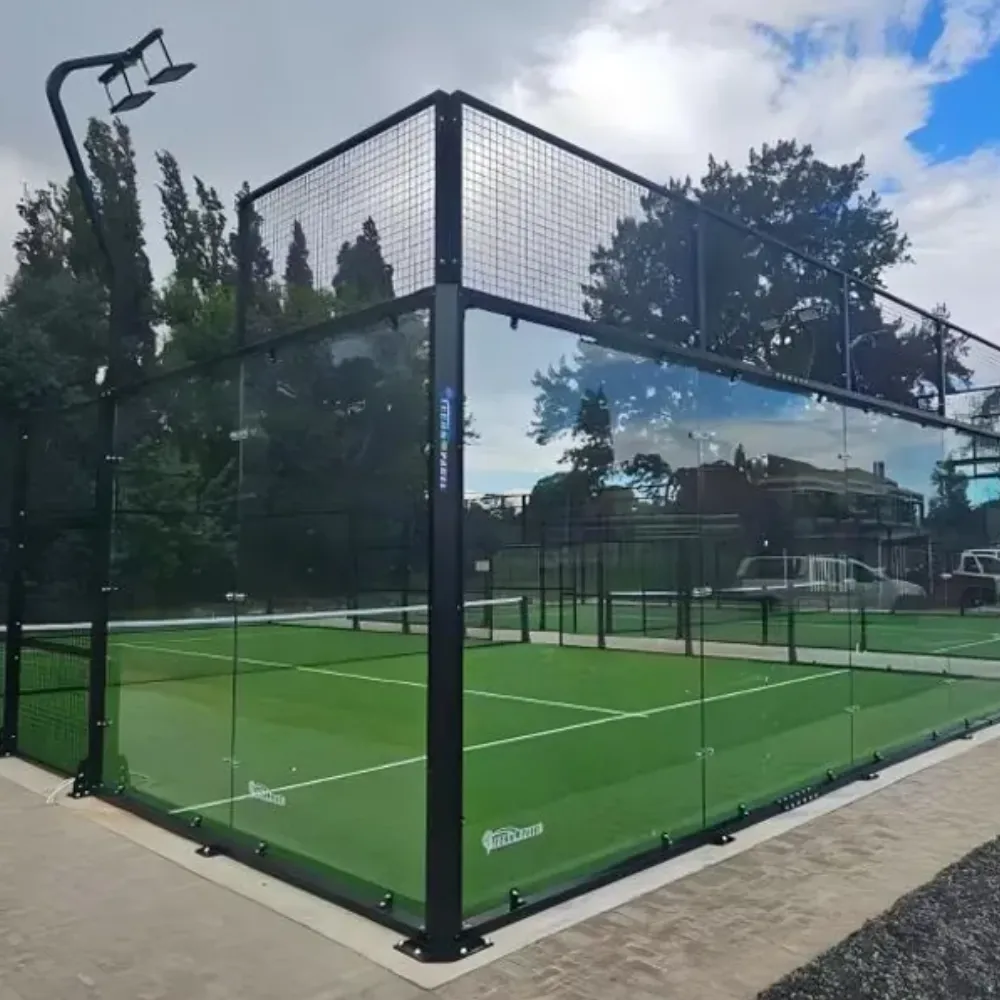
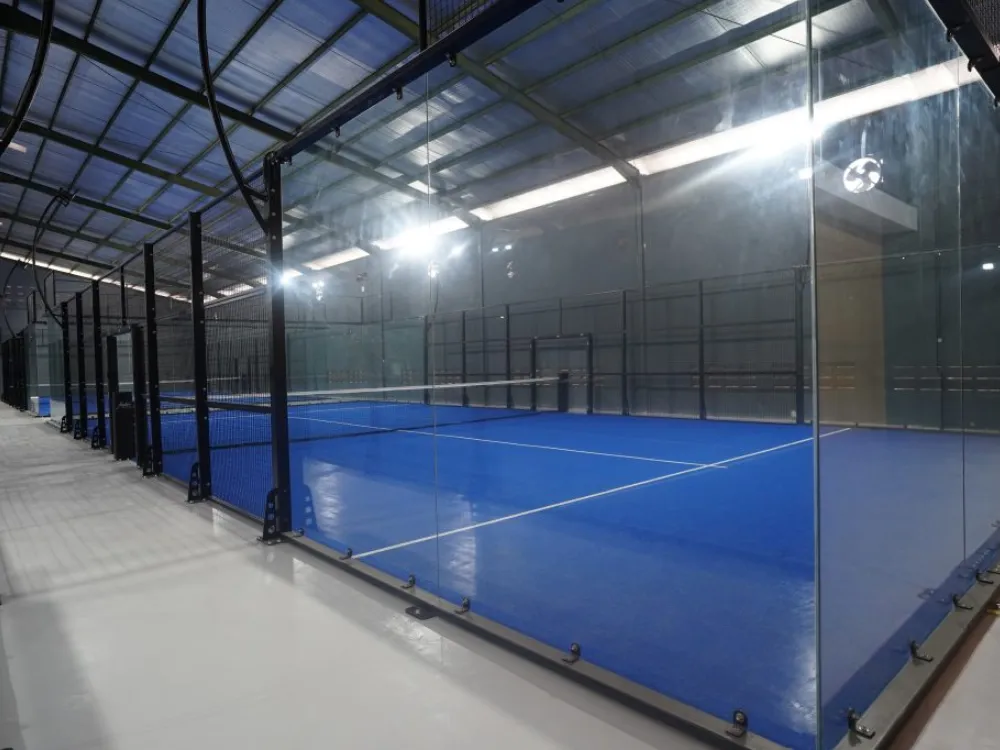
A covered padel court has a roof or covering above the playing area, with its protection and operating conditions determined by the actual design. Plan the roof, site, local works, and equipment supply together before committing to a price or opening date.
Adding a roof can address a venue’s exposure concerns, but the word covered leaves important questions open. Are the sides open? Where will roof water go? Who checks the foundations and playing clearance? This guide helps owners and procurement teams turn those questions into a clear brief, comparable proposals, and usable handover records.
Key takeaways
- Distinguish an open-sided cover from a fully enclosed indoor facility.
- Check clear height across the whole court, including beams, lights, and other obstructions.
- Coordinate the roof, foundation, drainage, and service interfaces before construction.
- Compare equipment, roof supply, delivery, and local works as separate budget scopes.
- Agree the documents, checks, and operating information needed at handover.
Have a location and proposed court count? Send PEDI your covered court project brief and request equipment information with a defined supply scope. Share the site conditions and local team arrangements so the remaining responsibilities are visible.
What a covered padel court does and does not define
Describe the actual coverage arrangement
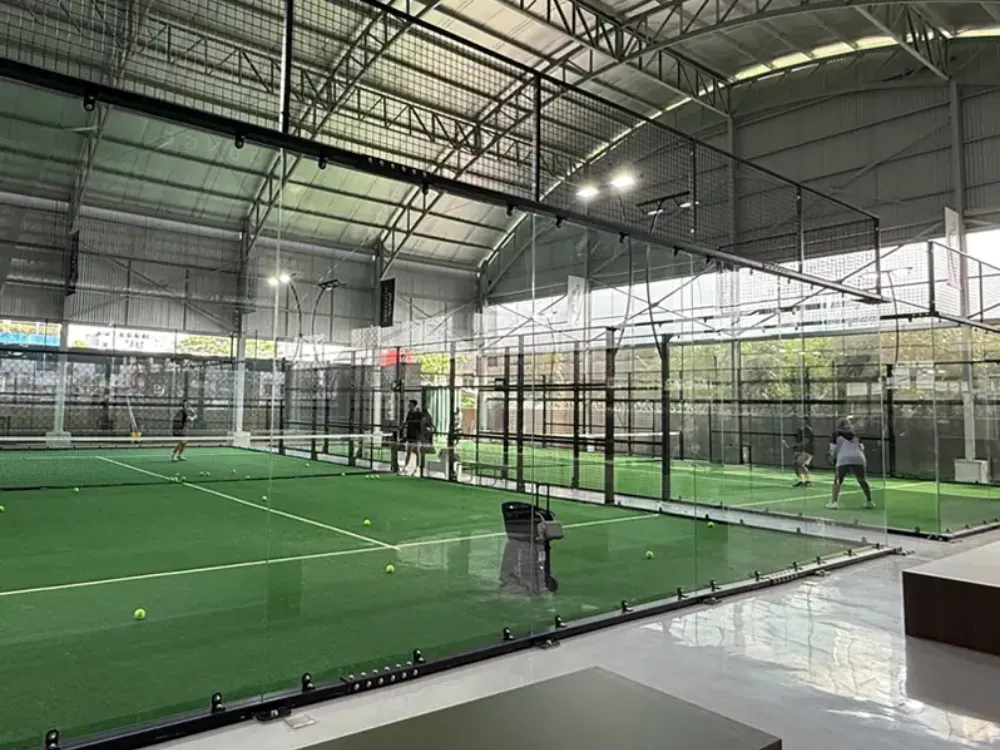
Start a covered padel court brief with the roof layout, sides, entrances, and surrounding venue. An outdoor court with a roof and a court inside a closed building are different settings. Do not assume they provide the same conditions for airflow, weather exposure, lighting, or operation.
Ask the supplier to identify the proposed system and the information available for review. Record which areas it covers and how the roof relates to the court enclosure. If side coverings form part of the proposal, include them in the relevant design and scope discussions.
| Arrangement under consideration | Information to request | Question for the project team |
|---|---|---|
| Open-sided roof or canopy | Roof plan, edges, supports, and openings | What exposure and operating conditions remain? |
| Roof with proposed side coverings | Current layout and supplied side components | What changes must the design team review? |
| Court within an enclosed building | Building layout, clearance, and relevant services | How does the court fit the actual indoor conditions? |
Use the table to define questions, not to rank one arrangement as best everywhere. A covered padel court proposal needs a stated scope and appropriate review for the site. Its name alone does not establish suitability.
Treat availability as a project objective
If reducing weather interruptions is your goal, describe the problem you want the design to address. Record the venue’s intended use and known operating constraints. Ask the responsible team how the proposed arrangement addresses them and what limits remain.
Do not turn all-weather wording into a promise that play can continue in every wind, rain, snow, or heat condition. Likewise, roof coverage does not establish a booking rate, payback period, or maintenance saving. Those outcomes need their own project and operating evidence.
Illustrative scenario: A hotel expects a roofed court to behave like an indoor room. During the brief review, the team identifies that the proposed sides remain open. The owner and design team clarify the intended conditions before the proposal becomes the basis for an order.
The example does not prescribe closing the sides. It shows why a covered padel court discussion should define the actual system before comparing benefits.
Check site conditions and playing clearance
Prepare a measured site brief
Give the local team and supplier the location, venue type, court count, and a measured plan where available. Include existing construction records, known services, access constraints, and proposed nearby facilities. Mark preliminary information so nobody treats an early sketch as an approved layout.
For a covered padel court on an existing site, ask what further information the responsible reviewers need. An available surface or photograph does not by itself resolve foundation, drainage, or structural questions. Identify who will obtain the missing records and which decision each supports.
Flag a rooftop, future expansion, or later enclosure at the start. These proposals need their own assessment and may affect the current scope. Do not assume that another venue’s arrangement confirms suitability for yours.
Measure clear height, not just roof height
The FIP Rules of Padel effective January 2026 specify a minimum unobstructed height of 6 m throughout the court and suggest 8 m for new facilities. Keep the minimum and recommendation distinct. Check the lowest relevant obstruction across the playing area, rather than only the highest point of the roof.
A covered padel court layout should show the roof structure alongside lights and relevant fittings. Ask the team to review the proposed positions together. Moving a fitting or revising the roof arrangement may require the clearance check to be updated.
The same FIP rules define the standard doubles playing rectangle as 20 × 10 m internally. That is not the complete roof footprint or land requirement. Use the court dimensions and site space guide to distinguish playing size, system footprint, and the wider venue.
Coordinate roof, foundations, drainage, and services
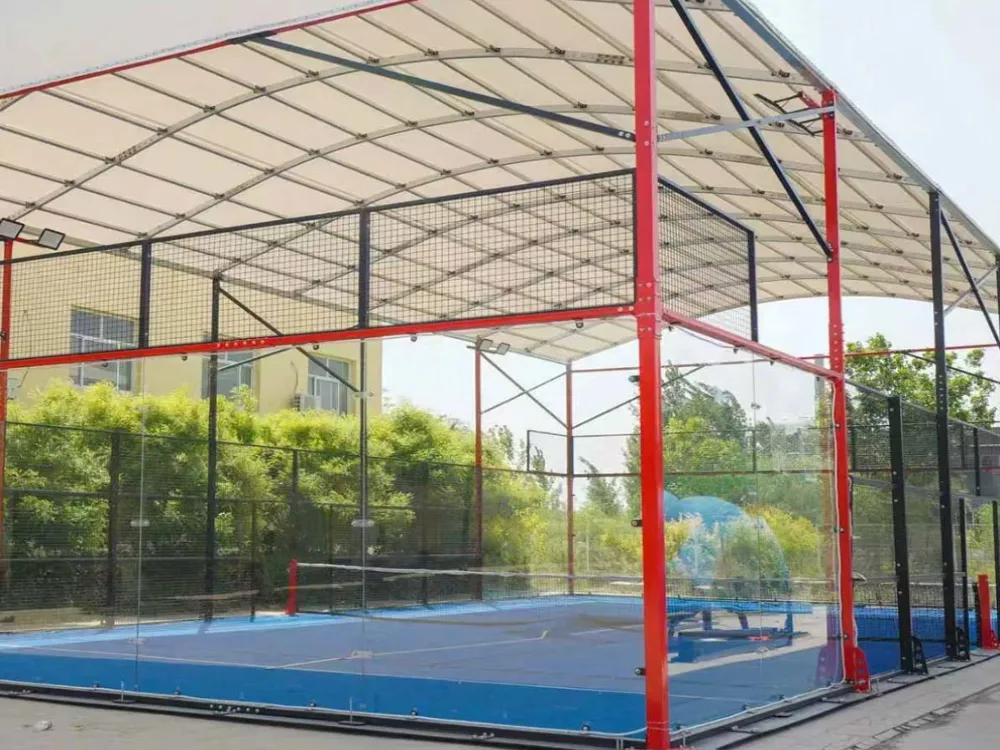
Assign the design interfaces
A covered padel court project brings together the roof system, court enclosure, and local site works. Ask who provides the information and design for each package. Record how the teams will check their interfaces and approve changes.
Share the proposed model and roof configuration with the appointed local professionals. Ask them to identify the site inputs needed for the applicable design, including relevant environmental conditions. A material name or a claim about reinforced steel doesn’t replace that review.
For UK projects, the LTA’s 2025 court construction guidance provides a national reference for site-specific design and project planning. Use it in its UK context and with advice for the actual location. Do not treat it as a foundation specification or approval process for every country.
Follow roof water to its destination
Ask where water from the covering will be collected and discharged. The design discussion should connect roof drainage with the surrounding levels, court area, and proposed outlet. Name the party reviewing the route and any local conditions that need resolution.
The foundation and drainage planning guide explains the supporting inputs and records. For this covered padel court brief, identify what the roof adds to those interfaces. Keep the drawings and responsibility list aligned rather than treating rainwater as a separate late task.
Review lighting, airflow, and access together
Include the proposed lighting arrangement in the roof and clearance review. Ask the relevant designer how the plan addresses visibility and the applicable project requirements. A lamp specification alone does not describe the installed lighting conditions.
Describe the intended side openings and any proposed enclosure when discussing airflow and comfort. Ask the team what information it needs to assess the arrangement. Avoid promising that a particular roof material automatically controls temperature or creates an indoor environment.
For covered padel court delivery and maintenance, check access as well as playing space. Identify unloading, handling, work areas, and routes to parts that may need attention later. Ask which arrangements form part of the quoted scope.
Build a covered padel court budget on a clear scope
Replace a single headline price with work packages
A covered padel court budget should show what each figure buys. Separate the court package, roof package, transport, local works, installation, and wider venue facilities. Request dated proposals with a defined configuration, quantity, destination, currency, and validity.
| Budget package | Included items to identify | Questions still to resolve |
|---|---|---|
| Court equipment | Agreed model, components, and options | Excluded equipment and required documents |
| Roof supply | Roof configuration and supplied parts | Support scope and local design inputs |
| Delivery and handling | Named delivery point and transport duties | Import tasks, unloading, storage, and handling |
| Local professional work | Appointed design and other agreed tasks | Responsibilities and required submissions |
| Site construction | Foundation, drainage, services, and access work | Investigations, exclusions, and provisional items |
| Installation and checks | Named labor, guidance, equipment, and records | Readiness conditions and connections |
| Wider venue | Other facilities included in the project | Items outside the court and roof packages |
Use the itemised court budget guide for the wider comparison method. A supply quotation is not automatically a completed venue price. Do not assume that transport and roof supply are the only costs beyond the court equipment.
Illustrative scenario: A club receives a court-and-roof proposal while its local foundation assessment is still open. The buyer separates the equipment offer from the unresolved site works. The project budget retains those open costs instead of presenting the supply total as the finished investment.
This covered padel court example does not predict a price increase. It keeps the quotation basis visible until the responsible parties can assess the remaining scope.
Keep financial assumptions separate
If the project business plan assumes more usable hours, record how that assumption will be assessed. Keep pricing, demand, operating expenses, and funding assumptions separate from the equipment proposal. Coverage alone does not establish the financial result.
Ask how changes will be priced and approved. A revised roof, side arrangement, or site layout may affect more than one package. Keep the updated scope and budget with the decision record.
For each covered padel court change, record what was requested, who reviewed it, and which files replace earlier versions. Send the agreed update to the teams whose work depends on it. Before confirming the order, review the remaining questions together and name the person who will close each one. Keep items that affect the purchase decision separate from tasks scheduled for a later stage.
Compare supplier documents and installation support
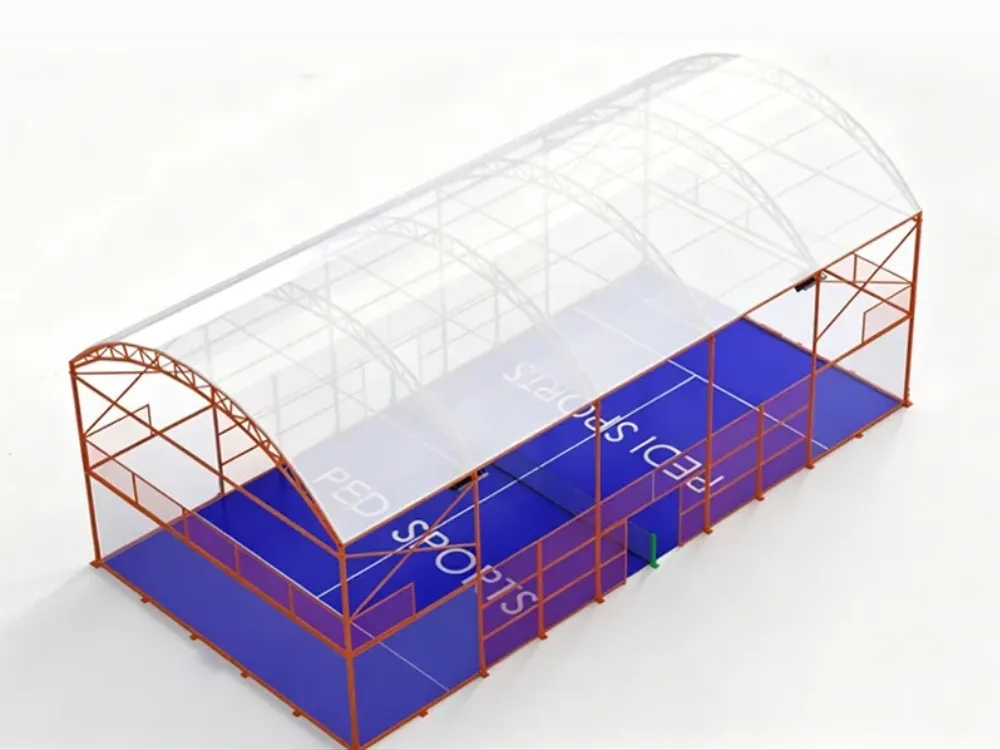
Request information for the actual configuration
PEDI lists the PC005 panoramic court with roof as a product option. Request the current model information, proposed roof configuration, relevant drawings, and supplied component list. Use those files to review your covered padel court proposal with the local team.
For the covered padel court offer, ask which files support each material and performance claim. Check what they cover and which components they relate to. A description such as self-cleaning, weather-resistant, or maintenance-saving needs applicable information before it becomes a purchasing assumption.
Clarify which files are available now and which depend on the final order or site inputs. Name the person handling each open item and the stage when it is needed. Do not treat a missing record as either automatic acceptance or proof that the product is unsuitable.
Distinguish guidance from local work
For covered padel court installation support, ask whether the offer includes manuals, remote guidance, on-site labor, travel, handling equipment, or other services. Put the actual arrangement in the proposal. Supply support does not automatically assign local design, construction, or approvals to the equipment manufacturer.
Use the installation readiness and timeline guide to coordinate equipment delivery and site release. Ask the responsible teams what must be complete before assembly starts. Base the programme on those inputs rather than a universal number of days.
Prepare handover records and your project enquiry
Agree what completion will mean
Before work starts, identify the covered padel court checks and records required from each party. Ask which apply to the roof, court system, foundations, drainage, services, and installation. Tie each check to the relevant project design or system instructions.
Keep the final configuration, applicable drawings, completed checks, approved changes, care instructions, and warranty terms in the venue file. Show the venue team who to contact for each type of concern. Ask how component identification, replacement parts, and routine care will be handled.
Illustrative scenario: A venue’s installation appears complete, but the operator has not received the roof care information or open-item list. The project lead assigns the missing records and asks the relevant reviewers which release decisions remain. The handover addresses those gaps before treating appearance alone as proof of readiness.
A covered padel court checklist tracks the decisions; it does not make the technical judgment. Name the party handling each issue and the next action required. Keep technical handover and the wider venue opening decision distinct.
Send a brief that supports a useful response
Include the country, venue type, court quantity, available plan, current surface, and known site constraints. Describe the intended covering, side arrangement, viewing needs, and proposed local team. Mark unknown conditions and target dates honestly.
For the overall project sequence, refer to the construction and procurement guide. Keep your covered padel court enquiry focused on the configuration and interfaces you need clarified. Attach a dated plan where available and say what scope you want priced.
Then request model information and a supply proposal from PEDI. Ask for the equipment configuration, relevant files, included support, and exclusions. Use that response with local professional advice to plan a covered padel court around the actual site and agreed responsibilities.
Frequently asked questions
Is a covered padel court the same as an indoor court?
Not necessarily. A roof can cover an otherwise open-sided outdoor court, while an enclosed building creates a different setting. Review the proposed roof, sides, services, and operating conditions rather than relying on the label.
Can a covered court operate in any weather?
Do not assume that from the name alone. Ask the responsible team to assess the actual system, site conditions, and operating limits. A roof is not a guarantee of uninterrupted play through every wind, rain, snow, or heat condition.
What height should be checked below the roof?
Check the lowest relevant obstruction throughout the playing area against the applicable requirements. FIP sets a 6 m minimum unobstructed height and suggests 8 m for new facilities. Roof peak height alone does not establish that clear space.
What should a covered padel court quotation include?
It should state the configuration, supplied equipment, delivery boundary, support scope, documents, and exclusions. List local design, foundations, drainage, services, installation, and wider venue work separately where they are not included. Keep unresolved items visible in the budget.
Can an existing court receive a roof later?
Treat it as a project requiring assessment. Provide existing records and the proposed roof information to the relevant local professionals. Do not assume the existing foundation, layout, or services suit the new arrangement without review.
Does a roof guarantee more revenue or less maintenance?
Those outcomes need project-specific operating and cost evidence. Review the design goals, care instructions, support terms, and business assumptions separately. A covered padel court proposal can define the supplied system without establishing the venue’s financial result.