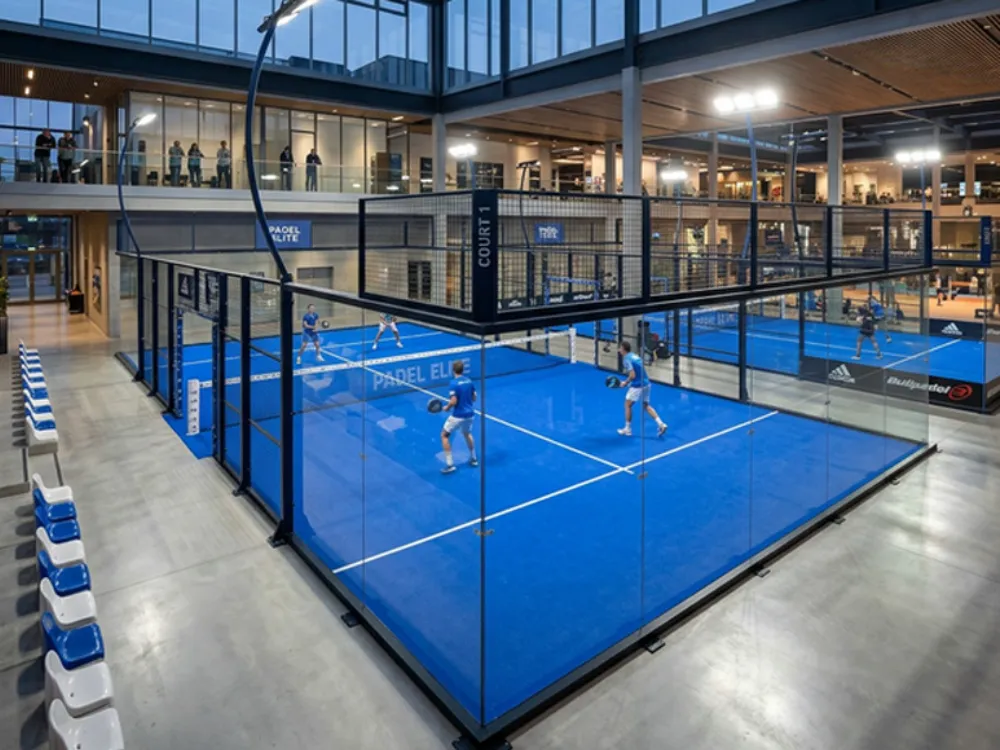
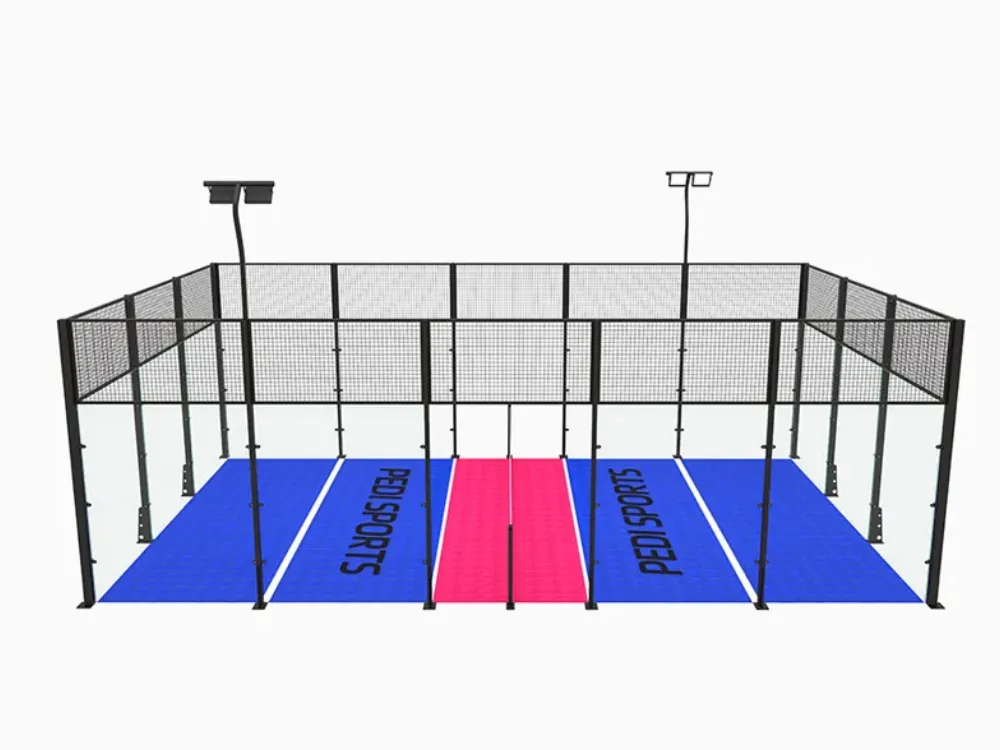
The key difference in Padbol vs padel is how players control the ball: Padbol uses the feet and permitted body parts, while padel uses rackets. They are separate sports with different playing areas, equipment, and rules.
Similar names and enclosed courts can make the choice look simple. For a venue, though, the right question is which activity you can support with a suitable site and a clear service plan. This guide separates sporting facts from project decisions, so you can prepare a product enquiry without assuming that either option guarantees demand or profit.
Key takeaways
- Choose the activity before comparing court packages.
- Distinguish the internal playing area from the full project site.
- Test user interest and define who will introduce the activity.
- Compare documented supply scopes rather than assumed returns.
Padbol vs padel: The main differences
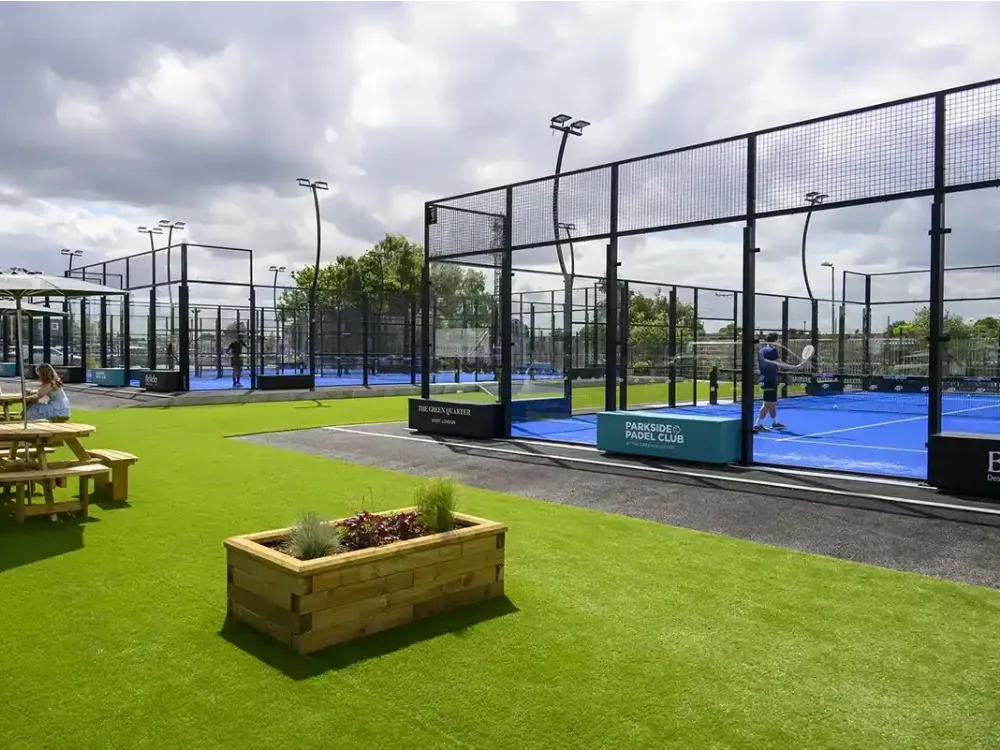
Start the Padbol vs padel comparison with the sport, not the appearance of the enclosure. A court with walls and a net is not enough to identify which game it supports.
How the ball is played
Use the FIPA official Padbol rules and the FIP Rules of Padel as separate references. The former governs Padbol play; the latter describes padel, including its racket and court requirements. A brief comparison cannot replace either rulebook.
| Feature | Padbol | Padel |
|---|---|---|
| Ball control | Feet and other permitted body parts | Racket-based play |
| Internal playing area | Nominally 10 × 6 m | Standard doubles court: 20 × 10 m |
| Participation reference | Two players from each team on court during play | Doubles format under the referenced rules |
| Rules to consult | FIPA Padbol rules | FIP Rules of Padel |
Walls take part in play in both sports, but that does not make their rally rules identical. Avoid describing Padbol as football rules applied to a padel court. Use the correct instructions for the activity you intend to offer.
Which rules should staff use?
For Padbol vs padel introductions, give staff the relevant rule source and a clear description of the session. Ask someone familiar with that sport to review any simplified user guide. Do not reuse a guide for the other activity by changing the name.
Keep casual session arrangements distinct from official competition requirements. If organised competition is part of the proposal, ask the relevant organiser what documents and conditions it requires. A product name alone is not proof of sporting recognition.
If you are considering either activity, send PEDI your intended use and site information. Ask which product documents are available for the options you want to assess.
Compare court space and equipment
For Padbol vs padel site planning, distinguish the rule dimensions from the supplied system. Neither the internal rectangle nor a product photograph establishes the complete space your venue needs.
Playing area is one boundary
Using the nominal internal dimensions, the playing areas calculate to 60 m² for Padbol and 200 m² for standard doubles padel. These are length-times-width calculations, not total land requirements. They do not establish a cost ratio or show how many complete installations fit on a site.
Mark three boundaries on the proposed plan: the playing area, the selected structure, and the wider venue. Request the system’s external limits and access arrangements from the supplier. Have the responsible project reviewers assess the surrounding site needs.
Illustrative scenario: A venue marks a smaller playing rectangle on unused ground and initially favours that activity. The manager then asks for a drawing of the selected system and adds the existing pedestrian route. The team keeps the location under review until the missing information is available. No conclusion about the base or a sufficient clearance follows from the sketch.
Equipment and dimensions are sport-specific
The Padbol rules specify a constant net upper height of 100 cm. The referenced padel rules specify 0.88 m at the centre and 0.92 m at the ends. These measurements describe the respective sports, not interchangeable equipment settings.
In a Padbol vs padel comparison, keep the model documents beside the rule reference. Ask for the exact surface, enclosure, net assembly, access, and included equipment on offer. Do not assume that components can move between systems because they look similar.
For indoor proposals, record overhead features for review. For outdoor proposals, provide the site information already available. Do not borrow a foundation detail, clearance, or electrical arrangement from the other sport’s documents.
Match the activity to your users
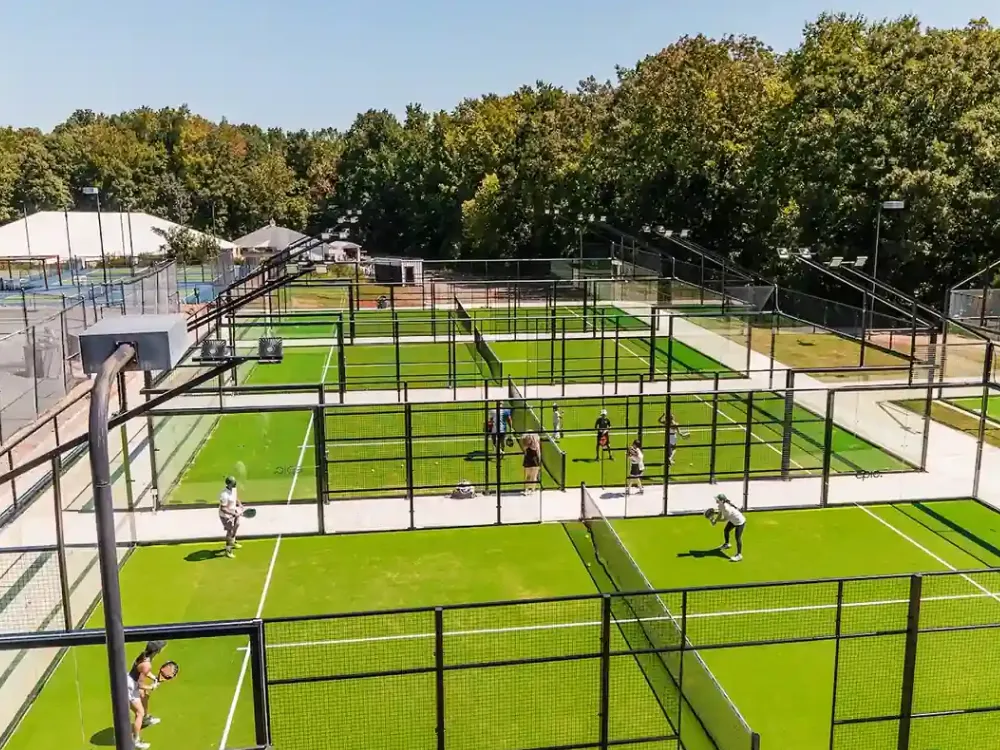
Padbol vs padel is also a service decision. Define the people you hope to serve and find out what they want to try. Familiarity with football or racket sports is a question to investigate, not proof that a new facility will attract bookings.
Ask about actual interest
Prepare the same questions for both activities. Ask prospective users about the experience they want, when they might attend, and what help they would need at a first session. Record how the answers were collected and which groups they represent.
Avoid leading questions that promise an activity will be easy or profitable. A useful Padbol vs padel discussion describes the choice clearly and lets people explain their interest. Distinguish a stated preference from a commitment to book.
Illustrative scenario: A sports centre hears interest in Padbol from several football participants. The manager asks about preferred session times and introductory support, then checks the answers against the centre’s staffing plan. The interest informs the proposal; it is not recorded as confirmed revenue or a forecast of repeat visits.
Plan the first visit
Map how a user moves from enquiry to arrival, introduction, play, and departure. Identify who explains the activity, supplies any venue equipment, and responds to questions. If a coach or outside provider is involved, agree the responsibilities rather than assuming they sit with reception.
For padel, consider the racket and ball provision in your intended service. For Padbol, confirm the appropriate playing equipment for the selected activity. Use the relevant rules and supplier information; don’t treat generic recreational equipment as automatically suitable.
Your Padbol vs padel plan should also name the operator. A school, hotel, or club may allocate tasks differently. Write down those choices so the physical court proposal and the service offered to users can be assessed together.
Collect evidence before choosing
For each Padbol vs padel option, keep a short evidence list. It should show which questions have answers and which still need work. Use clear labels:
- User interest: who was asked, and what did they say?
- Site fit: which plan and system drawing were reviewed?
- Service plan: who will help users on their first visit?
- Purchase scope: which offer matches the current request?
- Open questions: who will obtain the next answer?
Your Padbol vs padel evidence list need not be complete at the first meeting. Mark a missing answer as missing. Don’t replace it with a claim about what all football or racket-sport users prefer.
Share the list with the people who own the tasks. Ask each person to check the entries within their role. This keeps the Padbol vs padel discussion tied to usable information instead of a general impression of the sports.
Before making the choice, review the remaining gaps together. Record which ones must be resolved before an order and which need further planning. Keep the Padbol vs padel decision with the evidence available at that point, then update it when the inputs change.
Keep assumptions visible
Record the questions your team cannot yet answer. You may still need input from users, a coach, the supplier, or the people reviewing the site. Assign an owner and a next step to each question.
Do not resolve missing evidence with a claim that one sport is always simpler, safer, or more popular. This guide does not establish those outcomes. Keep the comparison tied to the users and venue you are actually planning for.
Padbol vs padel for your facility
A useful Padbol vs padel decision combines the activity, the site, and the work needed to operate it. Compare those inputs on the same basis before choosing a preferred product.
Build a decision matrix
Use a short worksheet for Padbol vs padel rather than an unsupported winner’s score. For each option, note the evidence received, the unresolved questions, and the person responsible for obtaining an answer.
| Decision area | Evidence to collect | Open question to record |
|---|---|---|
| Users | Relevant interest and intended session use | What has not yet been tested? |
| Site | Measured plan and selected system drawing | Which assumptions need review? |
| Introduction | Staff or provider responsibilities | Who prepares user information? |
| Equipment | Offered configuration and included items | What is optional or excluded? |
| Project scope | Written supply and local-work boundaries | Who prices the remaining tasks? |
| Operation | Handover and care information | Who owns the ongoing record? |
The worksheet is an editorial planning tool, not a sporting approval or a business forecast. Adapt it to your organisation. Do not turn a missing answer into a zero-cost item or a favourable score.
Compare a defined supply scope
For Padbol vs padel quotations, identify the proposed model, quantity, destination, and services. Keep equipment supply, transport, local work, installation, and operating preparation separate until their boundaries are clear. Ask suppliers to label exclusions and assumptions.
A smaller nominal playing area does not establish a lower complete project price. Compare the actual equipment proposal and the work assessed for each option. Do not estimate one sport’s budget as a percentage of the other’s playing area.
If the organisation needs a business case, keep its demand and operating assumptions separate from supplier quotations. Neither a price nor a statement of interest demonstrates future profit. Use evidence specific to your venue.
Review what could change the choice
Ask which unanswered question could alter the preferred option. It might concern user interest, a site constraint, an operating responsibility, or an excluded task. Obtain that answer before treating the Padbol vs padel choice as settled.
Keep a brief record of the reasons for the decision. If the location, user group, or supplied configuration changes, revisit those reasons. A choice made for one set of inputs should not silently become approval for a different project.
Prepare a product selection brief
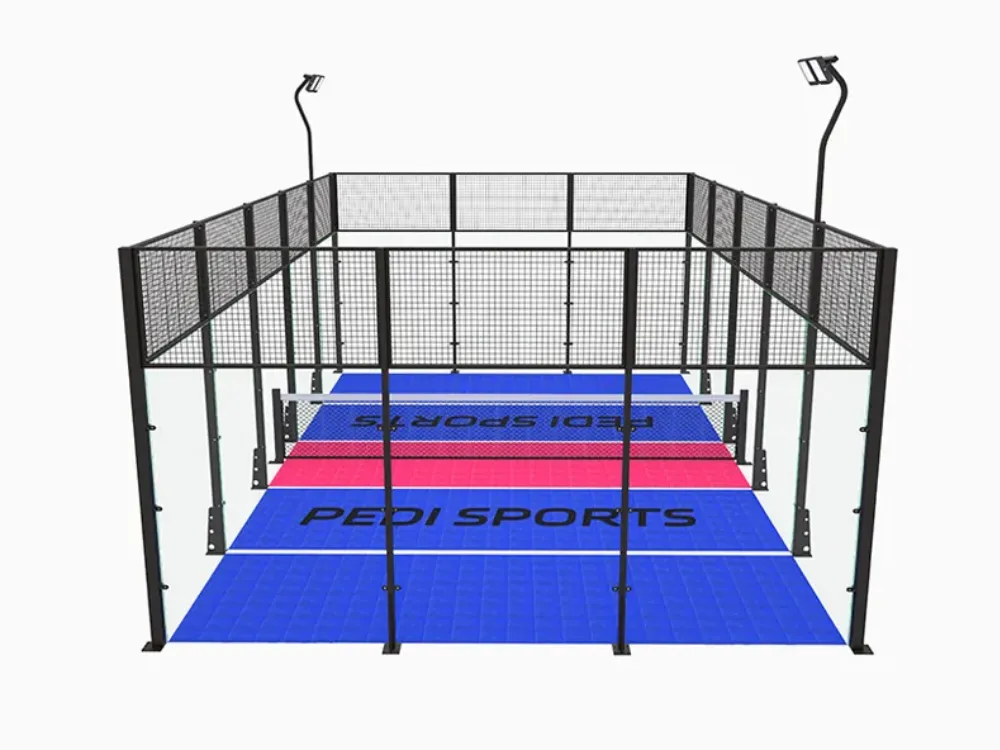
Turn your Padbol vs padel comparison into a short enquiry that a supplier can answer. Describe the activity and the venue first, then attach the site inputs and requested scope.
Request the right model documents
PEDI’s PC099 Padbol product page and padel court category provide separate product starting points. Ask for the current documents for the actual model you are considering. A public description isn’t the agreed order configuration.
Include the project location, intended use, indoor or outdoor setting, measured plan, photographs, quantity, and planning dates. Mark uncertain information clearly. Request the external system layout and the interfaces the responsible local reviewers need to assess.
For the wider Padbol purchase process, see PEDI’s Padbol court buying guide. Keep detailed budget and handover questions there rather than repeating them in the sporting comparison.
Keep revisions connected to the decision
Illustrative scenario: A buyer receives proposals with different installation and delivery boundaries. Instead of choosing from the headline totals, the buyer asks each party to identify its tasks and exclusions. The revised record supports comparison without assuming a saving, a finished project price, or a particular supplier’s superiority.
Give the selection brief a date and revision reference. Keep the corresponding model documents and responses together. When an input changes, ask which assumptions need another review.
That record keeps the Padbol vs padel discussion useful beyond the first meeting. The buyer, supplier, and operator can see what was requested, what was answered, and what remains open.
Frequently asked questions
Are Padbol and padel the same sport?
No. They differ in how the ball is played, the equipment, and the court requirements. Use separate rules and product documents for each activity, even when both are being considered for the same venue.
Which sport uses rackets?
Padel is racket-based. Padbol uses the feet and permitted body parts. Make that distinction clear in user information, equipment planning, and the description of introductory sessions.
Does a smaller playing area mean a cheaper project?
Not necessarily. The internal rectangle is one input. The selected system, site conditions, supply scope, and work required around it need their own proposals. Do not convert playing-area ratios into budget ratios.
Can one installed court be used for both?
Do not assume compatibility. The sports have different court and equipment requirements. Ask the responsible parties about the proposed system and intended use; a similar enclosure is not evidence of an approved dual-use arrangement.
Which activity should our venue choose?
Choose against documented user needs, site information, and operating responsibilities. Request the remaining evidence before committing to a product. Neither activity is a universal winner for every venue.
To move your Padbol vs padel decision forward, send PEDI your intended activity, site plan, and requested product scope. Ask for the model information needed to compare the options on a clear basis.