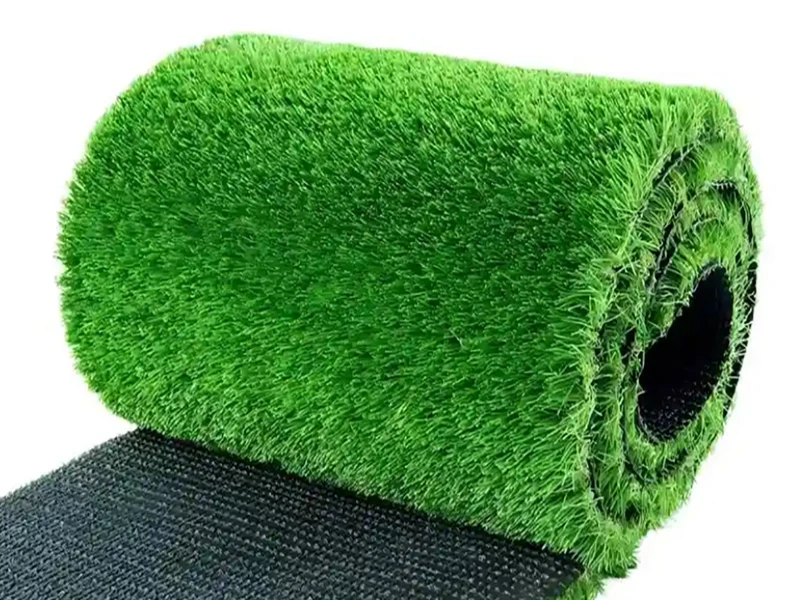
Padel is one of the fastest-growing sports in the world. As more clubs and communities invest in padel courts, one critical question arises: what type of artificial turf should you install? Ball bounce, player safety, maintenance costs, and court longevity all depend on the surface you choose. Making the right choice is the key to consistent matches, manageable maintenance, and satisfied customers.
This guide covers everything you need to know about selecting artificial turf for a padel court, including the ground system structure, the advantages of artificial grass, the differences between monofilament and texturized turf, key specifications like pile height and density, a comparison of PE and PP materials, and FIP professional standards. A product example that meets these standards is also provided. Whether you are building a community court or a commercial padel center, this guide will help you find the right turf.
1. The Padel Court Ground System
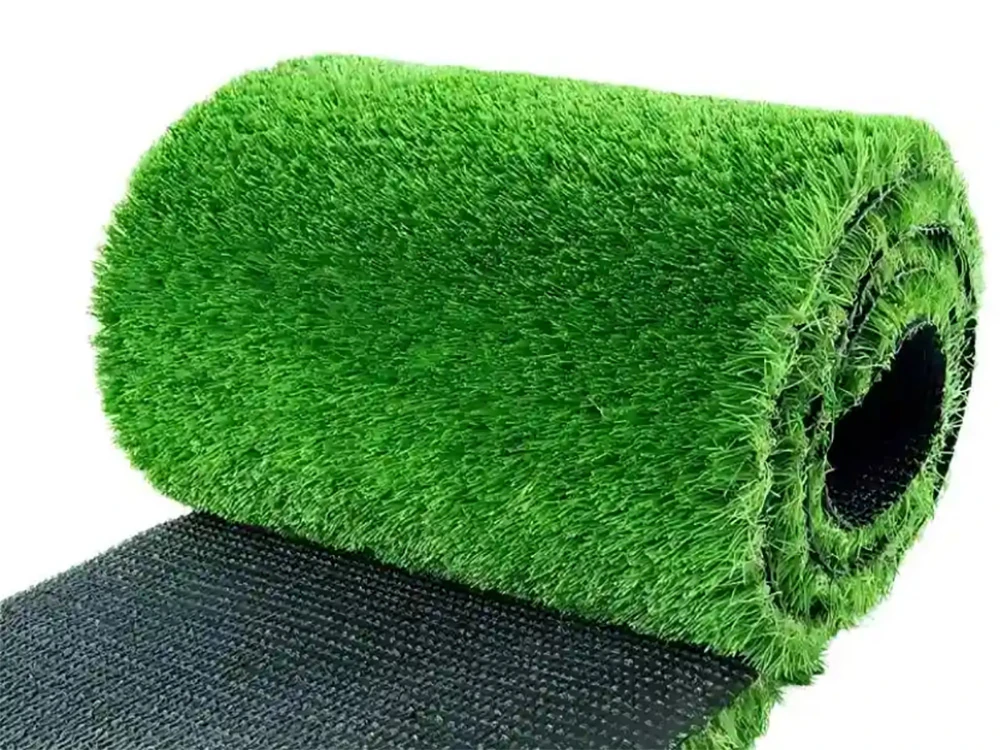
A professional padel court surface is not just “grass.” It is a layered engineering system. Each layer has a specific function, and skipping or compromising any layer will affect playability and durability.
The standard structure from bottom to top is as follows:
Base Layer (Concrete or Asphalt): Must be perfectly flat with a slight slope for drainage.
Shock Pad (Optional, Rubber or Foam): Reduces joint fatigue and improves player comfort. Commonly used in commercial clubs and tournament venues.
Artificial Turf (PE or PP Grass): It determines ball speed, bounce, and traction.
Sand Infill (Silica Sand, 0.1–0.6mm): Weighs down the turf, fixes fibers in place, and regulates ball bounce.
The shock pad is optional, but the concrete base, turf, and sand infill are considered essential for any proper padel court.
2. The Advantages of Artificial Turf for Padel
Consistent ball bounce: Natural grass gets worn and uneven. Artificial turf delivers a predictable bounce every time.
Improved player comfort: The soft, natural feel of the turf provides a comfortable playing experience, even during long sessions.
Better traction: The turf strikes a balance between grip and slide. Players can execute sharp changes of direction without their feet getting stuck, thereby reducing the risk of knee and ankle injuries.
Lower maintenance costs: No watering, mowing, fertilizing, or reseeding. A simple brushing and sand top-up once or twice a year is usually enough.
Professional appearance: This uniform, carpet-smooth appearance looks neat and professional all year round, which is crucial for clubs looking to attract paid members.
3. General Characteristics of Padel Grass
Padel-specific turf has several distinct characteristics:
Net-like fiber structure: The fibers are partially fibrillated to create a net-like structure, which helps lock the sand in place effectively.
Strong sand-holding capability: The net-like structure prevents silica sand from shifting during play, keeping the surface stable and consistent.
Lower cost: The turf is more economical to produce, making it a budget-friendly option for community courts and entry-level clubs.
4. Application Scenarios for Different Turf Types
Community courts (light to moderate usage): Entry-level or mid-range turf. Priorities: durability, low cost, easy maintenance.
Entry-level clubs: Mid-range turf with good sand-locking ability. Priorities: balance between performance and price.
Commercial clubs (high daily usage): High-density professional-grade turf. Priorities: consistent play, long lifespan, professional look.
5. Analysis of Different Turf Types: Monofilament vs. Texturized
There are two dominant yarn technologies for padel turf.
| Feature | Monofilament Turf | Texturized (Curly) Turf |
| Fiber structure | Single, straight fiber | Crimped or curled during manufacturing |
| Sand infill | Requires more sand to stabilize | Naturally holds sand without shifting |
| Ball bounce | Fast, predictable | 100% consistent, sand stays hidden |
| Maintenance | Moderate | Less maintenance required |
| Aesthetic | Standard | Carpet-like, premium look |
| Best for | Commercial clubs, tournaments, high-end projects | Windy regions, private courts, low-maintenance facilities |
6. Common Specifications and Their Differences
When comparing padel turf products, three specifications matter most: pile height, fiber density, and fiber material.
A. Pile Height: 10mm vs. 12mm vs. 15mm
| Height | Ball Speed | Player Comfort | Best For |
| 10mm | Fastest | Moderate | Fast-paced competitive play |
| 12mm | Optimal (FIP standard) | Good | Most courts – professional and amateur |
| 15mm | Slower | Highest | Recreational facilities, community courts |
Shorter grass means faster ball speed. Longer grass means higher comfort but slower play. For most clubs, 10–12mm is the right range.
B. Fiber Density (Stitches per Square Meter)
Fiber density is measured in stitches per square meter. Many assume that higher density is always better, but that is not the case. While high density provides better softness, thickness, and wear resistance, excessive density leads to higher cost, reduced drainage and air permeability, fibers that flatten more easily, and difficulty with sand infill. If density goes too high, it becomes difficult to infill with quartz sand or rubber granules. Standard padel turf usually has a density of about 10,000 to 20,000 stitches per square meter.
C. Fiber Material: PE vs. PP
Common fiber materials include Polyethylene (PE) and Polypropylene (PP). PE turf is soft, resilient, and widely used for sports fields and residential gardens. PP turf is stiff, durable, and low-cost, often used for decorative landscaping, commercial installations, or as a support fiber blended with PE.
The key differences are as follows:
| Feature | Polyethylene (PE) | Polypropylene (PP) |
| Touch & Feel | Soft, natural, close to real grass; comfortable to walk on barefoot; less likely to cause skin abrasions | Stiff, rigid; uncomfortable barefoot; higher friction |
| Resilience | Excellent – recovers quickly after being stepped on | Moderate – flattens more easily |
| Support Performance | Moderate | Superior rigidity and hardness; excellent support strength; often used as a secondary upright fiber in high-performance sports turf |
| UV Resistance | High – does not harden or fade; long outdoor lifespan | Low – degrades and fades with prolonged sun exposure |
| Cold Weather | Flexible – does not become brittle at low temperatures | Becomes brittle |
| Cost | Higher | Lower – cost-effective and economical |
| Typical Applications | Soccer fields, kindergartens, private gardens, pet areas – places where safety and comfort are priorities | Golf greens, landscape decoration, temporary exhibition flooring, or blended with PE to improve overall turf uprightness |
7. The FIP Standards for High-Quality Padel Turf
The International Padel Federation (FIP) has established clear standards for tournament-ready padel courts. If you want a court that can host official competitions, or simply want the same quality as professional venues, the following four standards are essential:
1. Pile height & material: Pile height should be between 9–12mm, with straight PE material preferred. Anti-UV, anti-static, and high-density weaving technology must be used to ensure ball speed and playing feel.
2. Flatness & traction: Joints must be smooth with no gaps after installation. The surface should provide moderate grip and sliding balance, preventing players from slipping or suffering joint injuries during high-speed direction changes.
3. Sand infill standards: Silica sand must be evenly applied, typically with a particle size of 0.1–0.6mm at 8–12kg per square meter, to secure the fibers and regulate ball bounce height and speed.
4. Drainage performance: The drainage rate must reach 30–60 liters per minute per square meter, ensuring no standing water on the court after rain or cleaning.
8. A Professional Product Example: 12mm High-Density Padel Turf
Below is a product example that meets the FIP standards above. Below is a product example that meets the FIP standards above. As a professional padel court manufacturer, PEDI offers the 12mm high-density artificial turf. This turf is designed for the sharp side-to-side moves and unique ball bounce of padel. It uses advanced Texturized (Curly) Grass. The curly fibers form a dense, non-directional surface that locks silica sand in place. The sand stays hidden and does not shift, leading to 100% consistent ball bounce, less maintenance, and a stunning carpet-like aesthetic.
Technical specifications:
| Specification | Detail |
| Pile Height | 12mm (Optimal FIP padel standard) |
| Yarn Type | Texturized (Curly) |
| Yarn Material | 100% Virgin PE (Polyethylene) – Soft & friction-resistant |
| Dtex (Yarn Weight) | 9,000 – 9,500 Dtex |
| Backing Material | Premium PU (Polyurethane) or Double PP + Net (Maximum tuft bind) |
| Gauge | 3/16 inch |
| Color Options | Padel Blue (Most Popular), Classic Green, Rust Red, Custom |
Key durability features:
Tear-proof PU backing: Unlike cheap latex backings that crack and rot over time, PU backing provides superior tuft lock, preventing fibers from pulling out even under extreme commercial use.
Extreme weather resistance: Manufactured with top-tier UV inhibitors, the PE fibers will not fade, harden, or turn brittle – whether exposed to the scorching sun of the Middle East or freezing European winters.
Optimized drainage: Equipped with precisely punched drainage holes (every 10cm), ensuring the court dries rapidly after heavy rain.
Certifications: CE and REACH certified, ensuring the product meets European safety and environmental standards.
9. Summary
The right padel turf depends on your specific needs. Community courts and entry-level clubs can use 10–12mm texturized or basic straight turf made of PE or a PE/PP blend. Commercial clubs and high-end projects should invest in 12mm monofilament or high-density texturized turf made of 100% PE. Tournament venues require 12mm monofilament turf with FIP certification. For windy or extreme climate regions, 12mm texturized curly turf with UV stabilizers is the best choice. For most clubs, the best all-around choice is a 12mm, 100% PE, texturized curly turf with PU backing. It balances ball speed, comfort, low maintenance, and durability.


