Introduction
Choosing a padel court for a commercial facility is a long-term investment. Many buyers focus only on the initial quotation, but the real value depends on product quality, supplier capability, installation support, and future maintenance costs.
Before you buy a padel court, it is important to evaluate every part of the project, from material selection to supplier service. However, many buyers still make decisions based on limited information. This may result in unexpected expenses, poor performance, or operational challenges.
In this guide, we will discuss the 7 common mistakes to avoid when buying a commercial padel court. Understanding these factors will help you choose the right court, select a reliable manufacturer, and build a facility with long-term value.

Mistake 1: Choosing a Padel Court Based Only on the Lowest Price
Price is an important factor when purchasing a padel court. However, choosing the cheapest option without checking product details may create problems later.
A reliable commercial padel court includes several components that directly affect performance, such as:
· Steel structure quality
· Glass thickness
· Artificial grass quality
· Lighting system
· Installation service
· Warranty coverage
A low quotation may reduce the initial investment, but it can increase future costs. Poor-quality materials may cause rust problems, unstable structures, frequent repairs, and higher maintenance expenses.
When comparing padel court cost, buyers should consider the overall value instead of focusing only on the purchase price. A court with durable materials, professional manufacturing, and reliable support can provide better performance throughout its service life.
Mistake 2: Not Checking the Manufacturer’s Capability
Another common mistake is choosing a supplier based only on product pictures or price lists. A professional padel court manufacturer should have strong production capability and strict quality control.
Before making a decision, buyers should evaluate several important factors.
Manufacturing Capability
A reliable manufacturer should have:
· Proper factory facilities
· Professional production equipment
· Clear manufacturing processes
· Quality inspection procedures
A supplier with its own production capability usually has better control over product consistency, customization, and quality.
Previous Projects
Past projects can show whether a manufacturer understands different application environments. Commercial clubs, hotels, and sports centers often have different requirements for design, installation, and daily operation.
Experienced suppliers are more likely to provide suitable solutions for different locations and usage needs.
Mistake 3: Ignoring Court Design and Location Requirements
A padel court should match the installation environment. Ignoring location requirements may affect player experience while increasing maintenance needs.
Space Planning
Before purchasing, buyers should confirm:
·!– /wp:paragraph –>
· Required surrounding clearance
· Available installation space
A suitable layout allows players to move safely while improving the overall experience.
Environmental Conditions
Different climates require different considerations.
For coastal areas, corrosion resistance is important because salt air can accelerate metal corrosion.
For hot climates, buyers should pay attention to material durability and UV resistance.
For rainy areas, proper drainage helps protect the playing surface and maintain court performance.
Usage Purpose
The right court type depends on the application.
For example:
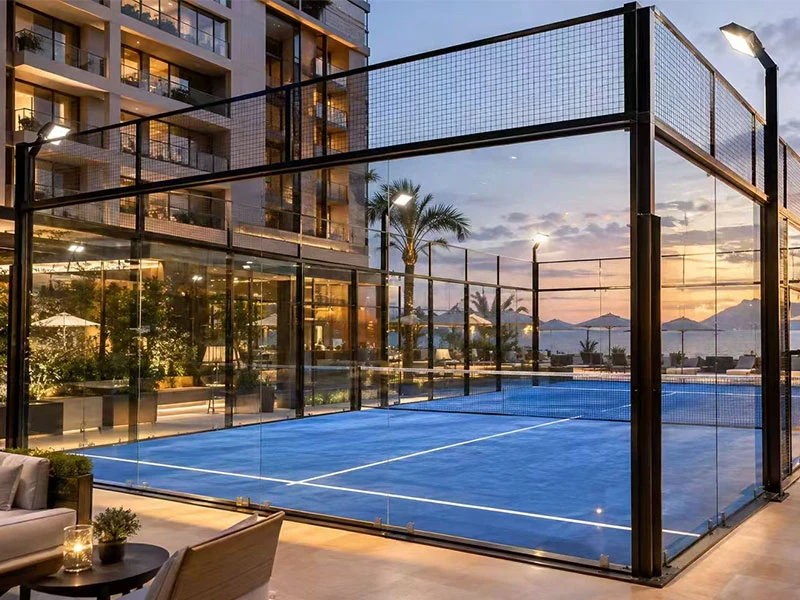
· Commercial clubs often prefer panoramic designs because they offer better visibility with a modern appearance.
· Hotels may choose premium courts that match their overall environment.
· Indoor facilities may require designs suitable for limited spaces.
Before purchasing, buyers should consider the location, expected users, and business goals.
Mistake 4: Focusing Only on Court Structure and Ignoring Player Experience
A strong structure is essential, but commercial facilities also depend on player satisfaction.
A high-quality court should provide both safety and comfort.
Glass Visibility and Safety
Panoramic glass design improves visibility for players and spectators. It creates a more open viewing experience, which is especially useful for clubs that host events or competitions.
Turf Performance
Artificial grass affects ball speed, player movement, and overall comfort. The right turf surface helps players move naturally during matches.
Lighting Quality
Many commercial facilities operate in the evening. Proper lighting improves visibility while supporting longer operating hours.
When choosing a court, buyers should consider not only durability but also the experience it provides for players.
Mistake 5: Forgetting Installation and After-Sales Support
Buying a padel court is not only about receiving the product. Installation and after-sales support also influence project success.
Before purchasing, buyers should confirm whether the supplier provides:
· Installation guidance
· Technical support
· Spare parts availability
· Warranty service
For international projects, long-term support is especially important. A supplier with overseas project experience can help solve issues related to transportation, installation, and future maintenance.
A reliable padel court manufacturer should support customers throughout the entire process, from production preparation to final installation.
Mistake 6: Not Comparing Different Court Types
Many buyers select a product before understanding the differences between court designs.
Different court types are suitable for different applications.
A panoramic padel court focuses on visibility and modern appearance. It is suitable for commercial clubs and premium venues where spectator experience matters.
A classic padel court can be a practical choice when cost efficiency and structural performance are the main priorities.
Compact courts are suitable for facilities with limited space because they help maximize available areas.
Before you buy a padel court, you should compare:
· Court design
· Installation environment
· Expected usage
· Investment budget
· Long-term return
The best option is not always the most expensive one. It should match the project requirements and business objectives.
Mistake 7: Choosing a Supplier Without Understanding the Full Buying Process
A successful padel court project requires careful planning. Many buyers focus only on product selection or price comparison while ignoring the complete purchasing process. This can lead to communication issues, delayed delivery, unexpected costs, or installation problems.
A professional buying process usually includes the following steps:
1. Define Project Requirements
Before contacting suppliers, buyers should clearly define their project requirements.
Important factors include the installation location, available space, court type, expected users, and investment budget. Clear requirements help manufacturers recommend suitable solutions and avoid unnecessary adjustments later.
2. Compare Manufacturers
Choosing the right manufacturer is one of the most important decisions in a padel court project.
Buyers should evaluate product quality, manufacturing capability, previous project experience, and after-sales support. A supplier with professional production experience can usually provide more reliable products and better project guidance.
3. Confirm Customization Options
Commercial facilities often have different design requirements. Buyers should discuss customization options before production begins.
These options may include court colors, glass design, lighting solutions, accessories, and other details. Confirming these requirements early helps avoid delays and ensures the final court matches the project expectations.
4. Production and Shipping
Production quality and transportation arrangements directly affect the project schedule.
Buyers should confirm production timelines, quality inspection procedures, packaging methods, and shipping details with the supplier. Good communication during this stage helps reduce delivery risks.
5. Installation and Operation
Proper installation is essential for court performance and long-term durability.
Before opening the facility, buyers should ensure the court is installed according to technical requirements. Professional installation guidance can help prevent structural issues and improve daily operation efficiency.
Following a clear purchasing process helps buyers control quality while reducing unexpected costs.
Why Choose PEDI Commercial Padel Courts?
After understanding the common mistakes when purchasing a commercial padel court, choosing an experienced manufacturer is the next important step.
PEDI provides factory-direct padel court solutions for commercial applications worldwide. With different court designs available, PEDI helps customers select the right option based on installation space, application requirements, and business goals.
Professional Manufacturing and Flexible Court Solutions
PEDI offers a wide range of padel court models for different commercial environments, including sports clubs, hotels, resorts, schools, and professional facilities.
Each court type is designed for specific application needs. Buyers can choose a suitable solution based on visibility requirements, available space, installation conditions, and investment plans.
PEDI also supports customization options, including court colors, design details, lighting solutions, and accessories. This allows each project to match its specific operating environment.
Designed for Better Player Experience
A successful padel facility requires more than structural strength. Player experience also plays an important role in attracting users and improving customer satisfaction.
PEDI commercial padel courts are designed with key features that support daily operation:
| Component / Feature | Specification Details |
| Product Name | Panoramic Padel Tennis Court |
| Court Size | 20m×10m |
| Artificial Turf | Height: 12mm;Dtex: 9500;PP+PP+PU Anti-UV |
| Tempered Glass | 1995*2995*12mm |
| Column&Mesh | Hot-dip Galvanized Zinc-Rich Powder + Paint Powder |
| Corner Column | 100mm×100mm×3mm |
| Fence Column | 50mm×100mm×3mm |
| Frame&Mesh | Frame:50mm×30mm×3mm Mesh:50mm×50mm×4mm |
| LED Light | 8pcs,200W LED; 300LUX;IP65 |
These features make PEDI courts suitable for daily training, recreational games, and competitive events.
Reliable Support for Global Projects
For international buyers, installation guidance and after-sales support are essential factors when selecting a padel court manufacturer.
PEDI provides support throughout the project process, including product selection, production preparation, installation guidance, and technical assistance.
With factory-direct solutions and different court options, we help buyers reduce purchasing risks while building commercial padel facilities with reliable performance.
By choosing PEDI, businesses can avoid common purchasing mistakes and invest in a commercial padel court solution that delivers long-term value.
Conclusion
Buying a commercial padel court is a long-term investment that requires careful evaluation. As discussed in this guide, buyers should consider more than the initial price. Product quality, manufacturer capability, court design, installation support, and after-sales service all affect the final project result.
Avoiding these seven common mistakes can help businesses reduce unnecessary costs, select a suitable court solution, and create a better experience for players. A reliable padel court manufacturer can provide not only a high-quality product but also professional support throughout the entire purchasing process.
If you are planning to buy a padel court for a sports club, hotel, school, or commercial facility, choosing the right supplier is an important first step. Contact PEDI today to discuss your project requirements and find a suitable padel court solution for your business.