Key Takeaways
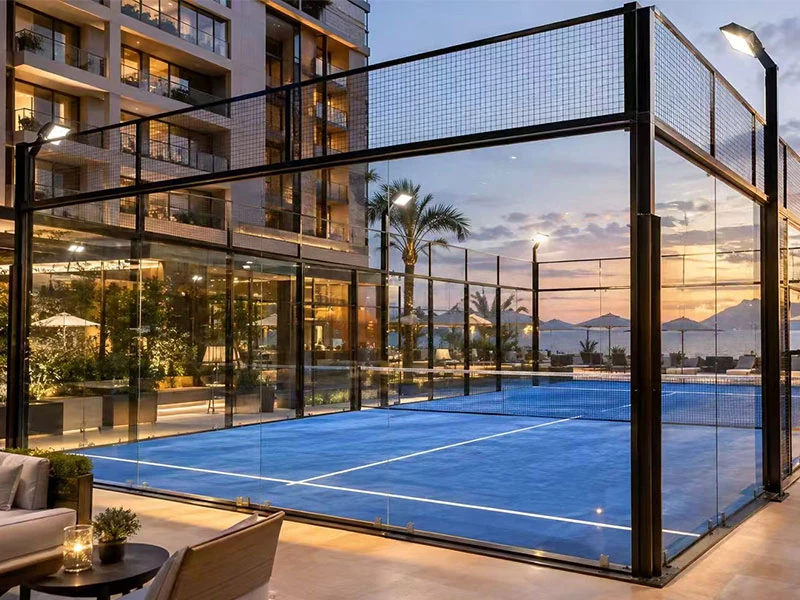
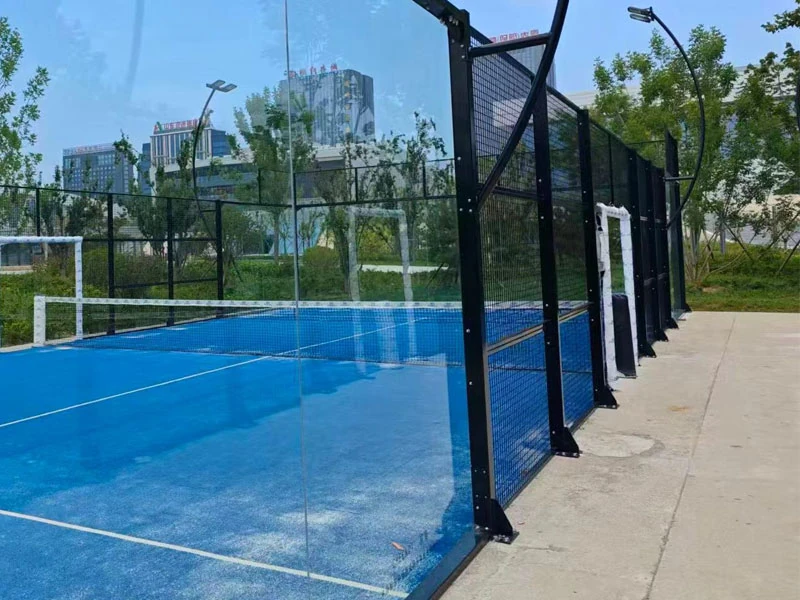
· A classic padel court includes a steel frame, glass panels, artificial turf, lighting, and a central net.
· Classic and Panoramic courts use the same standard playing area of 20 m × 10 m. Their main differences are the glass layout and structural design.
· Facility space, local weather, material quality, usage, and maintenance should be considered before a court is selected.
· Proper site preparation is essential for safe and efficient padel court installation.
· A Heavy-Duty Classic Padel Court can be a practical option for facilities that need a durable court for regular use.
What Is a classic padel court?
A classic padel court is an enclosed court with a steel structure, glass walls, artificial turf, lighting, and a central net. According to the International Padel Federation (FIP), padel is played on a rectangular court measuring 20 m × 10 m, with enclosed walls forming part of the playing area.
For buyers, the court should be assessed as a complete installation. The structure, glass, surface, and lighting should match the facility’s site and intended use.
Key Components of a classic padel court
A classic padel court typically includes:
· Glass panels
· Steel structure
· Artificial turf
· Lighting
· Central net
These components form the main structure of the court. Their specifications should be confirmed before purchase, especially for outdoor facilities or courts that will see frequent use.
Classic vs. Panoramic Padel Courts
Both court types use the standard 20 m × 10 m playing area, but their structural design and visual appearance are different.
| Feature | Classic Padel Court | Panoramic Padel Court |
| Structural Design | Visible steel posts and framing | More glass with a reduced visual frame |
| Visibility | Good visibility for players and spectators | Wider panoramic view |
| Appearance | Traditional and practical | Modern and visually open |
| Durability | Robust structure for regular use | Durable, with more glass requiring careful maintenance |
| Maintenance | Relatively straightforward | More attention may be needed for the larger glass surfaces |
| Cost | Same | Same |
| Best For | Sports clubs, schools, community facilities, and commercial venues | Premium clubs, resorts, showcase venues, and design-focused facilities |
| Main Advantage | Practical structure for regular use | Enhanced visibility and visual openness |
Padel Court Types: Which One Is Right for Your Facility?
The right choice depends on how the court will be used. Consider the venue, expected traffic, and the importance of spectator visibility before making a decision.
Classic Padel Court
A classic court can be a suitable choice when regular use is the main priority. For example, a sports club with several courts may prefer this configuration for daily training and recreational play.
It can also work well when the facility needs a practical court design that is easy to inspect and maintain.
Panoramic Padel Court
A Panoramic court may be more suitable when spectators need a clear view of the game. It can also fit venues where the court is part of the overall visual design.
For example, a resort or showcase venue may place greater value on an open view of the court.
How to Choose Between Them
Start with the facility’s main purpose. If the court will mainly support regular play, a classic design may fit the plan. If spectator viewing or visual presentation is a major consideration, a Panoramic design may be worth considering.
Before ordering, compare the supplier’s specifications with the actual site requirements and the padel court types available for your facility.
Check the Official Padel Court Dimensions Before Choosing
Before ordering a padel court, confirm the required dimensions with the supplier and the applicable rules.
Standard Padel Court Dimensions: 20 m × 10 m
According to the International Padel Federation (FIP), a standard padel court measures 20 m × 10 m, with a permitted dimensional tolerance of 0.5%.
For buyers searching for padel court dimensions 20m x 10m official fip requirements, the 20 m × 10 m playing area is the key dimension to verify before site preparation.
How Much Space Does a Padel Court Really Need?
The total site area should be larger than the court footprint to allow space for access and facility operations.
Before site preparation, review the supplier’s installation drawings to confirm the required foundation area and surrounding clearance.
Other Important Dimensions and Clearance Requirements
Besides the 20 m × 10 m playing area, buyers should confirm:
· Court height
· Glass dimensions
· Net dimensions
· Door position and size
· Required clearance
· Lighting positions
· Foundation dimensions
These details should be confirmed before construction begins, especially when the court will be installed in an existing facility.
5 Factors to Consider When Choosing a classic padel court
The right court depends on the facility’s site, usage, and maintenance needs. Check these five factors before placing an order.
1. Facility Location and Available Space
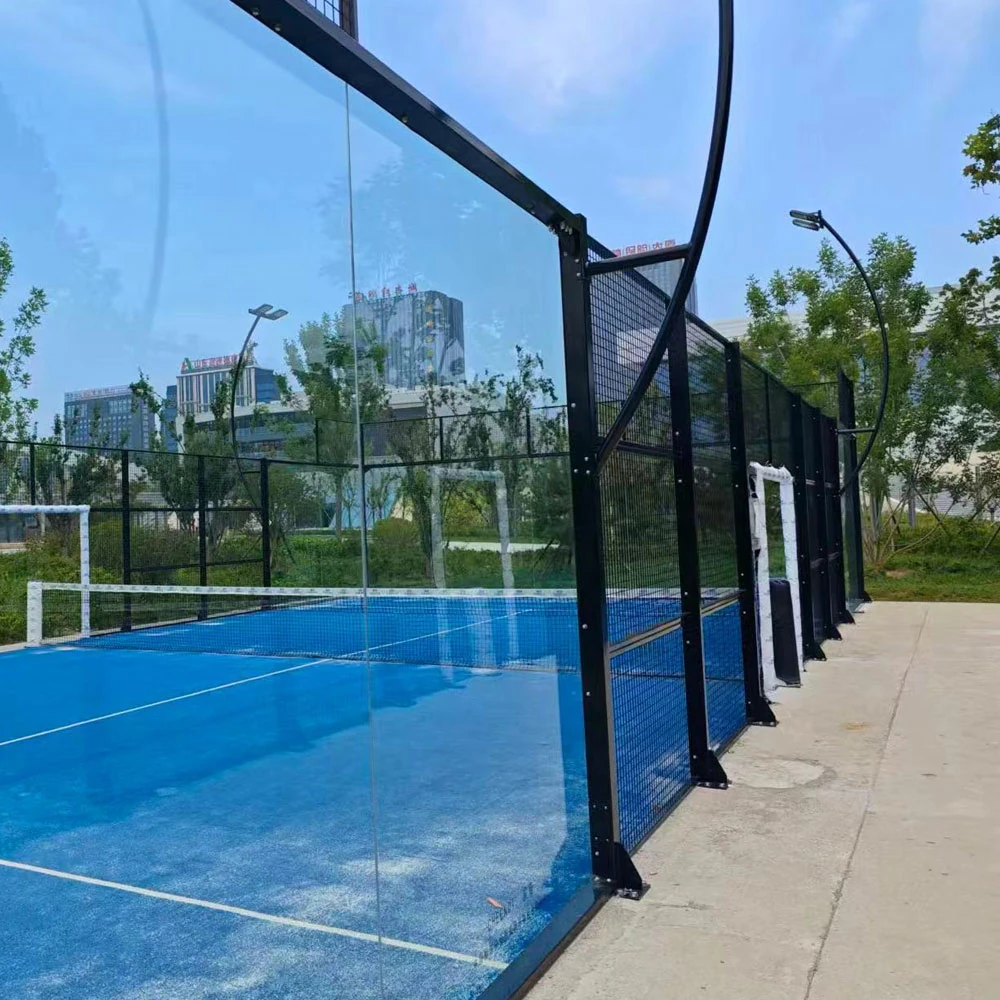
Start with the installation site. An outdoor court needs suitable ground conditions and enough space around the court for access and routine work.
2. Weather and Environmental Conditions
Local weather should be considered for outdoor courts. If the site is humid or near the coast, corrosion protection for the steel structure deserves particular attention.
3. Court Structure and Material Quality
Ask for clear specifications for the main court components. For example, the steel grade, glass thickness, and turf type should be stated in the quotation so they can be checked before purchase.
4. Facility Usage
Think about how often the court will be used. A busy padel club may need a more durable configuration, while a hotel may place greater value on appearance.
5. Installation and Maintenance
Installation requirements should be confirmed before the court is ordered. Buyers should also check how routine maintenance will be handled and whether replacement parts are available when needed.
What to Check Before Padel Court Installation
Before padel court installation, check the site against the supplier’s drawings. Use the following checklist to prepare the site before delivery.
Site Preparation
· Confirm that the installation surface is level.
· Check the foundation size and fixing points.
· Plan drainage for outdoor courts.
· Complete the required ground work before delivery.
Access and Logistics
· Confirm that delivery vehicles can reach the site.
· Check the unloading area and temporary storage space.
· Tell the supplier about any site access restrictions before delivery.
Utilities and Lighting
· Confirm the available power supply.
· Check the planned lighting positions.
· Plan cable routes before installation begins.
Safety and Compliance
· Check the local building requirements before construction.
· Confirm that the court specifications meet the required safety standards.
· Ask the supplier for installation drawings and instructions.
A Heavy-Duty Classic Padel Court for Commercial Facilities
If you are comparing courts for regular commercial use, it helps to look at the actual specifications rather than the design alone.
PEDI’s Heavy-Duty Classic Padel Court is one example. It uses a reinforced galvanized steel structure with a standard 20 m × 10 m court size. The model also includes 12 mm tempered glass, 12 mm artificial turf, and eight 200 W LED lights.
Suitable for Different Commercial Venues
The Heavy-Duty Classic Padel Court can be used in facilities where regular play is expected. It is suitable for padel clubs, hotels, resorts, schools, and community sports facilities.
For a project with several courts, the Classic design can also be considered when practical maintenance is an important factor. Individual glass sections can be replaced when necessary.
Specifications and Installation Support
| Feature | PEDI Heavy-Duty Classic Padel Court |
| Model | PC003 |
| Court Size | 20 m × 10 m |
| Tempered Glass | 1995 × 2995 × 12 mm |
| Artificial Turf | 12 mm, 9,500 Dtex |
| Corner Column | 100 × 100 × 3 mm |
| Fence Column | 50 × 100 × 3 mm |
| LED Lighting | 8 × 200 W, 300 LUX, IP65 |
Installation and After-Sales Support
PEDI provides installation drawings and 3D video tutorials to support on-site installation. For overseas projects, buyers can also contact the supplier for technical support and replacement guidance when maintenance is required.
FAQ
Q1. What should I confirm before ordering a classic padel court?
Confirm the court dimensions, steel structure, glass thickness, turf specifications, lighting, and installation requirements. The supplier should provide clear specifications before production begins.
Q2. Does a classic padel court need extra space beyond 20 m × 10 m?
Yes. The 20 m × 10 m size refers to the playing area. Extra space is needed around the court for access, maintenance, and installation.
Q3. Is a classic padel court suitable for outdoor use?
Yes, provided the structure and materials are selected for local weather conditions. For coastal or humid areas, buyers should pay close attention to corrosion protection.
Q4. How can I reduce maintenance downtime?
Ask how damaged components are replaced before placing an order. A classic court with individually supported glass panels can make single-panel replacement easier when repairs are needed.
Q5. What installation support should I expect from the supplier?
Ask for installation drawings and clear assembly instructions. PEDI also provides 3D installation tutorials and technical support for overseas projects.
Conclusion
Choosing the right classic padel court starts with the needs of your facility. Check the available space first. Then consider how often the court will be used and which padel court types fit the venue.
Next, confirm the court size and key specifications. The standard playing area is 20 m × 10 m under FIP rules. Before placing an order, make sure the steel structure, glass, turf, and lighting meet your project requirements.
Site preparation should also be planned before padel court installation. If you are considering a classic padel court for your facility, contact PEDI for detailed specifications, installation guidance, and a quotation.