A premium padel club needs more than attractive courts. Players notice the playing surface, lighting, glass, viewing areas, and overall comfort from the moment they arrive. For owners, these details also affect maintenance, daily operations, and long-term value.
The court should be planned as part of the club rather than treated as a separate product. A clear club concept, suitable court design, supporting facilities, and reliable technical support should all be considered before construction begins.
Key Takeaways
- Define the club’s target players and business model before selecting the courts.
- Choose professional courts that match expected use, site conditions, and maintenance needs.
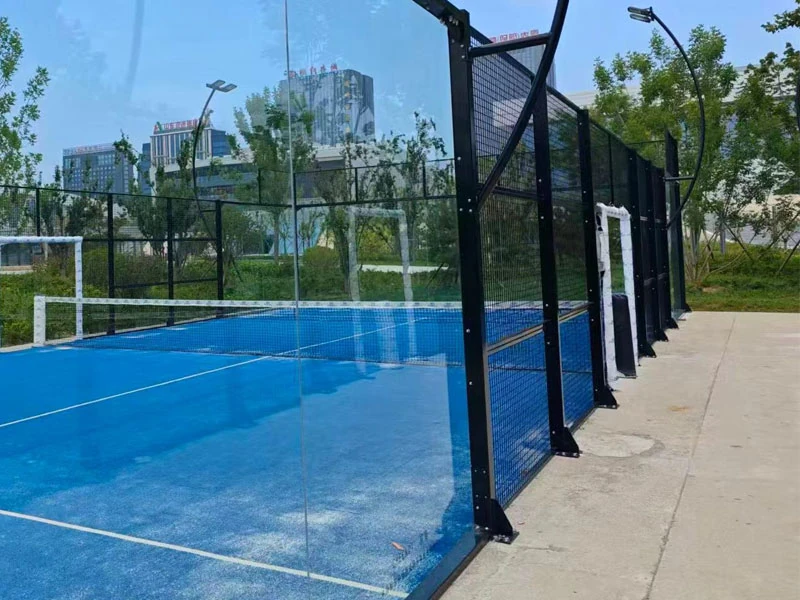
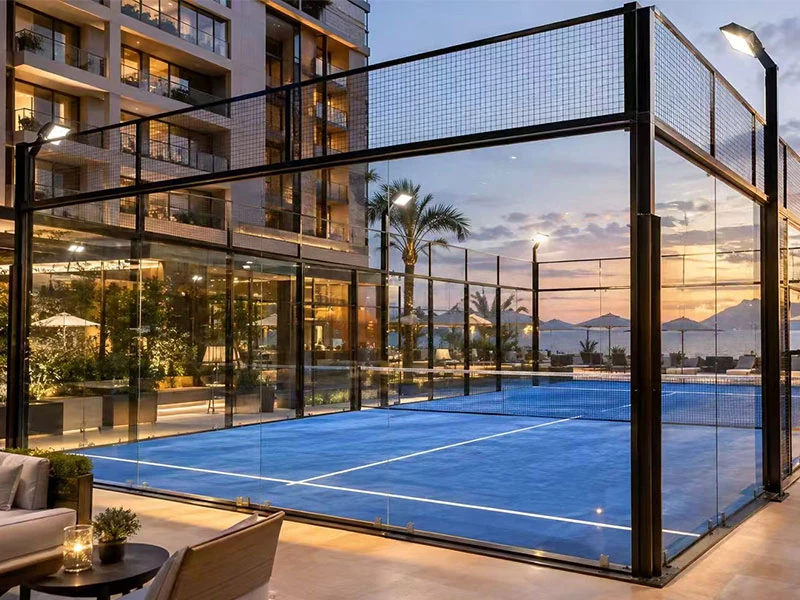
- A full panoramic padel court can create an open visual environment for premium clubs, events, and spectator-focused venues.
- Reception, lounges, changing rooms, and viewing areas should be planned around the courts.
- When comparing a manufacturer of padel courts, review materials, customization, installation support, and after-sales service.
- If tournaments are planned, court specifications should be checked against current FIP requirements.
Start with a Clear Premium Padel Club Concept
Before selecting the courts, define what the club is designed to offer. A premium venue may serve experienced players, professional athletes, corporate clients, or members who mainly play for recreation.
The target audience affects the court design, training areas, spectator spaces, and supporting facilities. The business model should also be defined early. Memberships, court rental, coaching, tournaments, corporate events, and hospitality services can all form part of the plan.
Define Your Target Players and Club Positioning
Start by identifying the main customer groups. A club focused on professional training will have different requirements from one built around memberships and social activities.
The expected use of the venue should also guide court selection. A high-frequency commercial club may need durable materials and components that are easy to maintain or replace.
Plan the Club Around the Player Experience
Consider the player journey from the entrance to the court and back.
Reception should be easy to find. Changing rooms should be convenient to access. Courts should connect naturally with viewing and social areas.
A premium club should feel consistent throughout the venue. The courts may be the main attraction, but the surrounding spaces complete the experience.
Choose Professional Padel Courts for Commercial Use
The court is where players spend most of their time, so its materials and construction should match the club’s expected use and site conditions. Before ordering a professional padel court, buyers should review the key specifications below.
| Specification | What to Check |
| Steel structure | Material, connections, and surface treatment |
| Glass and mesh | Safety, thickness, size, and corrosion protection |
| Artificial turf | Fiber, pile height, backing, and drainage |
| Lighting | Output, uniformity, and glare control |
| Court dimensions | 20 m × 10 m and applicable FIP requirements |
For outdoor courts, corrosion protection and drainage deserve particular attention. Coastal sites may require additional protection because salt and moisture can accelerate corrosion. Effective drainage also helps protect the turf and reduce maintenance needs.
Glass and fencing should provide safe boundaries while maintaining clear visibility. If the club will host tournaments or broadcasting events, lighting and other court specifications should be checked against the applicable FIP requirements during the design stage.
Choose the Right Premium Padel Court Design
Once the club concept and basic court requirements have been defined, the court design can be selected to match the venue.
Full Panoramic Padel Court for an Open Premium Look
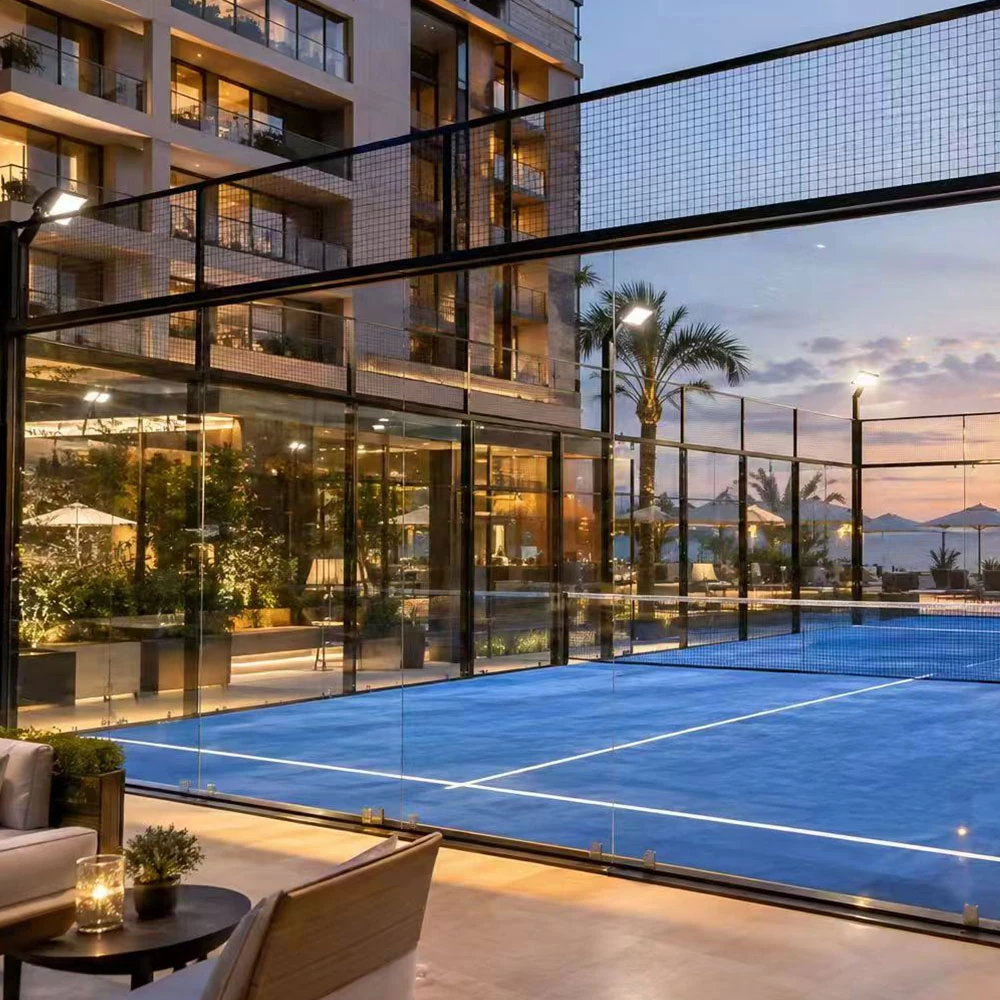
A full panoramic padel court is designed to reduce visual obstruction around the glass areas. This creates a more open appearance and allows the court to become part of the club’s visual environment.
This design can suit premium clubs, tournament venues, and facilities where photography, video content, or spectator viewing is important.
However, panoramic construction should not be selected for appearance alone. Structural design, glass specifications, installation conditions, and local weather should also be reviewed.
Match the Court Design with Your Brand Identity
The court should fit the rest of the club. Steel colors, turf color, lighting, logos, and structural finishes can be coordinated with the club’s visual identity.
This is particularly useful when several courts are installed. Consistent finishes can create a more cohesive appearance across the venue.
Customization should be considered together with the building’s architecture and branding rather than treated as a final decorative step.
Design Club Facilities Around the Courts
The courts should influence the spatial layout without taking over the entire facility. Supporting spaces should make movement between playing, changing, watching, and socializing convenient.
Create an Attractive Reception and Entrance
The entrance creates the first impression of the club. Branding should be clear without making the space feel crowded.
Visitors should be able to understand the layout quickly. The route from reception to the courts, changing rooms, and lounge areas should be easy to follow.
If panoramic courts are visible from the entrance, they can also become a strong visual feature.
Build Comfortable Social and Player Areas
Padel is often played as a social activity. A premium club can support this with comfortable spaces before and after matches.
Lounges, cafés, meeting areas, and player areas can encourage members to stay longer after their games. The goal is not simply to add more facilities. Each space should support the way members use the club.
Changing rooms should provide enough space, privacy, showers, and lockers. Convenient access is particularly important for players who spend several hours at the venue for training or events.
Plan Viewing Areas for Matches and Events
Viewing areas should be considered when the court layout is developed.
A full panoramic padel court can provide clearer sightlines because it reduces visual obstruction around the court. This can benefit spectators and coaches while also providing more flexible positions for photography and video.
For tournaments, the layout should also account for players, officials, cameras, event staff, and spectator movement. Requirements should be checked against the relevant competition category before construction begins.
Plan Club Operations and Event Use
A premium venue also needs a practical operating plan. Court design, booking schedules, memberships, and events should work together.
Court Booking and Membership Management
Online booking can make court use easier to manage. Different membership levels can be linked to booking privileges, training programs, or event access.
Court schedules should also allow time for maintenance and tournaments. This helps keep daily operations organized while reducing conflicts between regular bookings and special events.
Create Multiple Revenue Streams
A premium club does not need to rely on court rental alone. Possible revenue sources include:
- Membership fees
- Court rental
- Coaching and training
- Tournaments
- Corporate events
- Private activities
- Food and beverages
- Retail products
The final mix should reflect the local market, target customers, and available facilities.
Design for Tournaments and Events
If competitions are part of the business plan, the venue should be prepared from the beginning.
Consider court visibility, lighting, spectator capacity, player circulation, equipment access, and event staff areas. The relevant FIP requirements should be reviewed according to the competition category before construction begins.
How to Choose a Reliable Manufacturer of Padel Courts
Choosing a manufacturer of padel courts involves more than comparing prices. Buyers should review the following areas before placing an order.
| Evaluation Area | What to Check |
| Materials | Steel, glass, mesh, turf, and lighting |
| Standards | Applicable product and safety standards |
| Customization | Colors, logos, turf, and lighting |
| Technical support | Drawings and installation guidance |
| After-sales service | Warranty, spare parts, and maintenance |
For professional or competitive venues, the manufacturer’s specifications should also be compared with the applicable FIP requirements. Buyers should confirm that the proposed glass meets the relevant safety requirements, such as those covered by EN 12150.
Before comparing quotations, buyers should also confirm which technical and after-sales services are included. This makes it easier to compare suppliers based on the complete project scope rather than the initial court price alone.
Why the Premium Super Panoramic Padel Court Fits High-End Clubs
For clubs that want professional playing conditions with a strong visual identity, PEDI’s Premium Super Panoramic Padel Court provides one example of this approach.
The PC002 is designed as a 20 m × 10 m court. Its product specifications include 12 mm tempered glass, 12 mm artificial turf with a Dtex rating of 9500, a 50 × 30 × 3 mm frame, 50 × 50 × 4 mm mesh, and eight 200 W LED lights rated at 300 lux.
360° Unobstructed Visibility
The PC002 uses structural glass-to-glass fixation and thickened top and bottom steel ring beams to remove vertical metal pillars from the rear and corner glass walls, according to the manufacturer’s product information.
This creates an open 360° view around the court. The design can be considered for premium clubs where clear sightlines are important for spectators, coaches, and cameras.
Professional Construction for Commercial Use
The court combines a galvanized and powder-coated steel structure with tempered glass, welded mesh, artificial turf, and LED lighting. These components are specified for commercial padel applications on the product page.
For outdoor projects, the installation environment should still be reviewed carefully. PEDI recommends the Super Panoramic model mainly for indoor clubs or locations with moderate weather. Other court models are recommended for areas exposed to frequent hurricanes or extreme high winds.
This is important because court design should always be matched to actual site conditions rather than selected by appearance alone.
Customization for Club Branding
The PC002 supports customization for steel-part colors, logos, LED lighting, turf color, and structural finishes. These options allow the court to follow the visual identity of the club.
For a high-end venue, this can help create a consistent appearance between the entrance, player areas, viewing spaces, and courts.
FAQ
Q1. What should be considered when planning a premium padel club?
A premium padel club should consider its target players, business model, court requirements, supporting facilities, and operating needs. Site conditions and future tournament or event use should also be planned early.
Q2. Are full panoramic padel courts suitable for outdoor clubs?
They can be suitable for outdoor clubs when the court structure matches local site and weather conditions. Wind exposure, corrosion risk, drainage, and extreme weather should be reviewed before selection.
Q3. What standards should buyers check when purchasing padel courts?
Buyers should check the applicable FIP requirements for competition venues and relevant safety standards for court components. The manufacturer should also provide clear specifications for materials, dimensions, glass, and other key components.
Q4. What should I ask a padel court manufacturer before placing an order?
Ask for specifications covering the steel structure, glass, mesh, turf, lighting, dimensions, customization, and installation support. Warranty, spare parts, and after-sales service should also be confirmed before ordering.
Conclusion
Designing a premium padel club requires the court, building, player facilities, and operating model to be considered as one project. The target players and business model should be defined first, followed by the court specifications, spatial layout, and event requirements.
For venues that place strong emphasis on visibility and design, a full panoramic padel court can become an important part of the club’s identity. Before purchasing, buyers should confirm the court’s structure, glass, turf, lighting, site suitability, customization options, installation support, and after-sales service with the manufacturer of padel courts.