If you’re planning a new padel facility or converting an existing tennis court, proper space planning should be one of your first priorities. A court that feels too tight can limit player movement, create safety issues, and make future maintenance more difficult — especially in commercial projects. In this guide, we’ll look at the standard dimensions of a padel court, the recommended clearance around it, and the key differences between indoor and outdoor installations.
1.What Are the Standard Dimensions of a Padel Court
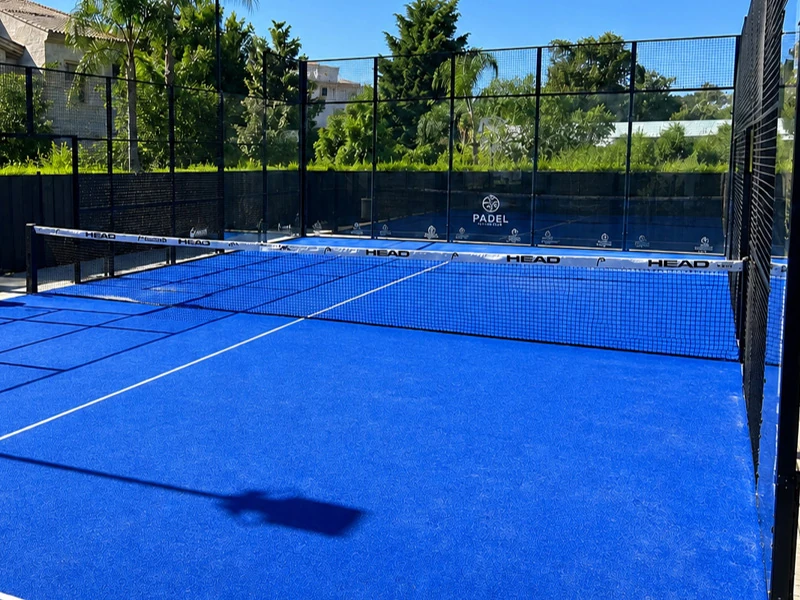
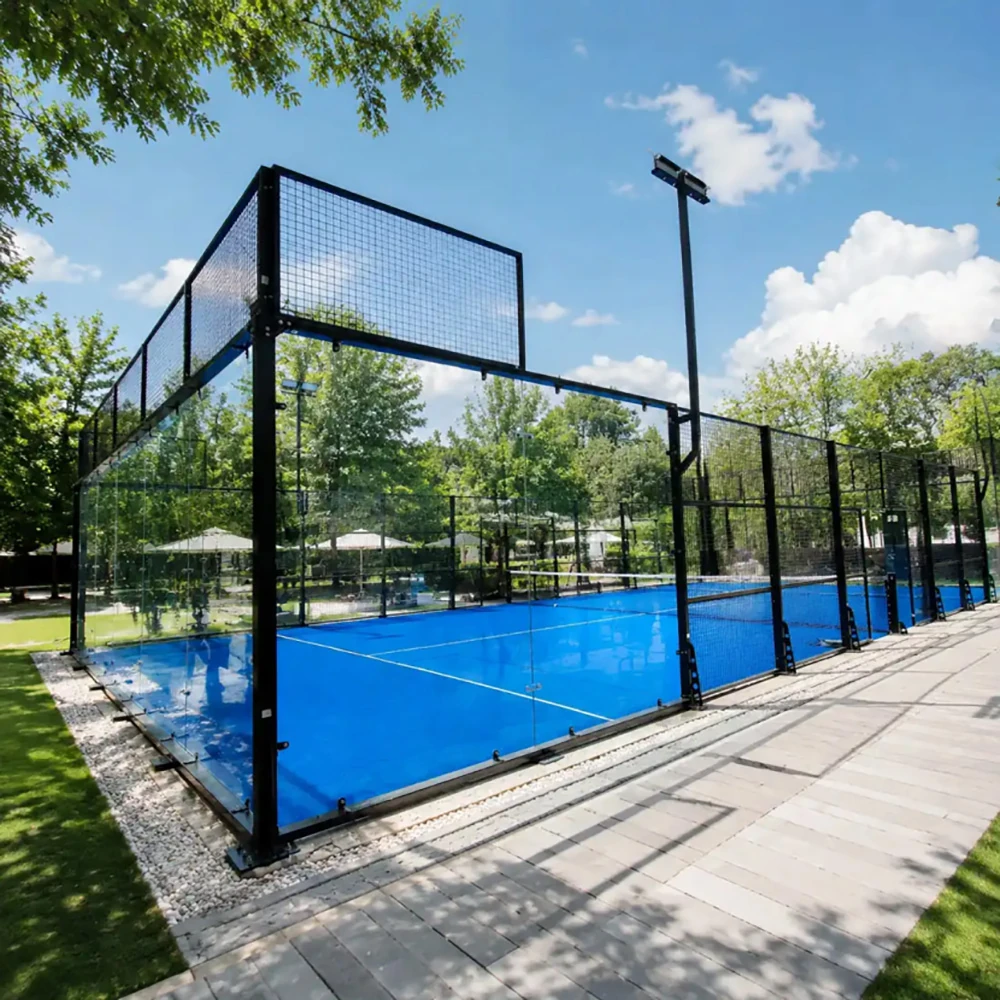
A standard doubles padel court has a playing area of 20m (length) × 10m (width), which is the official size used for most commercial clubs, tournaments, and competitive matches. This measurement refers to the internal playing area enclosed by the court structure, including the tempered glass walls and steel mesh fencing.
For singles play, the court width can be reduced to 6m while maintaining the same 20m length. Single padel courts are less common in commercial facilities but are sometimes used for private training areas or space-limited projects.
In some projects, court dimensions may also be customized based on the actual installation space and site conditions. For example, smaller layouts such as 18m × 6m or 16m × 8m are sometimes used for space-limited facilities or private training areas.
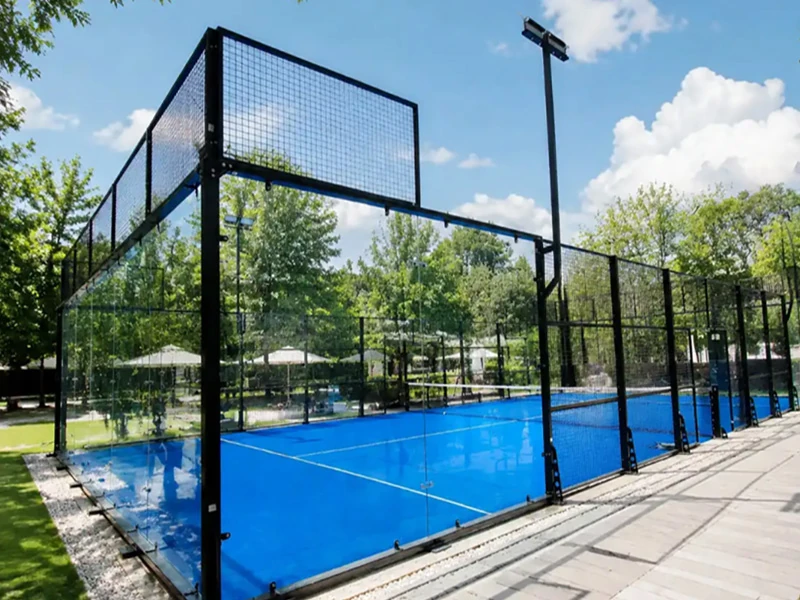
The overall enclosure height of a standard padel court is approximately 4m. The lower sections of the back and side walls use 3m-high tempered glass panels, while the upper sections are enclosed with an additional 1m of steel mesh fencing.
However, when lighting poles are included, the overall installation height of the court is typically around 5.6m. For planning purposes, a minimum height allowance of 6m is generally recommended.
2.How Much Space Should You Reserve Around a Padel Court
Because padel involves frequent high lobs and rebound shots, the 20×10 meter internal dimension alone is far from enough. You also need enough clearance around the court for player movement, maintenance access, and spectator circulation.
2.1 Minimum vs Comfortable Court Footprint
- Minimum footprint: 22m (L) × 12m (W). This layout leaves only limited clearance around the court and is generally suitable for private or low-traffic installations.
- Comfortable footprint: 24m (L) × 14m (W). This is the preferred layout for commercial clubs and competition venues. The additional space creates more comfortable walkways around the court, making it easier for players, referees, coaches, and spectators to move safely and comfortably.
2.2 Recommended Overhead Clearance for Indoor Courts
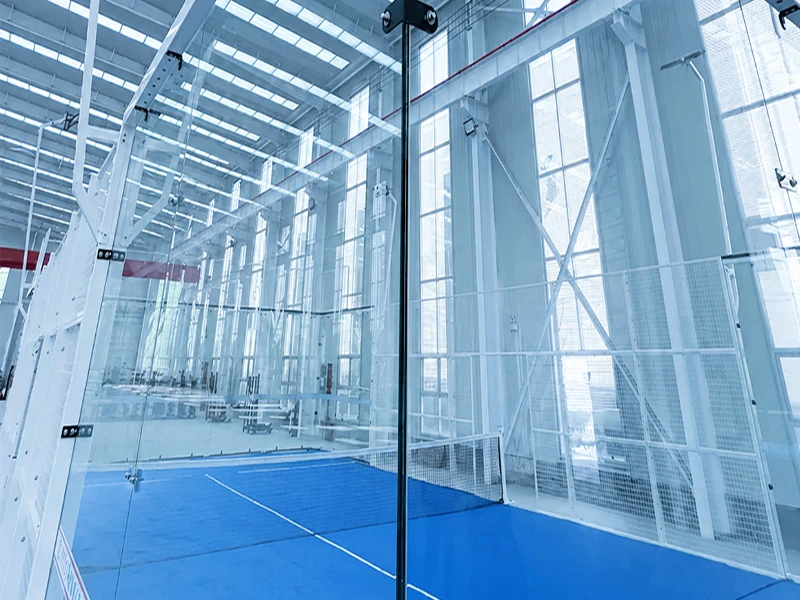
For indoor padel courts, overhead clearance is just as important as the court footprint itself. Although the main court enclosure is approximately 4m high, the overall installation height can reach around 5.6m due to the lighting poles. For this reason, a minimum height allowance of 6m is generally recommended for the court structure itself.
However, indoor venues still require significantly greater ceiling clearance above the court to support normal gameplay, especially for high lobs and defensive overhead shots.
In most indoor projects, a clear ceiling height of at least 8.5m is recommended, with 9m considered ideal for commercial clubs and competitive matches. This measurement should be taken from the surface of the artificial turf to the top of the lowest overhead obstruction (such as ceiling joists, lighting fixtures, ventilation ducts, or suspended equipment).
The reason is simple: padel relies heavily on high lobs and defensive overhead shots. If the ceiling is too low, players will constantly hit the ball against the roof structure, disrupting rallies and negatively affecting the playing experience. In serious cases, players may unconsciously avoid using lob shots altogether, which changes the natural rhythm and tactics of the game.
2.3 Why Proper Clearance Matters
Player safety
During matches, players often move beyond the glass walls to chase difficult shots or retrieve balls. Without enough clearance around the court, nearby walls, fences, or adjacent courts can increase the risk of collisions. Even though panoramic courts remove vertical pillars behind the back glass, sufficient buffer space is still essential for safe play.
Spectator Circulation and Refereeing
Proper perimeter space also improves movement around the venue. Wider walkways make it easier for players, coaches, referees, and spectators to circulate comfortably, especially during tournaments or peak operating hours. Additional space is also useful for camera setups and match observation in commercial clubs.
Maintenance access
Routine maintenance requires safe access around the court perimeter. Tasks such as cleaning glass panels, inspecting steel structures, and servicing overhead LED lighting are much easier when enough surrounding space is reserved during the planning stage.
3. How Many Padel Courts Fit in a Standard Tennis Court
One of the biggest advantages of padel is its efficient use of space. Compared with traditional tennis facilities, padel courts require a much smaller footprint, allowing sports clubs and commercial venues to increase court capacity and improve revenue potential per square meter.
In many cases, a single standard tennis court can accommodate 2 to 3 padel courts, depending on the layout configuration and the amount of surrounding clearance reserved. This makes tennis-to-padel conversion one of the most popular upgrade strategies for existing sports clubs and recreational facilities.
2-court layout: Each court uses the comfortable footprint (24×14m). Two courts side by side require a total width of about 28m and length of 24m, fitting well within a tennis court area with ample walkways.
3-court layout: Using the minimum footprint (22×12m) and optimized arrangement (e.g., two lengthwise and one crosswise), three courts can be placed tightly. Perimeter walkways will be narrower, suitable for low-intensity recreational use.
4. Indoor vs Outdoor Padel Court Planning Considerations
Although the core court dimensions remain the same, indoor and outdoor padel projects require different planning priorities. Outdoor courts are more affected by weather and visitor circulation, while indoor courts depend heavily on building conditions such as ceiling height, ventilation, lighting, and emergency access. Understanding these differences early can help avoid costly design changes later in the project.
4.1 Outdoor Padel Court Planning
Drainage system
Outdoor courts require proper surface drainage to prevent water accumulation after rain. Court foundations are typically designed with slight slopes to direct water away from the playing area. Poor drainage can lead to standing water, slippery surfaces, turf deterioration, and accelerated corrosion around the steel structure.
Spectator circulation space
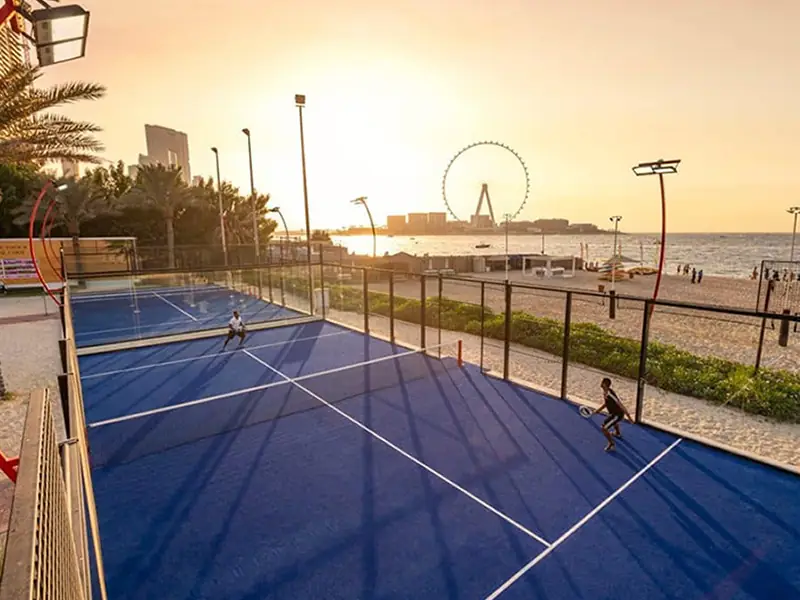
Outdoor clubs usually require larger circulation areas around the court for spectators, coaches, and pedestrian movement. Commercial venues and tournament sites often include additional walkways or viewing zones outside the court perimeter to improve crowd flow and accessibility.
4.2 Indoor Padel Court Planning
Ceiling height
Indoor padel courts require greater overhead clearance than the court structure itself. Because the lighting poles can reach approximately 5.6m in height, indoor venues are generally recommended to provide a clear ceiling height of 8.5–9m to prevent high lobs from contacting beams, lighting fixtures, or ventilation systems during play.
Ventilation system
Indoor venues rely on mechanical ventilation or HVAC systems to maintain airflow and reduce heat and humidity buildup during gameplay, especially in high-traffic commercial facilities.
Lighting layout
Indoor lighting systems should provide even illumination across the court without creating glare or shadows. Fixture positioning must also avoid reducing the effective overhead clearance above the playing area.
Emergency exits and access routes
Indoor facilities must maintain unobstructed circulation paths and emergency exits around the court area. Run-off zones, maintenance access, and spectator movement should not interfere with evacuation routes or building safety systems.
5.Common Mistakes When Planning a Padel Court
Mistake 1: Insufficient Peripheral Clearance
One of the most common planning mistakes is allocating space only for the court structure itself while overlooking the surrounding circulation area. After installation, clubs often discover that players have limited room to move behind the baseline or retrieve difficult lobs safely. Even on space-constrained sites, additional clearance around the court should always be reserved whenever possible.
Mistake 2: Poor Spacing Between Multiple Courts
When multiple courts are installed side by side, insufficient spacing can quickly create operational problems. Narrow gaps between courts increase the risk of player collisions, interfere with ball retrieval, and make maintenance access more difficult. Proper spacing between adjacent courts also improves circulation for coaches, spectators, and staff.
Mistake 3: Ignoring Drainage and Electrical Planning
For outdoor courts, drainage and electrical systems should be planned before foundation work begins. Poor drainage can lead to standing water, surface deterioration, and increased maintenance over time. Electrical planning is equally important, especially for courts equipped with overhead LED lighting systems. Reserving cable routes and sufficient electrical capacity in advance helps avoid costly modifications later in the project.
6.Why More Clubs Choose Panoramic Padel Courts
6.1 Benefits of Glass-to-Glass Panoramic Design
Unlike traditional courts with multiple rear steel pillars, panoramic padel courts use a glass-to-glass rear wall design to create a cleaner and more open view. This makes them especially popular for commercial clubs, tournaments, and venues focused on spectator experience or video broadcasting.
Compared with fully pillar-free “Super Panoramic” systems, the standard panoramic design retains reinforced corner pillars for better structural stability while still maintaining a modern panoramic appearance.
6.2 Advantages of Modular Bolt-On Installation
The court structure is designed for modular assembly. Steel components are CNC laser-cut and pre-drilled before shipment, allowing local teams to complete installation using bolt-on connections instead of on-site welding.This helps reduce installation complexity, shorten project timelines, and improve construction efficiency, especially for overseas projects.
6.3 Durability for Indoor and Outdoor Projects
Panoramic courts use 12mm CE-certified tempered glass and galvanized steel structures designed for long-term indoor and outdoor use.
The steel frame is treated with hot-dip galvanizing, zinc-rich primer, and powder coating to improve corrosion resistance. For coastal or high-humidity environments, an optional E-coating treatment can provide additional protection and extend service life.
7.Conclusion
A padel court requires more than just a 20m × 10m playing area. Surrounding clearance, indoor ceiling height, spectator circulation, and maintenance access all affect how the facility performs in daily operation.
For most commercial clubs, a footprint of around 24m × 14m and an indoor clear height of 8.5–9m provide a more practical and comfortable layout for both players and venue management.
Indoor and outdoor projects also come with different planning requirements. Outdoor courts usually focus more on drainage and circulation space, while indoor venues depend heavily on ceiling clearance, ventilation, lighting, and emergency access planning.
Planning these details early makes the installation process smoother and helps prevent space limitations after the court is already built.
8.FAQ
Q1: How much total space is needed for a standard padel court?
A: A standard doubles padel court has a playing area of 20m×10m, but additional clearance is required around the court. For most commercial projects, a recommended total footprint is approximately 24m×14m to allow for player movement, circulation, and maintenance access.
Q2: What ceiling height is recommended for an indoor padel court?
A: For indoor installations, a clear ceiling height of at least 8.5m is recommended, while 9m is preferred for competitive or commercial venues. This helps prevent high lobs from hitting lighting fixtures, beams, or ventilation systems during play.
Q3: Can an existing tennis court be converted into padel courts?
A: Yes. In many cases, one standard tennis court can be converted into 2 to 3 padel courts, depending on the available circulation space and layout design. This is one of the main reasons many sports clubs are investing in tennis-to-padel conversions.