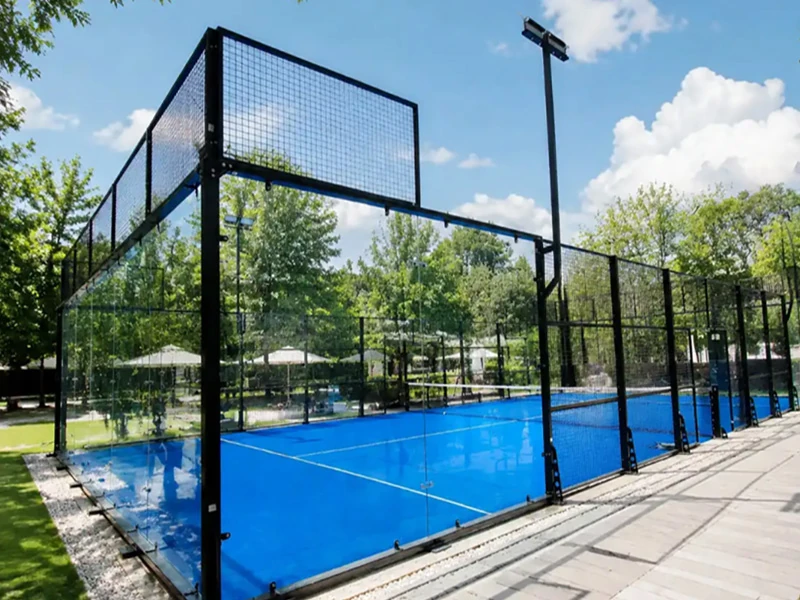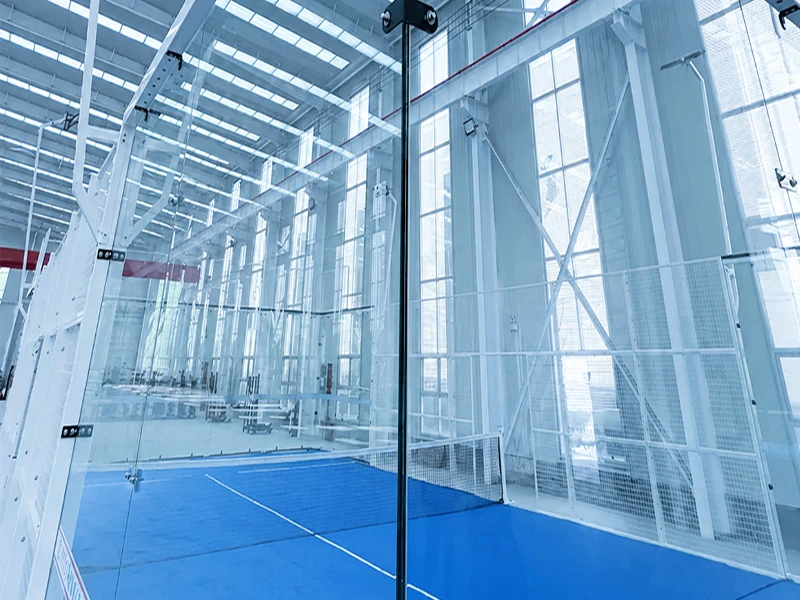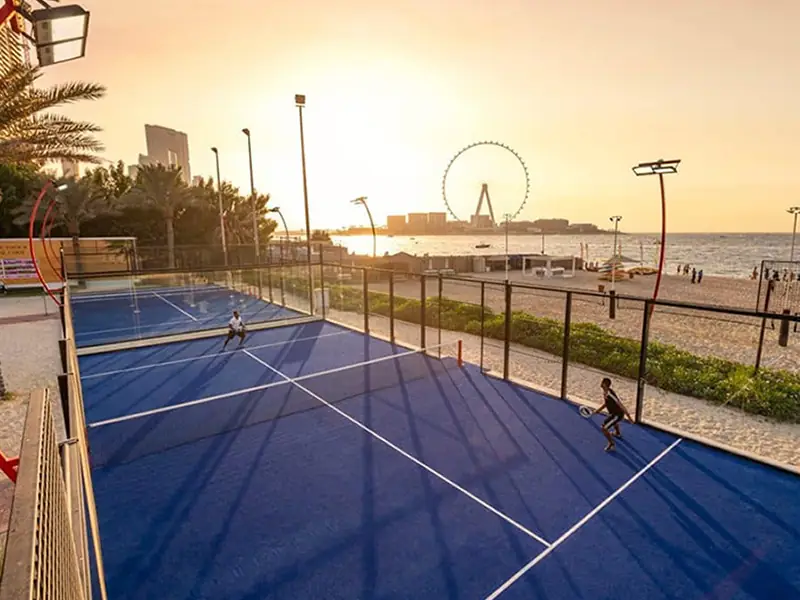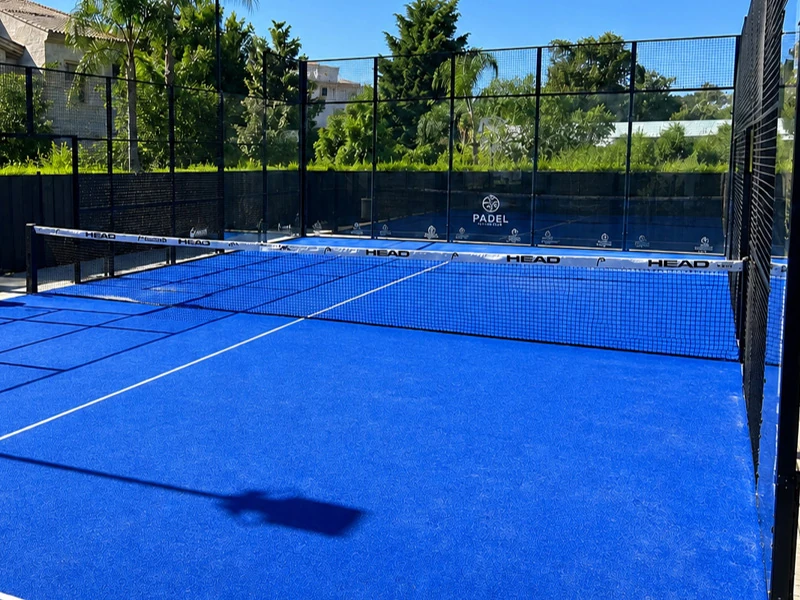
As padel continues to expand rapidly worldwide, demand for high-quality courts is increasing across sports clubs, hotels, residential communities, schools, and commercial investment projects. According to the United States Padel Association (USPA), the U.S. market alone could reach 20,000 courts and 15 million players by 2030, highlighting the sport’s accelerating global growth.
At the same time, rising steel prices, increasing transportation costs, and more complex construction requirements are making padel court budgeting more challenging and less predictable than in the past. In 2026, the cost of building a padel court typically ranges from €16,000 to €95,000, depending on the court type, foundation requirements, lighting systems, materials, and installation location.
This guide breaks down all major cost components of padel court construction in 2026, including foundations, panoramic structures, artificial turf, lighting systems, installation, and long-term maintenance considerations.
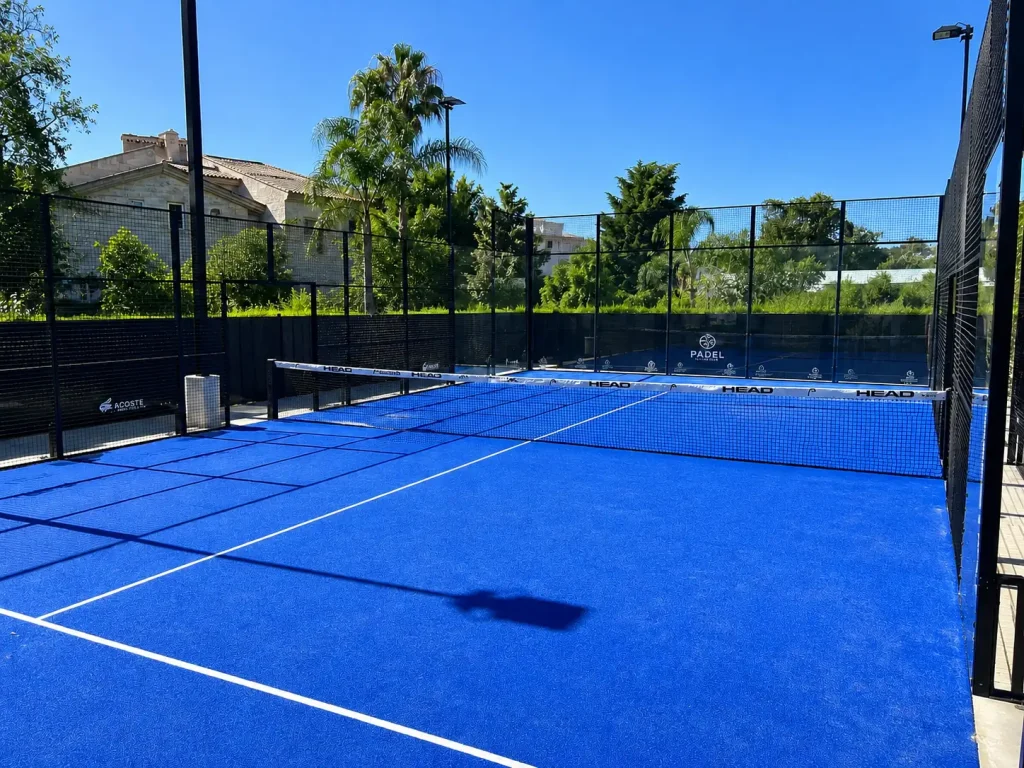
Average Padel Court Construction Cost in 2026
The total cost of a padel court can vary significantly based on location and specifications.
Estimated Padel Court Cost Range
Estimated Padel Court Construction Cost in 2026
| Court Component | Estimated Cost (EUR) |
| Foundation & Groundwork | €0 – €5,000 |
| Purchasing & Transportation | €10,000 – €20,000 |
| Installation & Assembly | €3,000 – €10,000 |
| Accessories & Equipment | €1,600 – €8,200 |
| Total Estimated Cost | €16,000 – €45,000 |
The €16,000–€45,000 range mainly reflects the core construction cost of a standard padel court, including materials, transport, installation, and basic accessories. In ideal cases with an existing concrete slab, foundation costs may be minimal.
However, total project costs vary depending on site conditions, drainage, lighting, and optional upgrades such as panoramic systems. As a result, most full padel court projects in 2026 typically range from €16,000 to €95,000.
Regional cost differences:
- Europe: foundation and installation costs around €5,000
- Southeast Asia: foundation and installation costs around $2,000 USD
For commercial clubs building multiple courts simultaneously, the average cost per court is often reduced due to shared groundwork and installation expenses.
What Affects the Cost of a Padel Court
Several key factors determine the final price of a padel court project:
- Region — labor and material prices vary by country
- Foundation requirements — ground conditions, drainage, climate
- Court style purchased — standard vs panoramic vs premium
- Quality of materials used — steel, glass, turf, lighting
- Installation team costs — experienced installers vs local crews
Foundation and Groundwork Costs
The foundation is often the most unpredictable expense in padel court construction.
Padel courts are heavy steel-and-glass structures that require strong and stable support systems. Ground conditions, drainage requirements, climate, and local regulations all influence foundation costs.
Many first-time buyers underestimate the importance of drainage and ground leveling. In regions with heavy rainfall or freezing temperatures, improper foundation preparation can lead to surface movement, glass stress, and long-term structural maintenance issues.
The two most common foundation systems include:
- Reinforced concrete slab
- Ring beam strip foundation
In colder climates, frost protection and drainage become critical and can substantially increase costs.
If the project site already has an existing reinforced sports slab in suitable condition, foundation costs may be reduced considerably.
Artificial Turf Costs
Artificial turf selection significantly impacts both performance and long-term maintenance.
Most padel courts use sand-filled synthetic turf systems specifically designed for player traction and ball response.
Common Turf Options
| Turf Type | Characteristics |
| Straight Fiber Turf | Lower cost, faster play |
| Curled Fiber Turf | Better cushioning and comfort |
Professional tournaments prefer curled-texture turf because it offers better shock absorption, consistent bounce, and greater player comfort.
Higher-quality turf generally offers:
- Longer lifespan
- Better drainage
- More consistent bounce
- Reduced player fatigue
Indoor vs Outdoor Padel Court Costs
Outdoor Padel Courts
Outdoor courts require:
- Weather-resistant coatings
- Corrosion protection
- Drainage systems
- Wind-resistant engineering
- UV-resistant turf materials
Outdoor projects are usually cheaper initially but may require more long-term maintenance depending on climate conditions.
However, outdoor courts installed in coastal or high-humidity environments often require additional anti-corrosion protection for steel structures and fasteners, which can increase long-term maintenance costs.
Indoor Padel Courts
Indoor courts eliminate many weather-related concerns but introduce additional building requirements.
Key indoor considerations include:
- Ceiling height
- Lighting systems
- Ventilation
- Fire regulations
- Warehouse structure compatibility
Most indoor padel facilities require minimum ceiling heights of 6 meters, while professional facilities typically prefer 8–10 meters.
Many warehouse conversion projects also require upgraded ventilation, acoustic treatment, and lighting layouts to meet commercial club operating standards.
Indoor court construction is often more expensive overall because of building infrastructure costs.
Why Padel Court Prices Are Higher in 2026
Several global factors are contributing to higher padel court prices in 2026.
Rising Material Costs
The cost of:
- Steel
- Turf
- Shipping containers
- Construction labor
has increased significantly in recent years.
Additionally, the rapid growth of padel worldwide has increased demand for manufacturers and experienced installation teams, leading to longer lead times in many markets.
Premium clubs are also increasingly investing in:
- Panoramic systems
- Smart lighting
- Luxury finishes
- Streaming-ready courts
which further raises project budgets.
Additional Costs to Consider
Many buyers focus only on the court structure itself while overlooking secondary project expenses.
Common Additional Expenses
- Permits and engineering approvals
- Crane access
- Site preparation
- Drainage channels
- Fencing and ball-stop netting
- Benches and seating
- Scoreboards
- Court branding
- Shipping and customs clearance
How to Reduce Padel Court Construction Costs
There are several effective ways to optimize a padel court budget without sacrificing quality.
One-Time Purchase
Avoid purchasing components in batches from multiple suppliers. It is generally more efficient to purchase the entire padel court system at once to ensure compatibility and reduce logistics costs.
Build Multiple Courts Together
Multi-court projects reduce installation and groundwork costs per court.
Use Local Contractors for Civil Works
Groundwork and concrete foundations can often be completed more economically by local construction companies.
Selecting an Excellent Supplier
An excellent supplier should provide complete, professional solutions — not just products. As a factory, it must deliver clear guidance on every step: foundation preparation, procurement, shipping, and on-site installation.
Padel Court Maintenance Costs
Padel courts require relatively low maintenance compared to traditional tennis courts.
Routine maintenance generally includes:
- Brushing and redistributing sand
- Removing leaves and debris
- Cleaning glass panels
- Checking lighting systems
- Inspecting structural bolts
With proper maintenance, a high-quality padel court can last 15–20 years.
Is Building a Padel Court Profitable
Commercial padel clubs are expanding rapidly because of strong player demand and relatively high court utilization rates.
In many markets, padel courts generate higher hourly revenue than tennis courts due to:
- Smaller court size
- Higher player rotation
- Growing participation rates
- Social gameplay format
Investment Example — 4 Indoor Courts
Initial Investment (4 Indoor Courts)
| Item | Estimated Cost (USD) |
| 4 courts construction | 160,000–400,000 |
| Warehouse renovation | 100,000–300,000 |
| HVAC / Lighting | 50,000–150,000 |
| Locker rooms / Bar | 50,000–200,000 |
Annual Revenue Model (Mature Club)
| Item | Annual Revenue (USD) |
| Court rental | 250,000–600,000 |
| Coaching | 80,000–250,000 |
| Membership fees | 50,000–200,000 |
| Food & beverage / Events | 50,000–150,000 |
| Total Annual Revenue | 430,000–1,200,000+ |
Typical ROI for a mature club:
- EBITDA margin: 20–35%
- Payback period: 2–5 years
In rapidly growing regions, some clubs have achieved payback in as little as 10 months.
For sports clubs and investors, padel courts are increasingly viewed as long-term revenue-generating assets.
Conclusion
Building a padel court in 2026 is a significant investment, but demand for modern padel facilities continues to rise worldwide.
Depending on the court type, foundation conditions, and selected materials, total construction costs typically range between €16,000 and €95,000.
For large commercial projects, working with experienced padel court manufacturers and installation teams can help reduce engineering risks, improve installation efficiency, and optimize long-term operating costs.
Whether you are planning a residential installation, a sports club expansion, or a commercial padel facility, understanding the full cost structure is the first step toward a successful project. If you are planning a padel court project, contact us to get a customized quotation and professional installation advice based on your location and budget.
FAQ
What is the average cost to build a padel court in 2026?
The average cost to build a padel court in 2026 ranges from €16,000 to €95,000, depending on court specifications, materials, foundation requirements, and location.
The lower end of the range typically includes standard outdoor courts with basic installation, while the higher end reflects premium or indoor courts with advanced structures, lighting systems, and additional engineering requirements.
What is the most expensive part of padel court construction?
The most expensive parts of a padel court are usually the foundation work and the steel-and-glass structure.
These components require stable engineering, durable materials, and precise installation, which significantly impact the total project cost.
Are panoramic padel courts more expensive?
Yes, panoramic padel courts are generally more expensive than standard courts.
This is because they require more advanced engineering design, higher-quality glass systems, and more precise installation processes to ensure structural stability and visibility. They are often used in professional or premium club environments.
How long does a padel court last?
A professionally installed padel court can last 15 to 20 years if it is properly maintained.
Regular maintenance tasks such as cleaning, inspecting structural components, and maintaining turf conditions help extend the overall lifespan of the court.
Is building a commercial padel club profitable?
Yes, building a commercial padel club can be profitable due to strong demand and high court utilization rates in many markets.
For a standard 4-court indoor club, the initial investment typically ranges from $160,000 to $400,000 for courts, plus additional costs for warehouse renovation, HVAC, lighting, and facilities.
A mature club may generate:
- Annual revenue: $430,000 – $1,200,000+
- EBITDA margin: 20% – 35%
- Payback period: 2 – 5 years
In rapidly growing markets, some clubs may achieve payback in as little as 10 months.