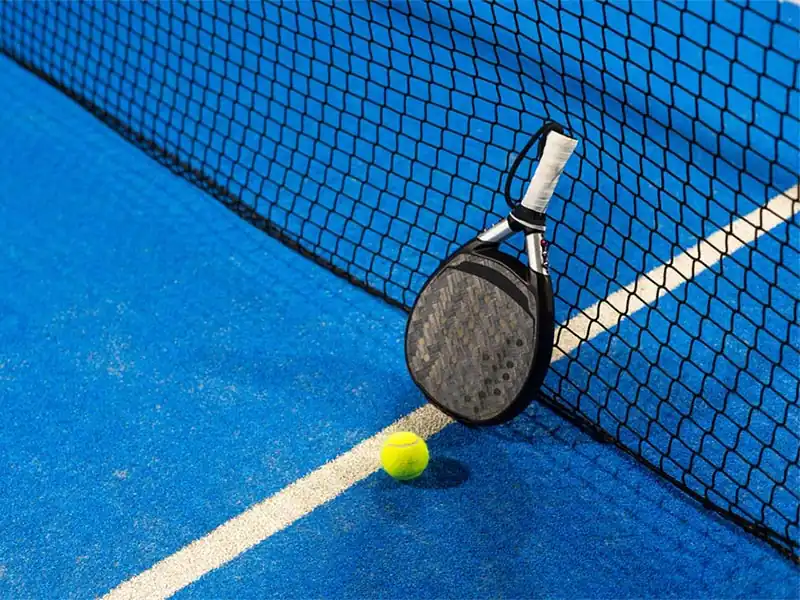
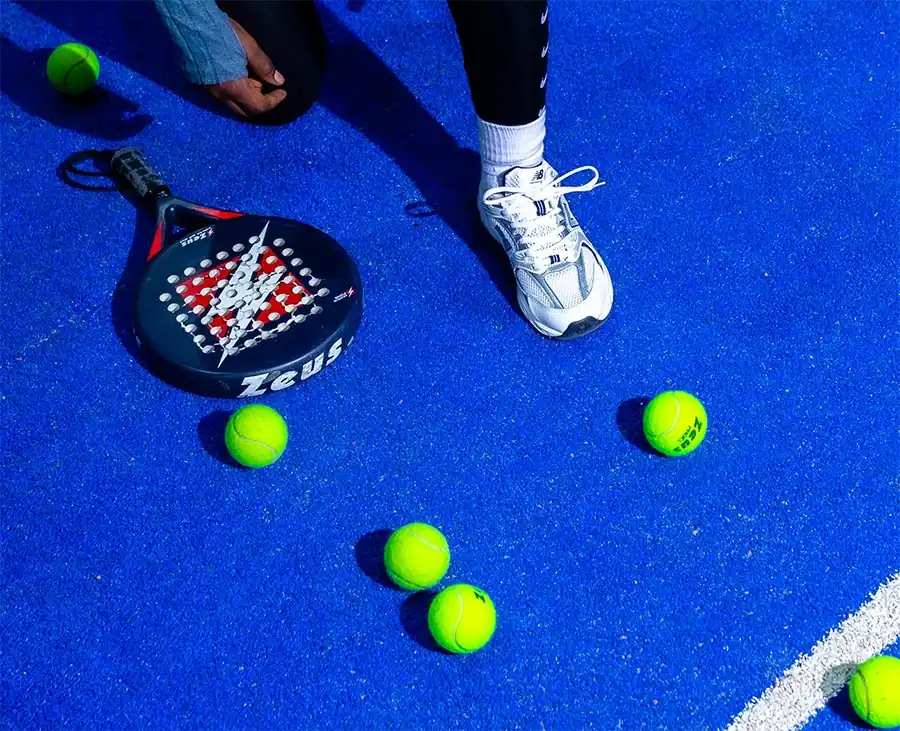
Before stepping onto the Padel court, it’s crucial to grasp the foundational aspects and rules of Padel – from court layout to executing serves and returns.
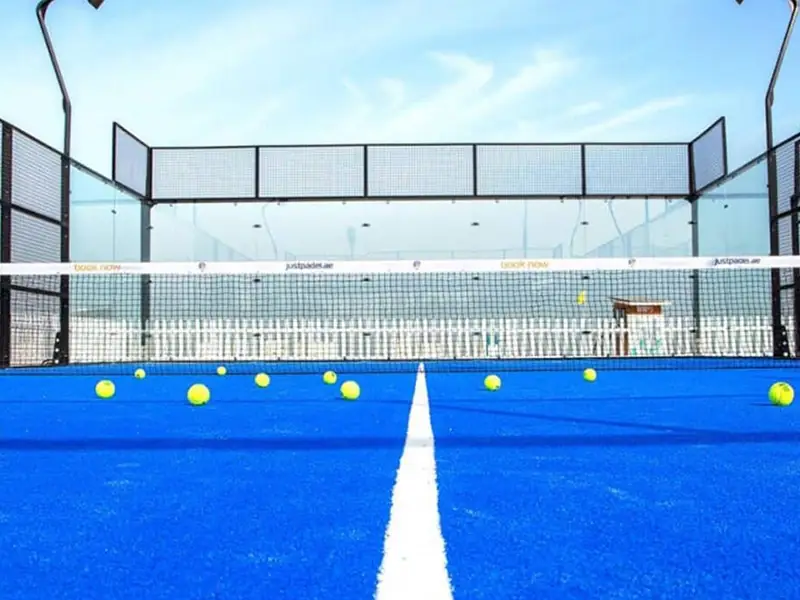
Court and court structure: A Padel court is smaller than a tennis court and enclosed by glass walls. The court takes on a rectangular shape, divided down the middle by a net. The court’s dimensions are roughly 10 meters wide and 20 meters long. The presence of walls allows players to bounce the ball off them, introducing a distinctive dynamic to the game.
Serves and returns: The game commences with the serve, where the ball is sent over the net to the opponent’s side in an underhand motion. The ball must first land on the server’s side and then clear the net. Returns follow similar rules to tennis, with the added element that the ball can rebound off the walls, creating tactical opportunities.
Scoring: Padel employs a scoring system akin to tennis. A game is composed of points, games, and sets. The sequence of scoring is 15, 30, 40, and then game. A set usually consists of playing up to six games, with a lead of at least two games required to clinch the set.
Doubles play and positioning: Padel is predominantly a doubles game, emphasizing social interaction and strategic positioning. Players adjust their positions according to the game’s dynamics, striving to place the ball where opponents have difficulty reaching.
Technique and movement: The fundamental shots in Padel include forehand and backhand, much like tennis. Maintaining a relaxed wrist motion is essential for controlled ball contact. Navigating the court demands agility and strategic placement to effectively engage with the ball while ensuring optimal court coverage.